Becoming a Craft Fair Vendor: Your First Year on the Circuit

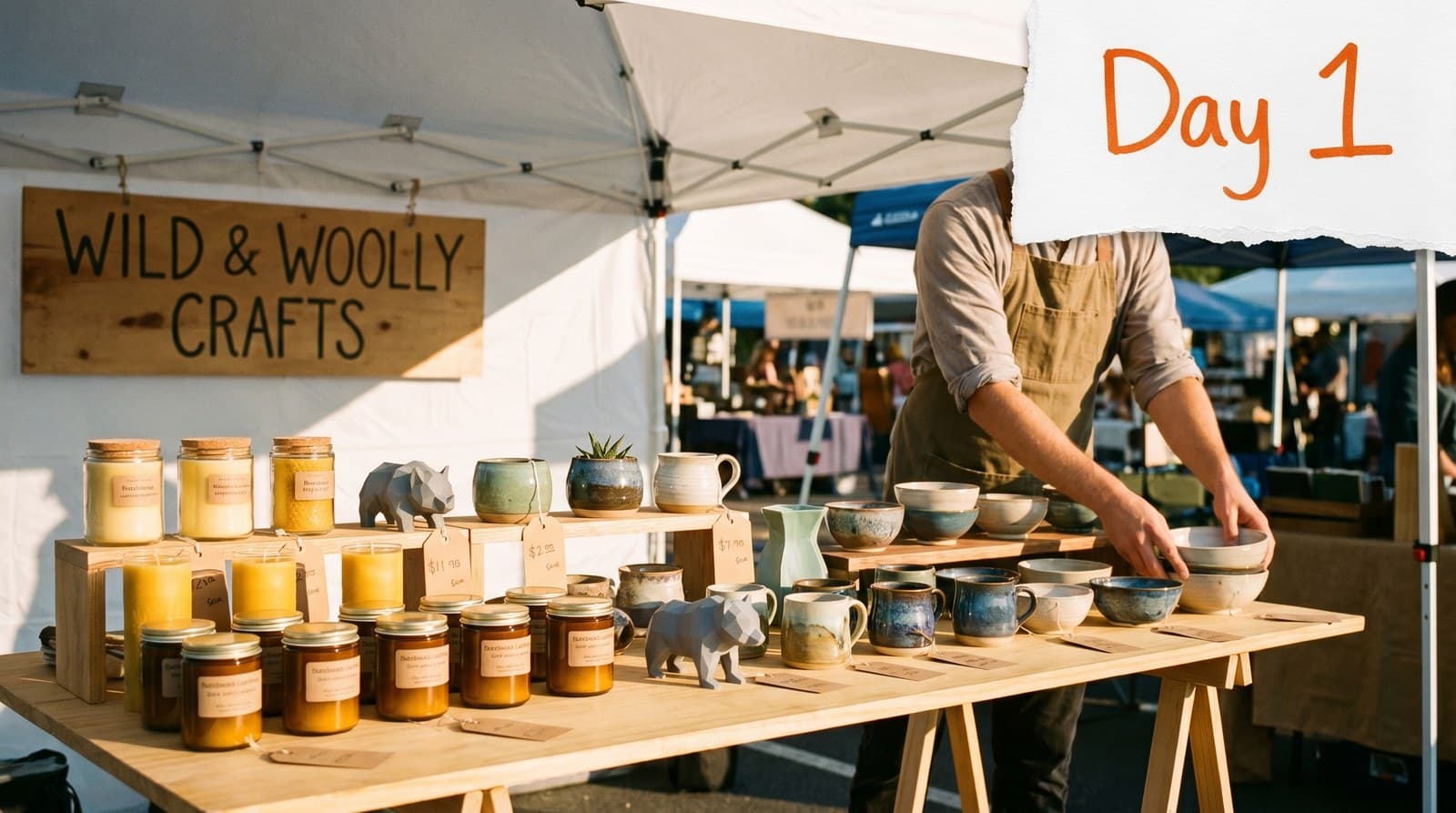
Becoming a craft fair vendor sounds like it should be hard, and the internet does its best to convince you of that. But knowing how to be a vendor at a craft fair is mostly a sequence of small, doable steps, not one giant leap. You make something people like. You find a show. You apply, pack a table, and sell. The U.S. market for handmade goods is worth over $268 billion and growing nearly 10% a year, so there's real room for new makers at the table. The catch is that 68% of first-time vendors lose money on their first show, usually from a handful of preventable mistakes. This guide walks you through your first year on the circuit: finding shows, applying, packing, pricing, setting up, and getting a little better each time. No hype, just the path.
How do you become a craft fair vendor?
You become a craft fair vendor by making a product, getting a sales tax permit, finding a local show, applying with photos of your work, paying the booth fee, and showing up with a table and inventory. Most first shows are small and low-stakes. You don't need a brand, a tent, or a big budget to start.
That's the whole loop, and it's worth saying plainly because the topic gets dressed up as something complicated. Here's the order most makers move through:
- Make a small, focused product line. Pick one thing you make well. Buyers trust a maker who clearly specializes over one who sells a little of everything.
- Sort out the paperwork. Most states require a sales tax permit, which we cover below.
- Find a show that fits. Start local and small. A church hall or school fundraiser is a forgiving first stage.
- Apply and pay the booth fee. Some shows accept everyone; others select vendors (more on that next).
- Pack a table, price your work, and sell. Then look at what happened and adjust.
You'll repeat steps 3 through 5 for the rest of your vending life. The first year is just the version where everything is new.
How do you find craft fairs to sell at?
You find craft fairs by searching local event listings, asking other makers, checking community Facebook groups, and visiting shows in person before you apply. Look for events that draw your kind of customer, not just the biggest crowd. A smaller show with the right shoppers beats a huge one where nobody buys what you make.
The advice nearly every experienced vendor repeats is the same: visit a market before you apply to it. Walk it as a shopper. Notice the foot traffic, how booths are laid out, and what's selling. Most vendors are happy to tell you whether a show was worth it, so ask.
When you weigh a show, look at:
- The crowd. Are these your buyers, or just a lot of people? Fit matters more than size.
- The booth fee versus likely sales. A $300 fee needs a lot of $15 sales to break even. Our free booth fee evaluator helps you sanity-check that math before you commit.
- The vibe. Handmade-only, or resellers and direct-sales reps too? It affects who shows up.
For a deeper walkthrough of vetting events, see our guide on how to find craft fairs near you. And don't overlook the obvious starter: starting small at a local fair gets you reps without much risk.
How do you apply to a craft fair?
You apply to a craft fair through the organizer's website, usually with a short form, 3 to 6 photos of your products, and the booth fee. Some shows accept everyone who pays. Others are juried, meaning a panel reviews applications and selects vendors based on quality, originality, and fit. Booth fees typically run from $50 for a small community show to $500 or more for a big one.
The word "juried" scares new makers off, and it shouldn't. A juried show just means someone curates the vendor list. To get in, you mostly need clear photos and a short description of what you make.
For juried applications, the photos do the heavy lifting. Most applications succeed or fail on the images, so:
- Shoot in natural light against a clean background. Sharp and well-lit beats fancy.
- Keep the set consistent. Juries flip through fast, so matching orientation and color palette helps your work read as a cohesive line.
- Include a booth photo if you have one. Even a simple setup shows you've thought about presentation.
- Write a plain maker statement. A few sentences on what you make, how, and what makes it yours.
One piece of housekeeping that's easy to forget: most states require a sales tax permit, which is usually free and takes 5 to 15 minutes to apply for online through your state's revenue department. Your city or county may also want a small business license. Sort this out before your first show, not the night before.
What to bring to your first event
Your first packing list is longer than you'd guess, and the stuff that saves the day is rarely the product. It's the tape, the float of small bills, the snack you forgot to eat. We've all underestimated how long packing actually takes, so build your list early and reuse it.
The essentials fall into a few buckets:
- Your table kit. Tablecloths, a way to take payment (a phone card reader works), price tags, bags, and a small cash float for change.
- Display pieces. Risers, crates, or boxes to add height. More on why height matters below.
- The just-in-case bin. Scissors, tape, zip ties, a power bank, pens, business cards, and a first-aid basics pouch.
- You supplies. Water, food, a folding chair, and layers. A long day on your feet is the part nobody warns you about.
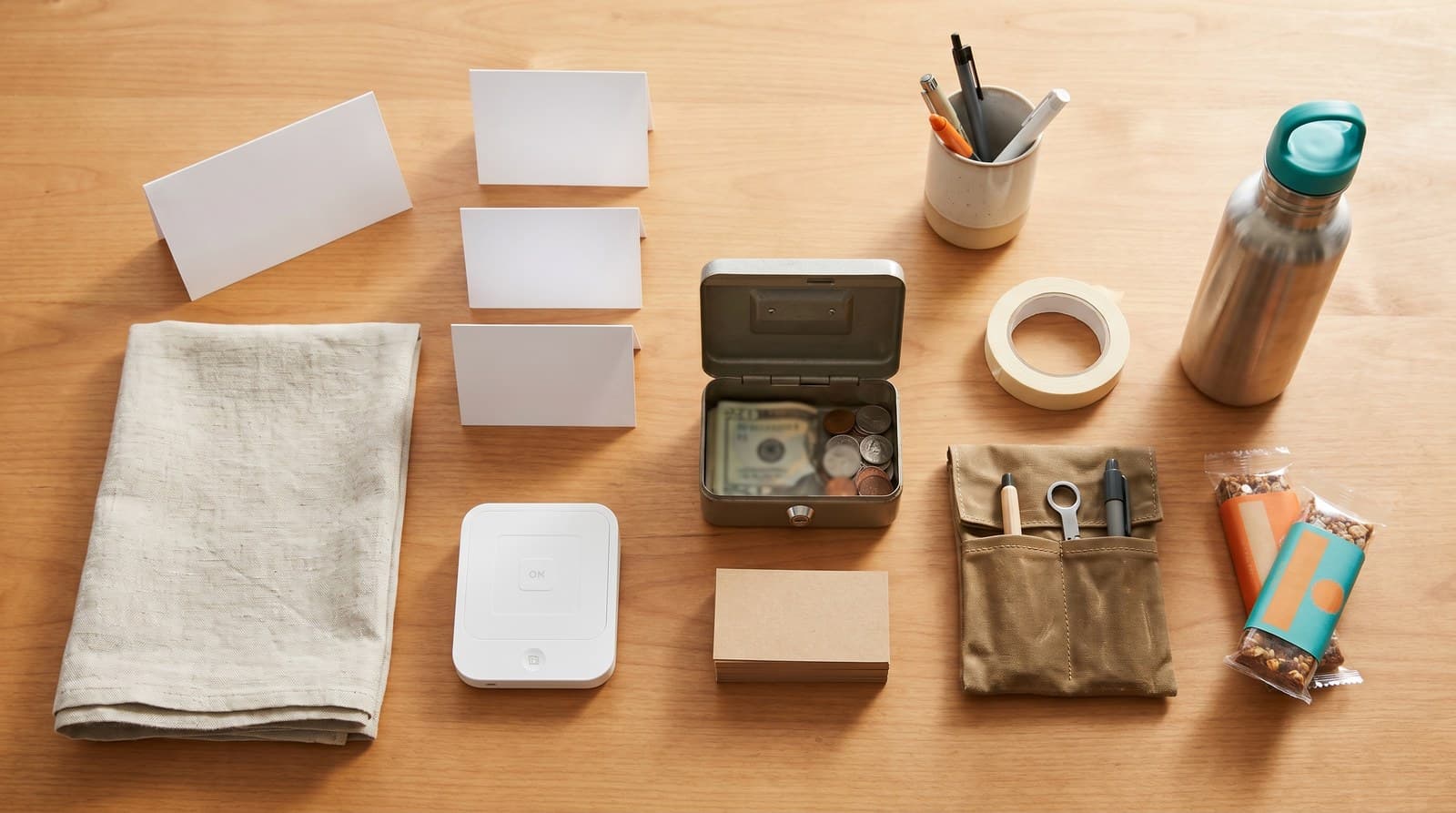
Rather than rebuild this from memory each time, work from our complete craft fair packing checklist and our shorter list of first-event essentials. One quiet pro move: a never-unpack bin system keeps your kit packed between shows so prep takes minutes, not hours.
Here's the wedge we'll keep coming back to: most makers overpack product, badly. Three wagonloads for a 4-hour event is normal, and it's a mistake. You'll learn what to actually bring from your own sales data, not from fear. Our guide on how many of each product to make helps you bring less with more confidence.
How do you price your work for a craft fair?
You price handmade work by adding up materials, labor, and overhead, then multiplying by a markup, usually 2 to 3 times that base cost. So a base cost of $10 (materials, your time, and a share of booth fees) becomes a retail price of $20 to $30. Pricing only on materials is the single most common mistake new vendors make.
This matters more than almost anything else in your first year. Roughly 60% of vendors underprice by 30 to 50%, which is how you end up exhausted and barely breaking even. The fix is to stop ignoring your own time.
A simple formula that works:
| Cost piece | What it includes | Example |
|---|---|---|
| Materials | Raw supplies per item | $4 |
| Labor | Your hourly rate times time per item | $10 (30 min at $20/hr) |
| Overhead | Booth fee, packaging, travel, prorated | $2 |
| Base cost | Add the three above | $16 |
| Retail price | Base cost times 2 to 3 | $32 to $48 |
Pay yourself a real wage in that labor line. A common starting point is $15 to $25 an hour, the rate you'd pay someone else to do the work. And watch a telling signal: if you sell out of an item at every single show, your price is probably too low.
To run your own numbers fast, use our free profit calculator, and for the full strategy see pricing for your first craft fair.
Setting up your booth
Your booth is the first impression a buyer ever gets of your work, and the good news is that a strong setup is mostly cheap tricks done well. You don't need custom shelving. You need height, layers, and a clear path in.
The principle experienced vendors swear by is to get product up off the table. Shoppers' eyes land at standing height, so aim to display items around 36 inches, counter height, rather than flat on a 30-inch table. Upside-down boxes, crates, and risers under a second tablecloth do the job for free.
A few moves that make a booth look intentional:
- Build levels. Add height with boxes and risers, then drape fabric to hide the rough edges.
- Group in odd numbers. Threes and fives at varying heights read as a styled display, not a pile.
- Keep a clear path. Position tables so shoppers can step in and browse without feeling trapped. Open and inviting beats crammed.
- Lead with your best. Put a strong, eye-catching piece where people see it first.
Plan the whole layout before show day so you're not problem-solving at 6 a.m. Our craft fair booth layout guide walks through arranging a table that's easy to shop. If you're heading outdoors, the wind and sun add their own challenges, so read up on outdoor craft fair survival first.
How do you get better after each event?
You get better by reviewing each event right after it ends: note what sold, what didn't, how much you made per hour, and what you'd change. This short review turns every show into data. Over a season, that data tells you what to make, what to bring, and what to quietly drop, so you work less and sell more.
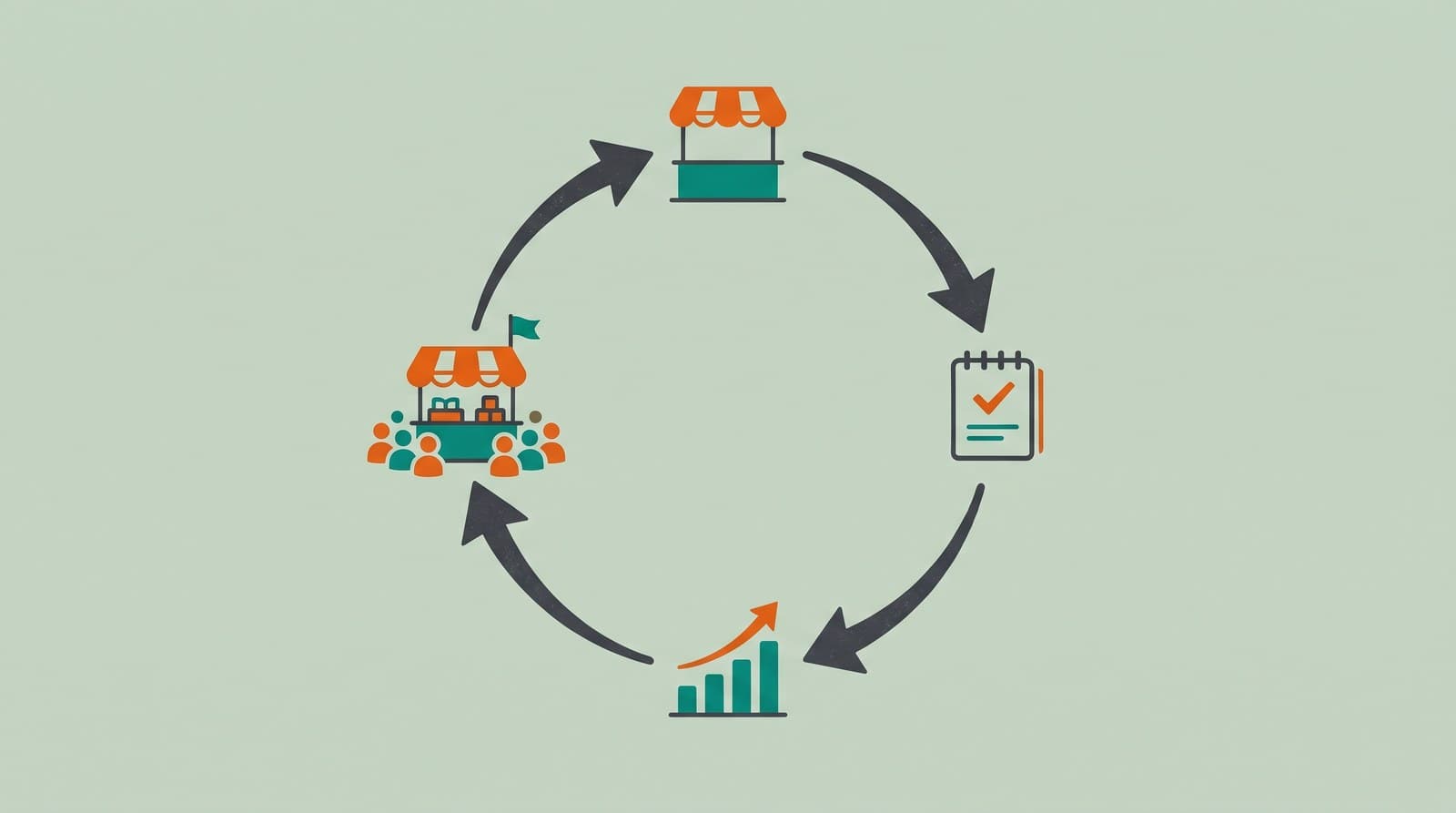
This is the part most makers skip, and it's the part that actually compounds. A 5-minute post-event debrief while the day is fresh captures more than your memory will a week later. Then track a few simple numbers across shows, like sell-through rate and revenue per hour, using our guide on how to track craft fair performance.
Here's why this matters, from our own table. One of our products looked busy at every show and still barely sold, while the data quietly flagged it as long to make and low return. We'd never have caught it by feel. The numbers said drop it, so we did, which freed up production time for things people actually bought. We told that whole story in best-selling items at craft fairs.
That's the whole point of bringing less. You stop hauling three wagonloads on a hunch and start bringing what your own history says will sell. If you connect a payment system like Square, you can even turn your Square sales data into a plan for your next market. The learning loop is the difference between a hard first year and a smart one.
Your first year, one show at a time
Becoming a craft fair vendor isn't a test you pass or fail. It's a loop you get better at. Three things carry you through year one:
- Start small and price for real. Cover your labor, not just your materials.
- Bring less than fear tells you to. Let your sales data, not your nerves, pack the car.
- Review every event. A 5-minute debrief today saves a wasted booth fee next month.
You'll have a chaotic show or two. Everyone does, and it's not a sign you're doing it wrong. It's just the circuit. The vendors who last aren't the ones who never struggle, they're the ones who learn a little from each table and keep showing up calmer than the last time.
MyEventPrep is built to handle the tracking and planning part so you can focus on making. Sign up free and let your first year teach you something useful.
Frequently Asked Questions
Do I need a license to sell at a craft fair?
In most states, yes, you need a sales tax permit to collect sales tax legally, and it's usually free and quick to apply for online through your state's revenue department. Your city or county may also require a small general business license. Always check with the show organizer, since requirements vary by location.
How much does it cost to be a vendor at a craft fair?
Booth fees range widely, from around $50 for a small community show to $500 or more for a large, high-profile event. On top of the fee, budget for display pieces, packaging, and travel. Start with low-fee local shows so a slow day doesn't sting.
What sells best at craft fairs for beginners?
The best first product is one focused, well-made line rather than a bit of everything, since specializing makes shoppers trust you and feel comfortable buying. Beyond that, your own sales data is the only reliable guide. Track what sells at each show and let the numbers, not guesses, shape what you make next.
How do I price my handmade items so I don't lose money?
Add up materials, labor at a real hourly wage, and overhead, then multiply that base cost by 2 to 3 for your retail price. Pricing on materials alone is why about 60% of vendors underprice by 30 to 50%. If you sell out of an item every single show, raise the price.
How many products should I bring to my first craft fair?
Fewer than you think. Most new vendors overpack, hauling far more than a short event can sell. Without past data, bring a reasonable, focused selection rather than your entire inventory, then track what actually sells so future shows are based on numbers, not nerves.