How to build a craft fair bin system that's always ready to go

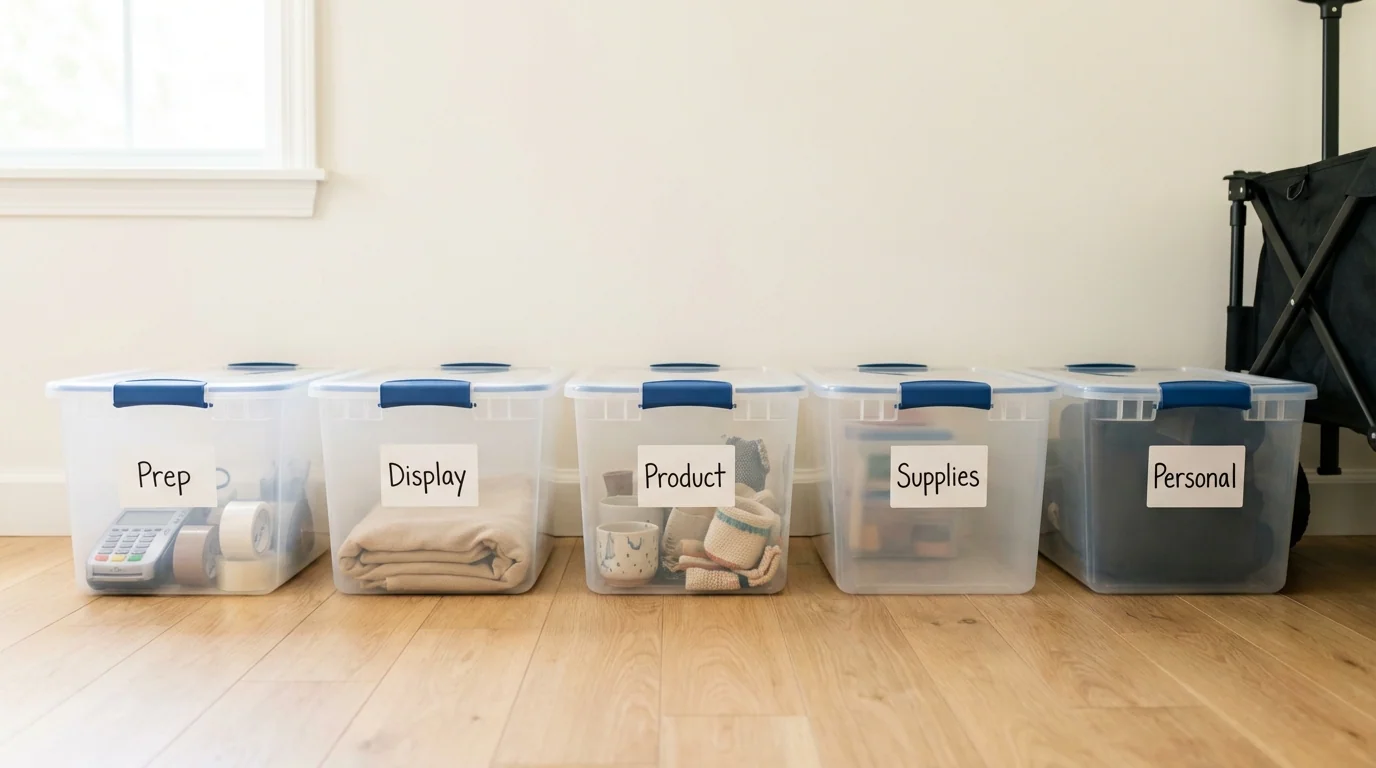
The night before a craft fair used to look like this for me: pulling the card reader off my desk, digging through the kitchen junk drawer for tape, grabbing the tablecloths from a shelf in the closet, hunting for the good scissors, and hoping I remembered where I put the price signs after the last show. Half of my packing time wasn't packing. It was finding.
And every time, something got left behind. If you've read our full craft fair packing checklist, you know the list of commonly forgotten items is long. The problem isn't that vendors don't know what to bring. It's that their stuff doesn't have a permanent home.
A craft fair bin system fixes that. Not a pile of random totes. A set of dedicated, labeled bins where every item lives full-time, ready to load into the car with zero scrambling. You restock them after each event instead of emptying them into the house. The bins stay packed. You stay calm.
Here's exactly how to build one.
In this guide:
- Why does packing for craft fairs feel so chaotic?
- The "always ready" principle
- How many bins do I need for a craft fair system?
- What goes in each bin
- How do I organize bins so loading is fast?
- The 15-minute post-event restock
- How does this system get better over time?
- Start with two bins
Why does packing for craft fairs feel so chaotic?
Because most vendors store their market supplies in the same places they store everything else. The card reader is on the desk. The tape is in the kitchen drawer. The signs are in the closet. The bags are in the hall cupboard. Packing becomes a scavenger hunt through your own house, and scavenger hunts lead to forgotten items.
The chaos isn't a memory problem. It's a storage problem. When your market supplies share space with your household supplies, you have to reassemble your setup from scratch before every event. That takes time, energy, and mental bandwidth you don't have the night before a show.
The fix is separation. Give your market supplies their own space, their own containers, and their own routine. Once everything has a home that isn't "somewhere in the house," packing becomes loading.
The "always ready" principle
The core idea behind a craft fair bin system is simple: your bins stay packed between events.
That doesn't mean the bins never come inside or never get touched. After each show, the battery pack comes out to charge. The cash float gets reset. Business cards get topped off. But everything goes right back into its bin when it's done. The bin is always assembled, always ready, always grab-and-go.
This is different from how most vendors operate. The typical cycle is: unpack everything after the show, scatter items around the house, then re-gather everything before the next event. Every cycle is a chance to lose something, forget something, or waste an hour hunting for something.
The "always ready" approach breaks that cycle. You maintain the bins instead of rebuilding them. Fifteen minutes of restocking after an event saves ninety minutes of scrambling before the next one. The shift is small, but the difference in how you feel the night before a market is massive.
How many bins do I need for a craft fair system?
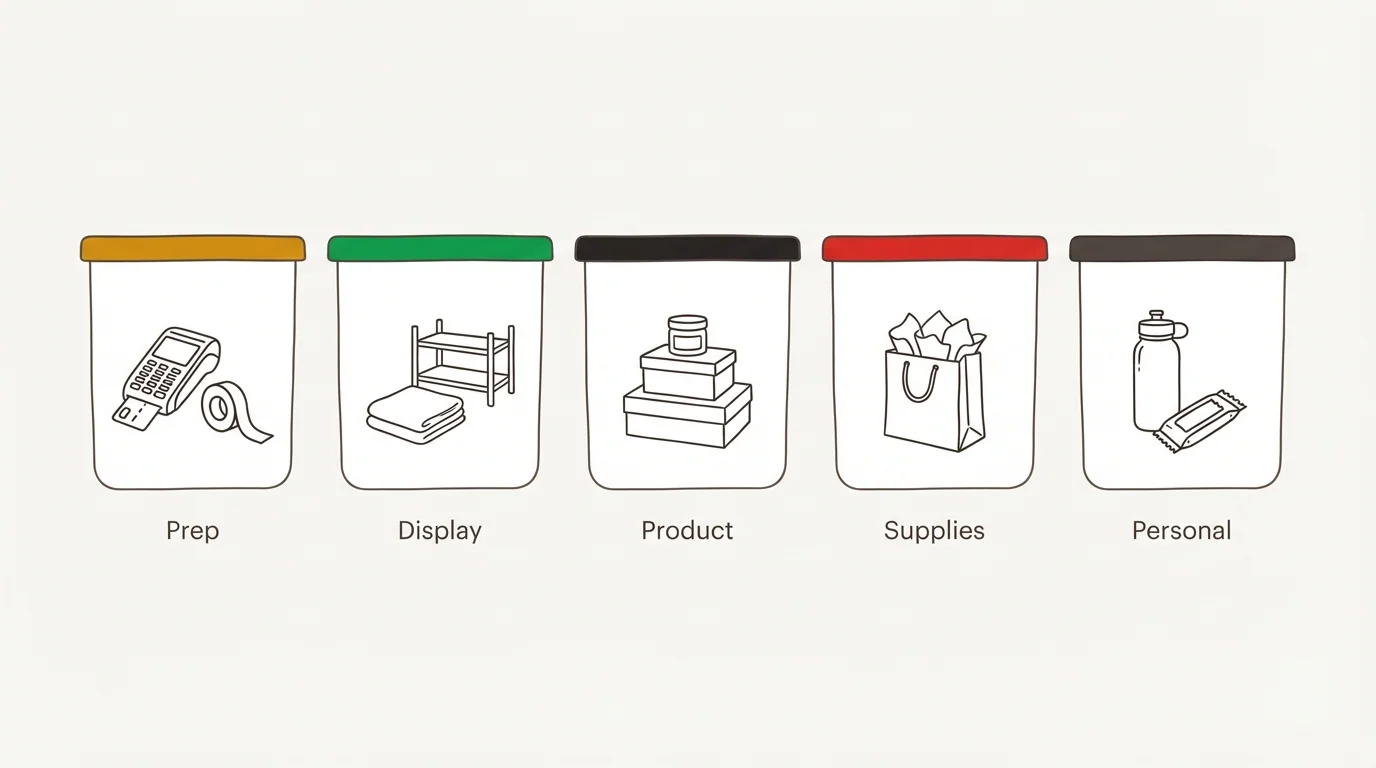
Most vendors need five to six bins: a prep/accessories bin, a display bin, one to three product bins, a supplies and packaging bin, and a personal comfort bin. The exact number depends on how much product you carry and how many product types you sell.
Use clear bins so you can see contents at a glance without opening lids. Label every bin on at least two sides (the front and the top) so you can identify them whether they're stacked or side by side. And here's a detail that makes a real difference: size every bin to fit your wagon or cart. If your bins don't fit the cart, you're making multiple trips. If they fit, you can load and unload in one shot.
You don't need to buy matching, expensive containers. Basic clear totes from any home goods store work fine. What matters is consistency: same size bins that stack, fit the cart, and have labels you can read from a few feet away.
What goes in each bin
Here's a bin-by-bin breakdown. Customize the contents based on your products, but the categories stay the same.
Bin 1: The Prep Bin
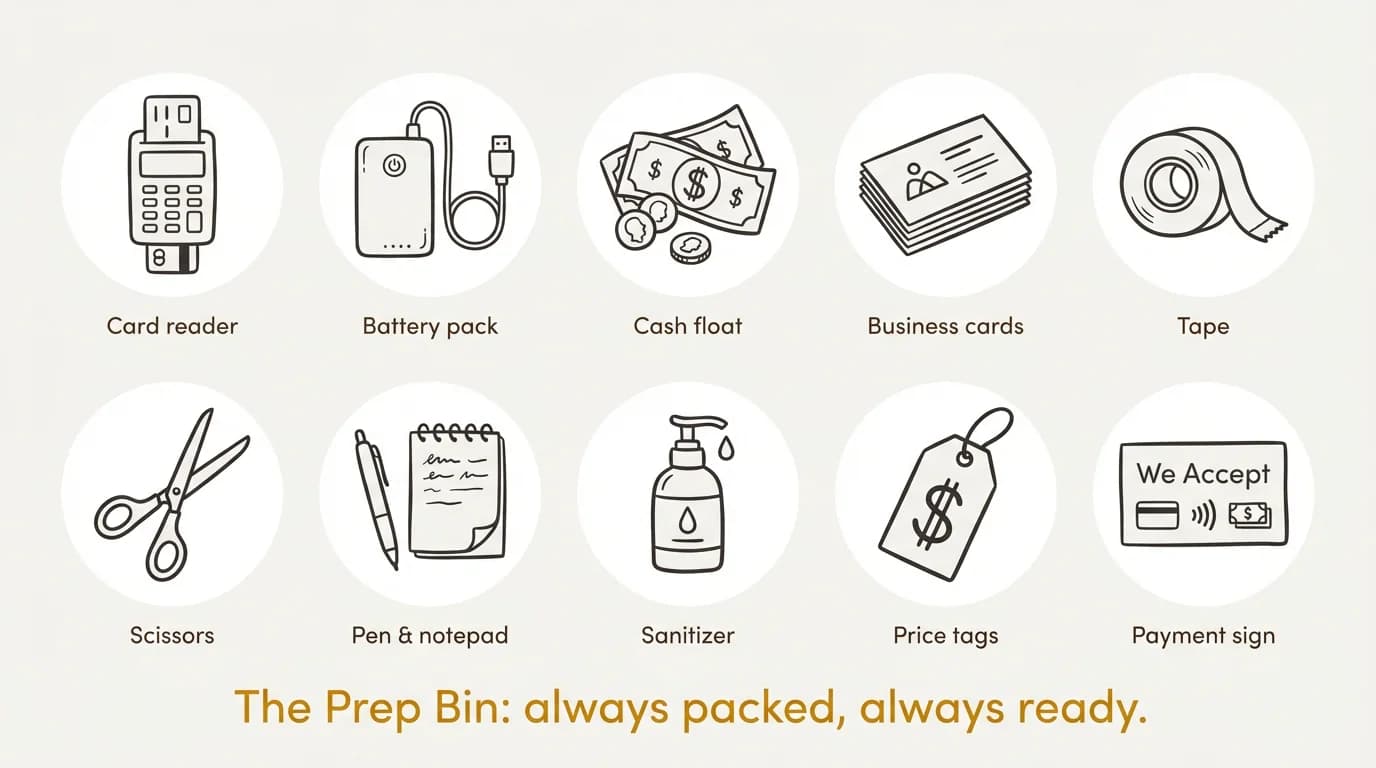
This is the most important bin in the system and the one that changed everything for me. It holds every small accessory you need at every event:
- Square Reader (or whatever card reader you use)
- Phone or tablet with POS app (if you use a dedicated device)
- Battery pack / portable charger
- Cash float (small bills and coins, reset after each event)
- Price signs and tags
- Business cards
- Tape (packing tape and painter's tape)
- Scissors
- Pens and a notepad
- Hand sanitizer
- Receipt book
- "Payment methods accepted" sign
- A few zip ties and clips
This bin stays packed between events. The battery pack comes out to charge and goes right back in. The cash float gets counted and reset. Business cards get topped off when they're low. But the bin itself stays assembled. When it's time to load the car, you grab it and go.
Bin 2: The Display Bin
Everything that makes your booth look like a booth:
- Tablecloths (the right size for your tables)
- Table clips or clamps
- Risers, shelves, or crates for vertical display
- Branded banner or backdrop
- Lighting (LED strips, clip lights, battery-powered)
- Mirror (if you sell wearable items)
- Easel or sign stand
Bins 3-4: Product Bins (1-3 depending on your range)
Your actual inventory, organized by product type or price tier. Pre-count everything and write down your starting quantities before each event. (This is the step that lets you calculate sell-through later. Our post on figuring out how many of each product to make explains why that matters.)
Keep backup stock in the same bins. At the venue, the extras stay under the table and restock the display as things sell. If you use Square sales data to plan your inventory quantities, your product bins get more accurate with every show.
Bin 5: The Supplies Bin
All the packaging and miscellaneous items customers and transactions need:
- Customer bags (paper, plastic, or branded totes)
- Tissue paper
- Bubble wrap for fragile items
- Gift boxes (if you offer them)
- Rubber bands
- Extra price tags and a marker
- Trash bags (two or three large ones)
- Wrapping paper or sleeves for prints and flat items
This is the bin that catches everything that doesn't neatly fit somewhere else. Without it, these items end up thrown into whatever bin has room, and then you can't find the tissue paper when a customer is standing there waiting for you to wrap their purchase.
Bin 6: The Personal Bin
Your comfort and survival kit:
- Water bottle
- Snacks
- Sunscreen and a hat (outdoor events)
- Layers for cold weather
- Hand warmers (fall and winter markets)
- First aid basics (band-aids, pain reliever, wipes)
- Backup phone charger cable
This bin is the one most likely to get partially unpacked between events (you'll eat the snacks, drink the water). Restock it as part of your post-event routine.
How do I organize bins so loading is fast?
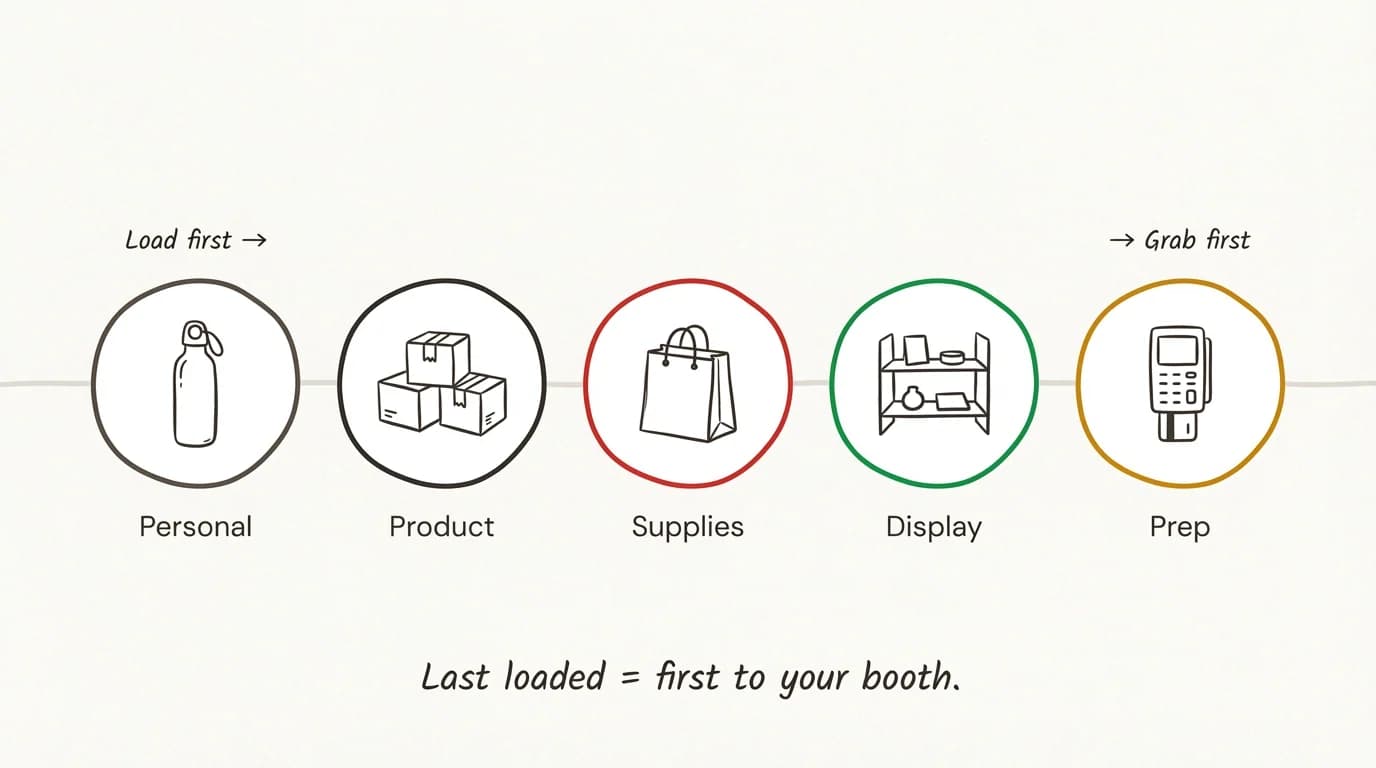
Size every bin to fit your wagon or cart, and load the car in reverse setup order. The bin you need last at the venue goes in first (deepest in the car). The bin you need first comes out last (closest to the tailgate).
A practical loading order:
- Personal bin goes in first (you won't need it until you're set up)
- Product bins next
- Supplies bin
- Display bin
- Prep bin last (first thing you grab, because you'll need the cash box and card reader accessible during setup)
At the venue, unload onto your cart and wheel everything to your space in one trip if possible. Two trips at most. If you're making three or four trips from the car, your bins are either too big, too many, or not fitting the cart properly.
The cart matters as much as the bins. A collapsible wagon with a flat bed is what most vendors use. Measure the bed before you buy bins. This sounds fussy, but it's the difference between a one-trip setup and a sweaty, chaotic four-trip setup while other vendors watch you block the loading zone.
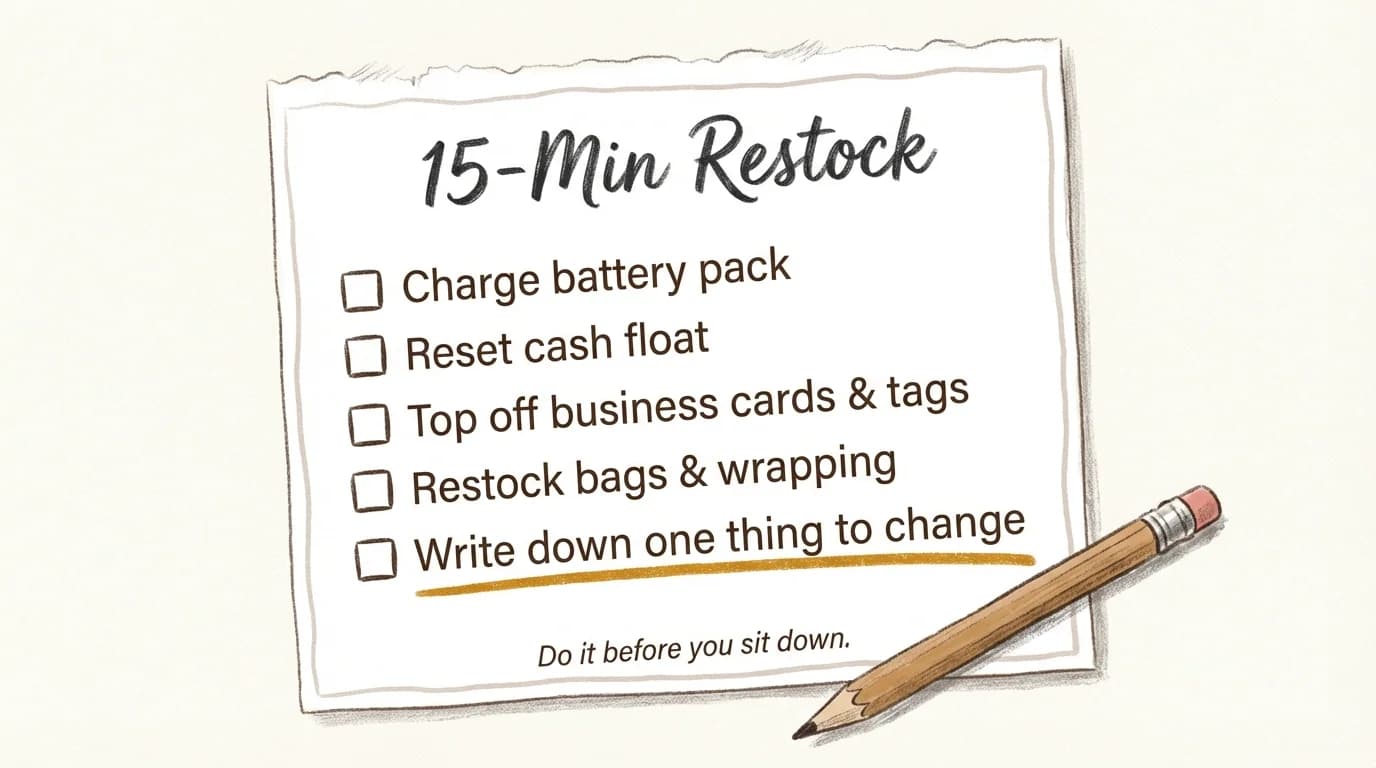
The 15-minute post-event restock
The bin system only works if you maintain it. And the only time you'll actually maintain it is right after the event, before you "relax."
Here's the post-event routine. It takes about 15 minutes:
- Prep bin: Bring it inside. Plug in the battery pack to charge. Count and reset the cash float. Top off business cards, price tags, or tape if anything is low. Put everything back in the bin.
- Product bins: Re-count what's left. Note anything that sold out or ran low. Repack neatly. This is also when you capture your sell-through numbers while they're fresh.
- Supplies bin: Replace any bags, tissue paper, or wrapping materials you used. Restock trash bags.
- Display bin: Check for anything damaged (broken riser, dead light). Replace or repair before the next event.
- Personal bin: Restock water, snacks, and any consumables.
- One note: Write down one thing you wished you'd had, or one thing you'd change. Just one. This is the seed that improves the system over time.
The discipline isn't complicated. It's just doing it while you're still in "event mode" instead of waiting until the night before the next show, when you've forgotten everything.
How does this system get better over time?
After three to five events, your bins start teaching you what you actually use. Items that never leave the bin get removed. Items you keep wishing you had get added permanently. The system sheds dead weight and fills gaps on its own, as long as you capture what you noticed after each event.
That last part is the piece most vendors skip. They do the restock but don't write anything down. Three events later, they can't remember whether they needed more small bags or fewer risers. The learning evaporates.
MyEventPrep keeps your post-event notes, built-in checklists, and production plan in one place so the learning sticks. Each event you log makes the next one easier to prepare for. The notes you took after the spring market are right there when you're packing for the summer one.
You don't need software to make a bin system work. A label maker and 15 minutes of discipline after each show will get you most of the way. But if the pattern of "I meant to write that down" sounds familiar, having one place where everything lives (notes, checklists, quantities, and sales data) is what turns a good system into one that actually improves.
Start with two bins
You don't need to build the whole system in a weekend. Start with two bins: the prep bin and one product bin. Those two alone will cut your packing time in half and eliminate the most common forgotten items.
Add a display bin before your next event. Then a supplies bin. Then a personal bin. Let the system grow as you learn what you need.
The goal isn't perfect organization. It's a system that exists at all, so the night before a market stops being stressful and starts being a simple load. Show up calm. Set up clean. Sell better.
Start tracking your events in MyEventPrep free during early access. No credit card needed. See how it works on the homepage.
Frequently Asked Questions
What size bins work best for craft fair vendors?
Medium-sized clear totes (roughly 60 to 70 quarts) work for most vendors. The key is sizing them to fit your wagon or cart so you can load and unload in one trip. Measure your cart bed before buying bins. Consistent sizing also lets you stack bins neatly in the car and in storage.
Should I use clear or opaque storage bins?
Clear bins are better for craft fair vendors. You can see the contents without opening the lid, which saves time during setup and when searching for a specific item mid-event. Pair clear bins with labels on the front and top so you can identify them whether they're stacked or side by side.
How do I organize craft fair supplies in a small space?
Stack your bins vertically in a closet, garage corner, or even a section of a room. Because the bins stay packed between events, they only take up the footprint of a few stacked totes. Collapsible wagons fold flat and lean against a wall. The total footprint is smaller than you'd expect once everything has a dedicated container instead of spreading across the house.
What goes in a craft fair emergency kit?
A good emergency kit lives inside your prep bin: tape (packing and painter's), scissors, zip ties, extra price tags, a marker, hand sanitizer, a few trash bags, rubber bands, and a backup phone charging cable. Some vendors also add a small first aid kit (band-aids, pain reliever, wipes) and a sewing kit if they sell fabric goods.
How often should I update my bin system?
Review your bin contents after every event as part of the 15-minute restock routine. Do a deeper review every five to ten events. During the deeper review, remove items you've never used, add items you keep wishing you had, and replace anything that's worn out or damaged. The system should feel lighter and more precise each time you revisit it.