What to do the morning of a craft fair (a calm 60-minute flow)

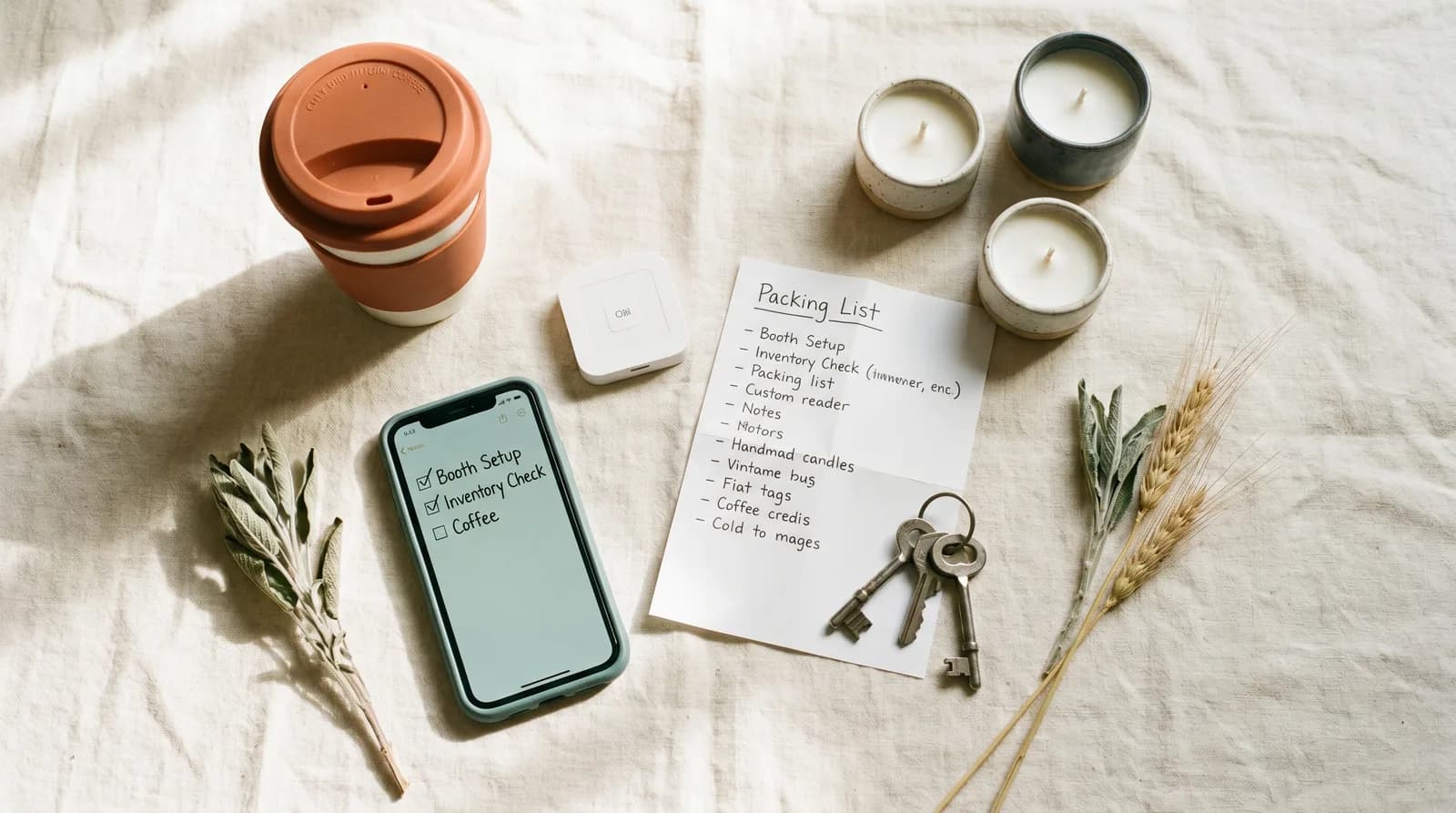
The difference between a vendor who has a good show and a vendor who has a chaotic one is rarely the product. It's the morning. Knowing what to do the morning of a craft fair, in what order, with enough margin to not feel rushed, sets the tone for the whole day. The good news: it's not a long list. It just has to happen in the right sequence.
Most craft fair guides give you a checklist of 40 items and call it a plan. We're going to skip that. What you actually need is a 60-minute flow: a few clear blocks of time, each with one job, and enough buffer that when the unexpected happens (it will), you're not the vendor sweating through your shirt at 9:55am.
Here's how the morning runs.
Why the morning of a craft fair matters more than the night before
Because almost everything that goes wrong on a show day is set in motion in the first 60 minutes. A late arrival becomes a rushed setup. A rushed setup becomes a forgotten card reader. A forgotten card reader becomes 3 missed sales while you reboot the app, and a vendor who's flustered before the first customer walks in.
The night-before work matters, but it's preventative. The morning is where everything either holds together or falls apart. Most of the famous craft fair horror stories ("we forgot the cash float," "the tent wouldn't go up") are morning-of stories. The fix is a calm setup flow, not a longer checklist.
If you nail your prep the night before with a solid packing checklist, the morning's job is just to put it all in the right place at the right time.
How early should you arrive at a craft fair?
As early as the organizer allows, within reason. That buffer absorbs traffic, parking surprises, and the inevitable "wait, where's our booth assigned?" conversation. Most organizers open load-in 90 minutes to 2 hours before doors. Larger juried festivals open load-in much earlier, sometimes 3:30 to 5am when doors are at 10 or 11.
Aim for the earlier end of whatever window the organizer gives you. Made Urban's guide to your first craft show confirms what most vendors learn the hard way: the vendors who arrive at the start of the window are calm by the time the late vendors are panicking.
A pre-event coffee or tea isn't a bad thing either. The 5-minute drive-through stop is one of the cheapest ways to give yourself a real arrival, instead of falling out of the car already behind.
The 60-minute setup flow, broken down
Once you're parked and ready, the morning splits into 3 clean blocks. Each one has a single job. Don't try to do everything in parallel.
Minutes 0 to 15: unload, claim, move. Get everything out of the car and into your spot. Don't unbox yet, just stage it. Move your car as soon as it's empty so the next vendor can pull in. Vendor etiquette around load-in matters more than people think, and parking at the entry too long earns you fast enemies.
Minutes 15 to 45: structure, then product. Tent or table up first. Get the bones of your booth layout in place. Then put product out. Working in this order means you don't have to move displays around once they're loaded. A trick worth stealing: photograph your finished booth at home before the fair, so you can rebuild from a picture instead of from memory.
Minutes 45 to 60: tech, money, sign. Card reader paired and charged. Cash float counted. AccentYourself recommends $50 to $100 in small notes and coins as a standard starting float. Signage out. A quick walk to the front of the booth to look at it from the customer's perspective. This is the calm pass: small adjustments only, not a full redo.
If you finish the third block with 10 minutes to spare, that's success. Use those 10 minutes for the next part.
How do you stay calm before a craft show?
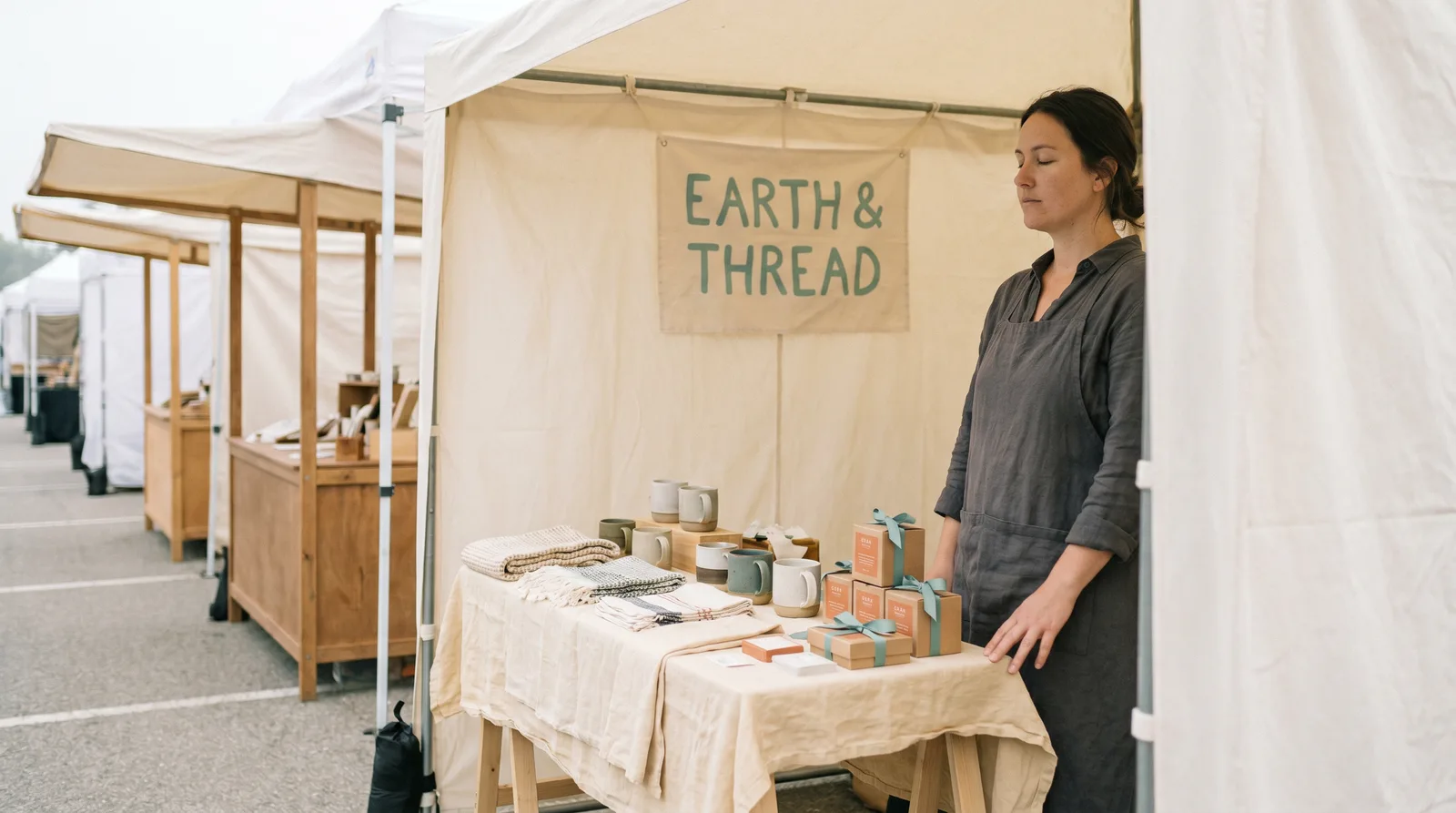
A 2-minute grounding routine, twice. Once right after setup, once right before doors open. Practitioners point to controlled breathing as one of the fastest ways to settle your nervous system before a high-pressure event. Box breathing (4 seconds in, 4 hold, 4 out, 4 hold) takes 2 minutes and works on the first try. The 5-4-3-2-1 grounding method works too: 5 things you see, 4 you feel, 3 you hear, 2 you smell, 1 you taste.
This is the part most vendors skip. They run from setup straight into the first customer interaction and wonder why they feel rattled. The first 10 customers are easier to talk to when you aren't still in setup-panic mode.
It's not a productivity hack. It's a stabilizer. Two minutes. Twice. Then you're ready.
The last 15 minutes before doors open: a quick checklist
6 things to confirm in the last 15 minutes. Keep this list short on purpose.
Card reader paired and charged. Cash float counted and in the right pocket. Signage visible from the aisle (walk out and check). Water and a snack within reach. Phone on silent, on the table. One customer's-eye walk of the booth, looking for anything blocking a sightline or hiding a price tag.
Crafty Base's craft show checklist and most vendor checklists converge on the same handful of items. The trick isn't a longer list. It's checking the same 6 things every time so it becomes muscle memory.
What experienced vendors do that newer vendors skip
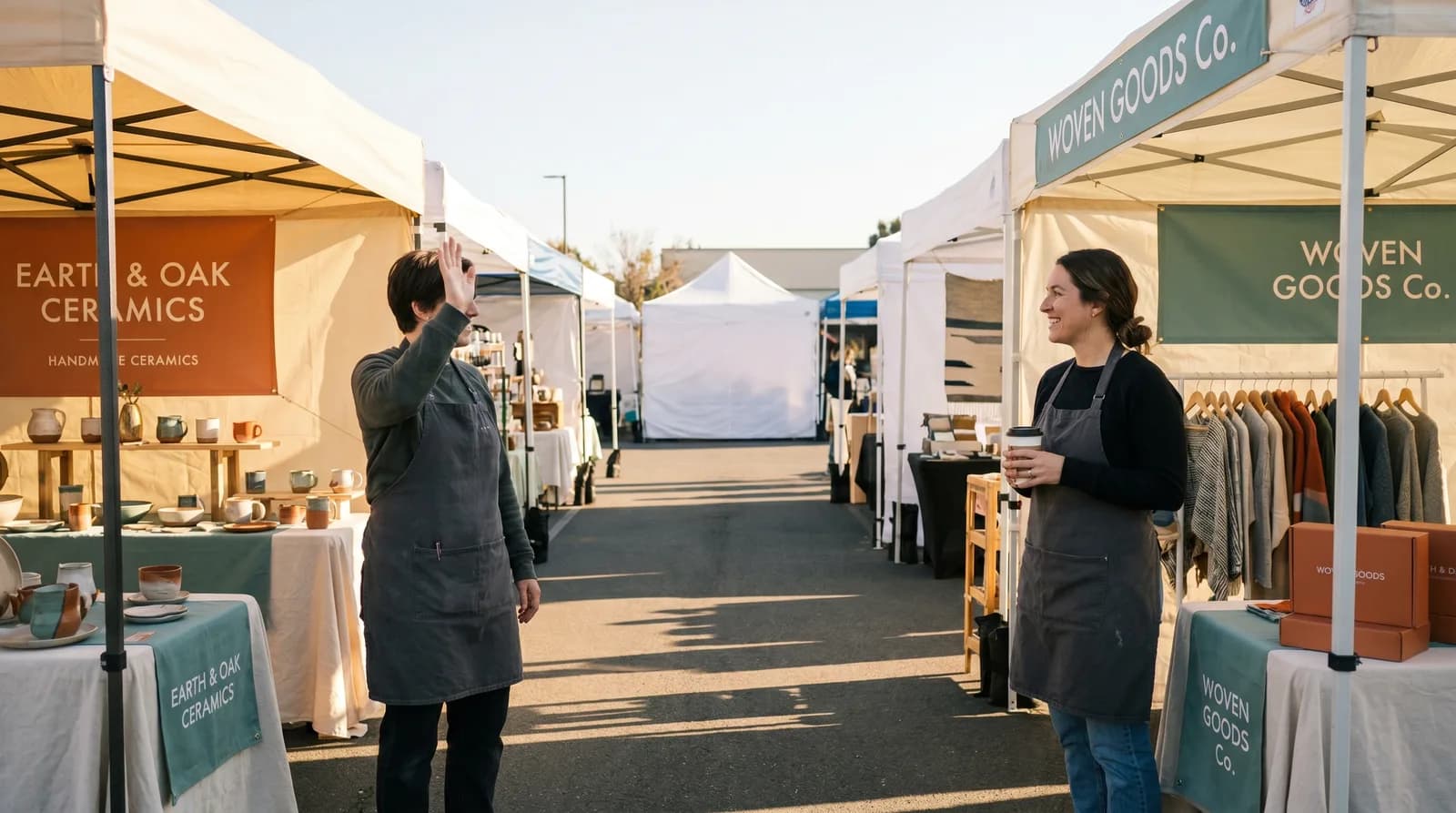
The thing newer vendors miss most: walking the event before doors open. Once setup is done, walk the show. Check out the other vendors, touch base with old friends, say hi to your new neighbors. Then come back and check your booth again with fresh eyes.
That walk does several things at once. It calms nerves through movement. It builds vendor relationships, which become referrals and tips about other shows down the line. It gives you a "fresh eyes" pass on your own booth when you return, where you'll spot the off-center sign you missed during setup. And it puts you in a sociable mood right before you have to be sociable for 6 straight hours.
A few smaller things that separate the calm vendors from the anxious ones:
Eat actual food before 9am. Not a granola bar at 11. Real food.
Know where the bathrooms are before doors open. Walking to the bathrooms 5 minutes before doors at a venue you don't know is its own anxiety.
Greet your booth neighbors by name. The day is much easier when the people on either side of you like you.
The morning isn't about doing more. It's about doing the same things in the right order, with enough margin to not feel flustered. The vendors who consistently have good shows aren't more talented or better prepared on the whole. They just have a flow they trust.
If you'd like a calmer way to prep across your whole event season, that's what MyEventPrep is built for. Sign up free for the calm prep approach to your next show.
Frequently asked questions
How early should I arrive at a craft fair? As early as the organizer's load-in window allows, within reason. For most shows that's 90 minutes to 2 hours before doors open. Aim for the start of the window, not the middle, so traffic, parking, or last-minute booth changes don't push you into panic mode.
What should I do in the last 15 minutes before a craft fair opens? Confirm 6 things: card reader paired and charged, cash float counted, signage visible from the aisle, water and a snack within reach, phone on silent, and one customer's-eye walk of the booth. Anything else is fluff at that point.
How do I stop being nervous before a craft show? Try a 2-minute grounding routine right before doors open. Box breathing (4 seconds in, 4 hold, 4 out, 4 hold) or the 5-4-3-2-1 grounding method both work. Vendors often skip this and then feel rattled through the first 10 customers.
What's the most common mistake vendors make on the morning of a craft fair? Arriving at the end of the load-in window instead of the start. Everything cascades from there: rushed setup, forgotten gear, no time to settle. The fix isn't a longer checklist, it's earlier arrival with margin built in.
Should I eat before a craft fair? Yes. Actual food, not a granola bar. Standing for 6 or more hours while talking to strangers on an empty stomach is its own form of suffering. Coffee or tea on the way in is a small ritual that makes the morning feel real instead of rushed.