Stop overthinking your booth setup: here's what you actually need

Some of the product links below are Amazon affiliate links. If you buy through them we earn a small commission at no extra cost to you. We only point at things we'd actually use.
You typed "craft fair supplies" into Google. Now you have 12 tabs open, a half-built Amazon cart, and a vague feeling that everyone else's first booth had matching crates and a custom-printed banner. None of that is true, but it's hard to remember at 11pm when you're three Pinterest boards deep.
This is the post that closes the tabs.
The goal here isn't to inspire you to "level up" your setup or sell you on a $400 starter bundle. It's to give you the honest short list: what to actually bring to your first event, what to leave off until you've seen the inside of a market once, and how to spend the next week prepping without losing your weekend to comparison shopping. Most of what you need fits in one car trip. Some of it is already in your house.
Let's get there.
Why first-time vendors over-prepare (and it's not their fault)
Over-preparing comes from caring. You signed up for this because you make something you love, and the thought of standing behind a half-finished table for 6 hours is genuinely scary. So the brain does what brains do: it tries to control the situation by buying things.
That's the loop. It feels productive (look at all these tabs), but it doesn't actually reduce the unknowns. The unknowns are things like "will it rain," "will the venue have outlets where I think they will," and "will the person next to me be friendly." None of those are solved by a second tablecloth.
There's a real difference between prepared and overloaded. Prepared is "I know where everything is and I can set up in 45 minutes." Overloaded is "I brought three bins of decor I never opened." We've made the overloaded version more times than we'd like to admit. The fix wasn't more stuff. It was less.
What do you actually need at your first craft fair booth?
You need 4 things: a clean way to display your work, a way to take payment, something to put a sale into, and the gear that keeps you comfortable for the day. That's the whole list. Everything else is optional, and most of it can wait until you've worked one event and know what you wished you had.
Here's what each of those looks like in practice.
Display: the table and what makes it readable
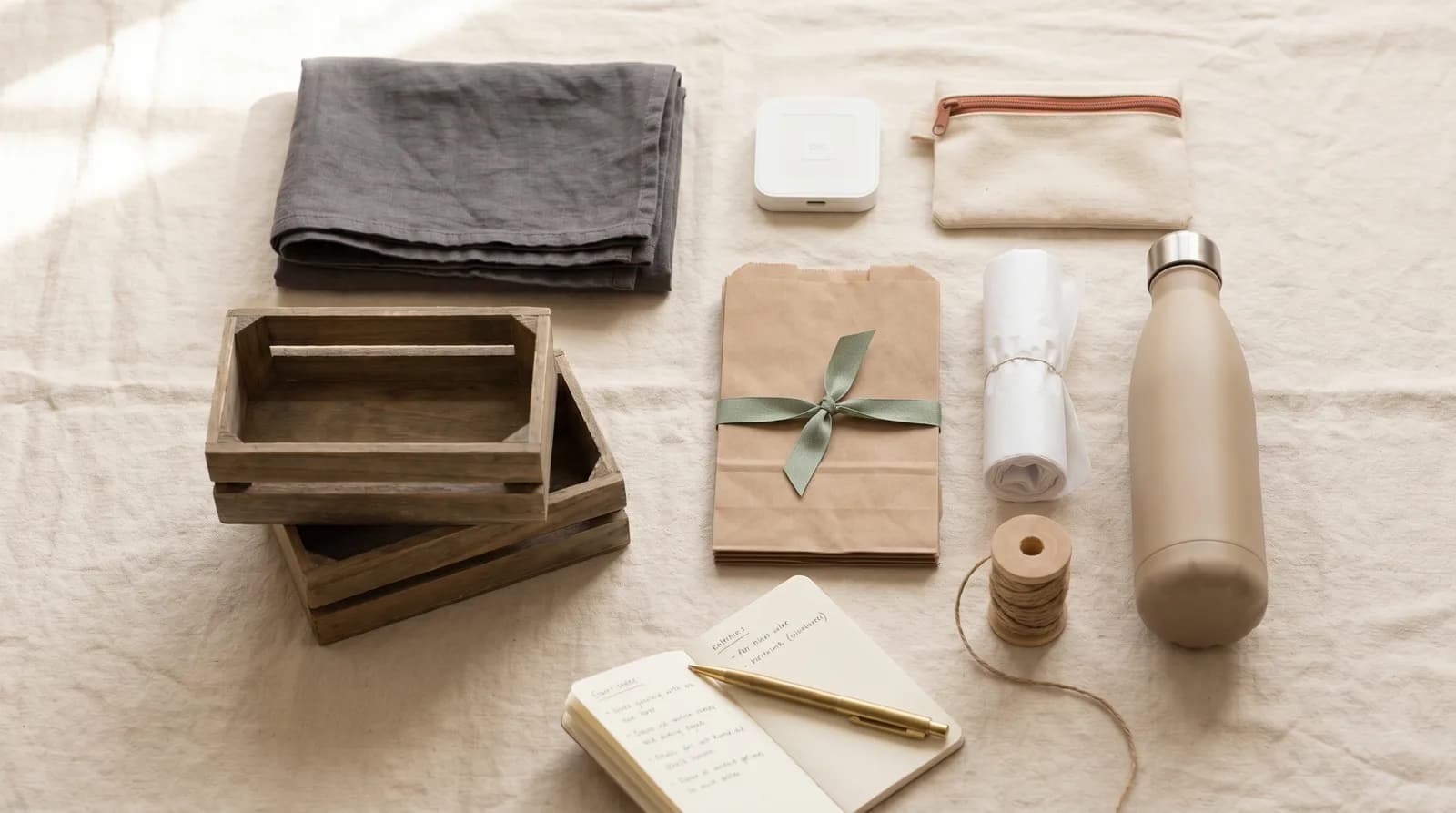
A 6-foot folding table is the workhorse of most first booths. If you don't already own one, a basic folding table is the single most useful purchase on this list. Pair it with a floor-length tablecloth (long enough to hide what you stash underneath; this matters more than you'd think) and you've got the base of a working booth.
Add one or two small wooden crates or risers to create some vertical interest. Flat tables read as "garage sale." Even a single shelf at eye level changes the whole look. If you want more on this, our booth layout guide goes deeper.
A pack of binder clips or table clamps keeps the cloth from sliding if you're outdoors. They cost almost nothing and save a real headache on a breezy day.
Payments: small, tested, ready
A Square reader or equivalent card reader, a phone or tablet you trust, and a backup charging cable. That's it. Don't buy the full POS stand for your first event. Test the reader at home, then test it again at the venue before doors open.
A zippered cash pouch for your float (most vendors start with $50 to $100 in small bills and coins) keeps you from digging through pockets mid-transaction. A small notebook for jotting things down (a customer's name, a custom request, what sold) is worth more than any app on day one.
Packaging: simple, neutral, enough
Bring small kraft paper bags, a pack of tissue paper in a color that's brand appropriate, and a little jute twine if you want a finished look. That's a packaging system. It works for almost any handmade product and costs under $30 to put together.
Custom-branded bags can come later, after you know how much you actually sell at this kind of event.
Personal comfort: this is the one people skip
A padded folding chair (the venue's metal chair will wreck your back by hour 3), an insulated water bottle, and a portable phone battery you charged the night before. Snacks you don't have to plate (we're fans of healthy granola bars). A layer for when the wind kicks up. Sunscreen if you're outside.
Skipping the comfort stuff is the most common rookie mistake. You can have a perfect booth and still have a miserable day if your phone is at 4% and you haven't eaten since 6am. Our outdoor craft fair survival guide gets into more of this if you're booked outside.
The stuff you can skip (for now)
A custom tent. A logo banner. A full POS stand. A second card reader as a backup. Branded packaging with your business name on it. Mannequins, busts, or anything that needs assembly. A second vendor friend you've convinced to come help "for moral support" (if having them there will make you anxious about their experience, do it solo the first time).
Also: more inventory than you can physically carry in 2 trips. Overpacking inventory is its own version of the same problem, and we've written about how many of each product to make for a craft fair in a separate post.
None of these things are bad ideas forever. They're just bad ideas before your first event. You don't yet know what you wish you had.
Your first event is research, not performance
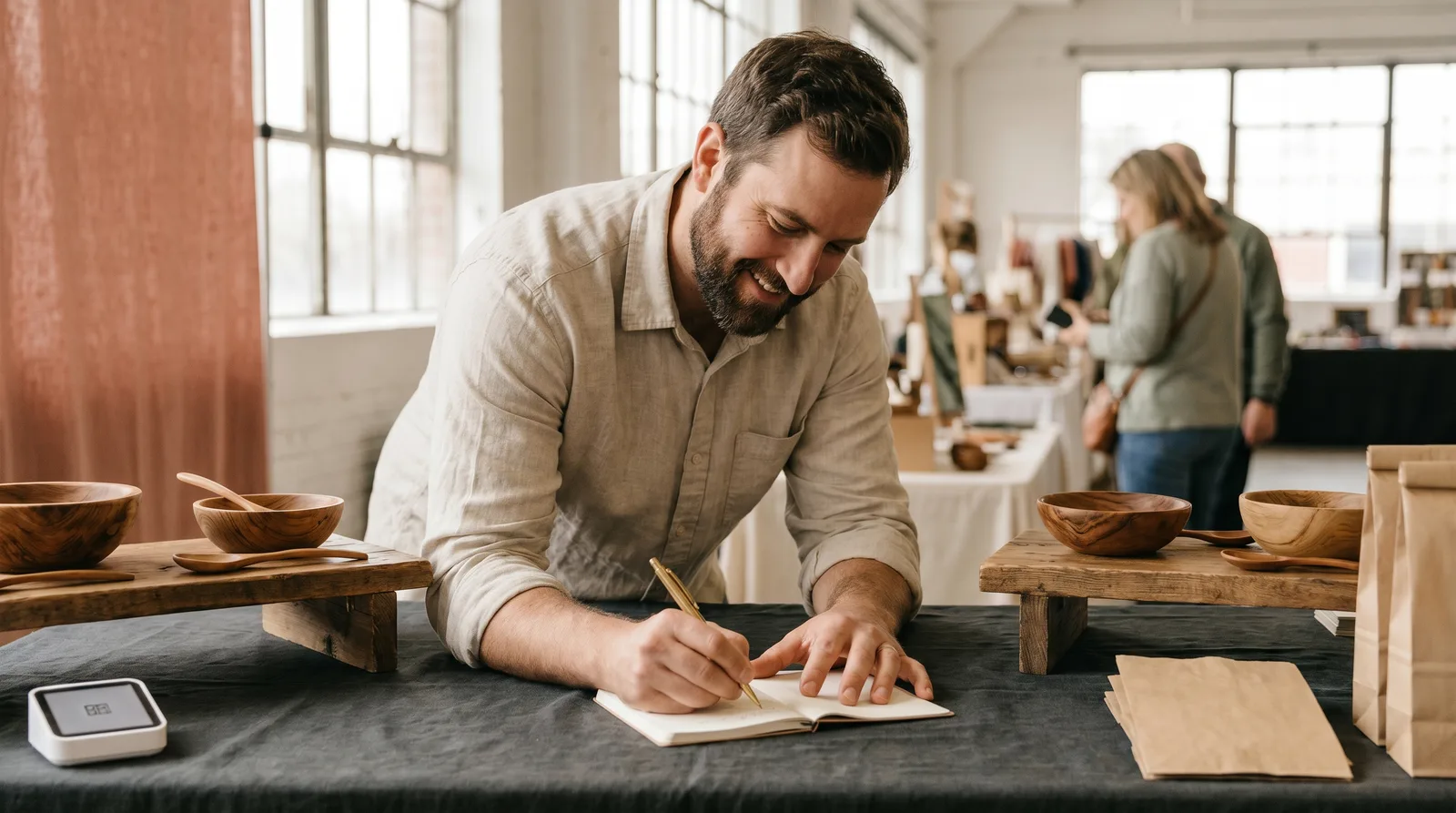
This is the reframe that helps most. Your first market isn't the version of you that will be doing this in 2 years. It's the data-gathering trip that tells you what to actually invest in.
You'll learn what sells, what people pick up and put down, how your prices feel out loud, how long setup actually takes you, what you wish you'd brought, and what sat in a bin all day. None of that is available from blog posts (this one included). It's only available from showing up.
So show up imperfect. Take notes. The booth gets better the second time, and noticeably better the third.
One more thing
After your first event, the most useful thing you can do is write down what worked and what didn't, while it's still fresh. That's the part most vendors skip, and it's the part that turns one event into a system. If you want a tool that holds those notes (and quietly connects them to what actually sold), MyEventPrep was built for exactly that. No setup required to look around.
Good luck with the first one. It's almost always better than you think it'll be.
Frequently asked questions
How much should I spend on my first craft fair booth setup? Most first-time vendors can put together a working booth for $150 to $300, including a folding table, tablecloth, a couple of risers, packaging supplies, and a chair. Anything beyond that is usually optional for event one. The booth fee itself is often the bigger line item.
Do I need a tent for my first craft fair? Only if it's outdoors and the organizer doesn't provide one. For an indoor event, skip it entirely. If you do need one outdoors, borrow before you buy. Tents are bulky, expensive, and easy to set up wrong without help, so renting or borrowing for event one is often smarter than committing $200 to your own.
What's the most overlooked item for a first booth? A phone battery pack and a comfortable chair. Both sound small. Both decide whether hour 5 of a 6-hour event is workable or miserable. A dead phone also means no card reader, which means no sales.
Can I use a plain tablecloth, or does it need to be branded? A plain, floor-length tablecloth in a neutral color (black, charcoal, white) works fine for a first event. Branded covers can come later. What matters more is that it reaches the floor, since most vendors store inventory and bins under the table, and a short cloth puts all of that on display.
How much inventory should I bring to my first event? Less than you think. Most first-time vendors overpack by 2 to 3 times what they actually end up selling. We have a longer post on how many of each product to make for a craft fair, but the short version: plan for the high end of what's realistic, not the absolute max you could fit in the car.