How to Sell at a Farmers Market: A Calm, Step-by-Step Guide

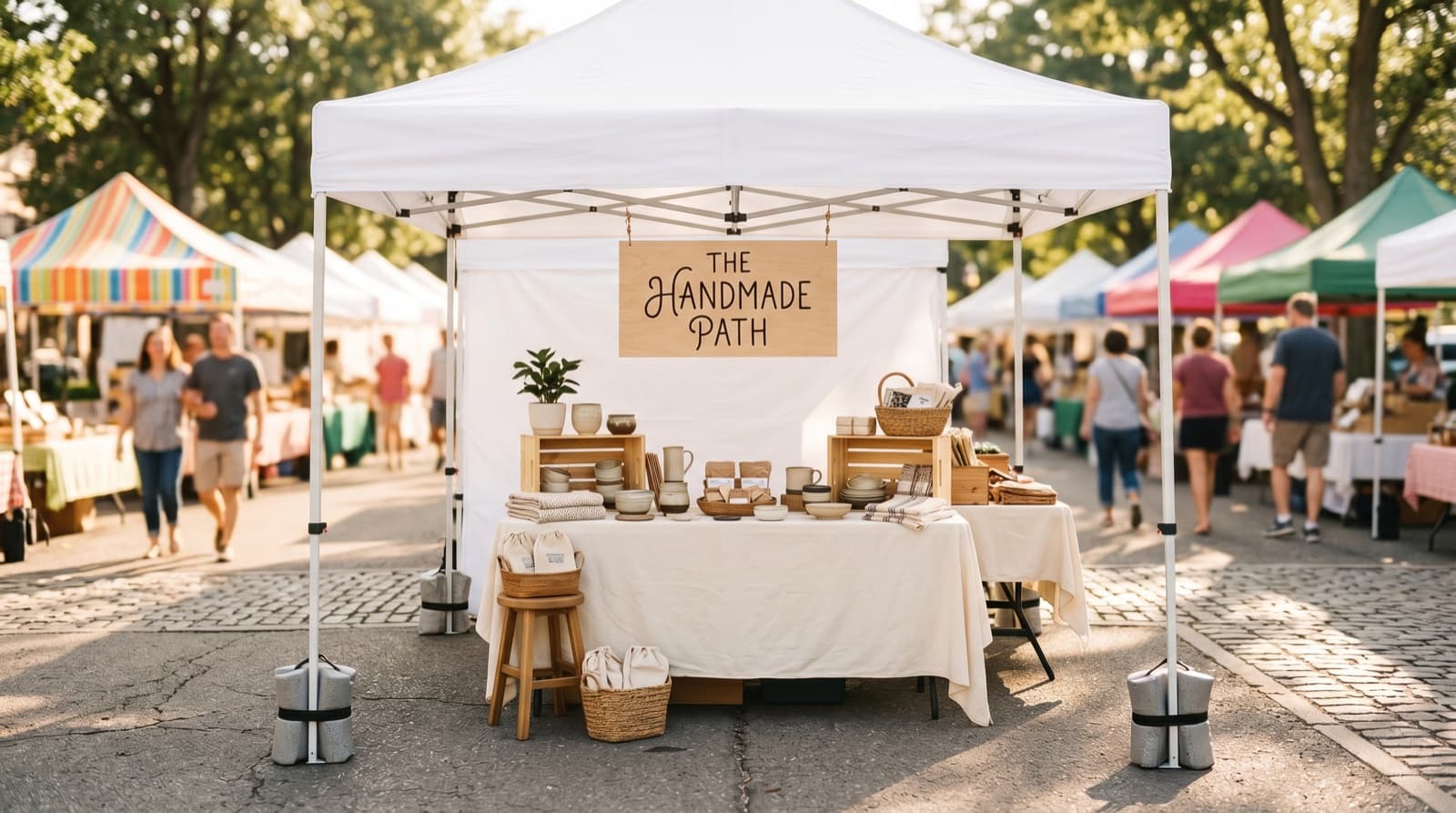
If you're figuring out how to sell at a farmers market, the good news is that the path is shorter than it looks. There's no gatekeeper test, no secret handshake. There's a manager, an application, a fee, and a folding table. That's most of it.
The harder part isn't getting in. It's everything you load into the car the night before, the part where you pack three bins of product for a 4-hour event and bring two of them home again. We'll cover the full setup, but we'll spend real time on that last piece, because it's where a good market day quietly turns into an exhausting one.
There are roughly 8,771 farmers markets across the US, according to USDA data, so the odds are decent that one is near you. Here's how to get a booth at one, step by step.
How Do You Start Selling at a Farmers Market?
To sell at a farmers market, contact the market manager, submit the vendor application, pay the stall fee (commonly $20 to $60 per market day), and bring your own table, tent, and signage. Most markets list the manager's email on their website. The application sorts out the rest.
That's the whole loop. Here it is as 4 steps, in the order that saves you the most hassle:
- Find the market. Each one has its own rules, fees, and vendor mix, so start by picking where you want to be.
- Email the manager. A two-line note ("Hi, I make X, do you have openings this season?") tells you fast whether it's worth applying.
- Apply and pay. Submit the vendor application and the stall fee once you're accepted.
- Pack your booth. Bring your own table, tent, weights, signage, and a way to take money.
Do these in order and you avoid the classic mistake: buying a tent and a pile of inventory before you've confirmed a spot. If you're still deciding which events to target, our guide on finding craft fairs and markets near you covers how to size up a market before you commit.
How Much Does a Booth at a Farmers Market Cost?
A booth at a farmers market usually averages $20 to $60 per market day, with busy urban markets charging $75 to $100 or more. Many markets also charge a one-time application fee of $25 to $50, and seasonal spots often run $400 to $800 for the full run.
Here's the quick version of the costs:
| Cost | Typical range | Notes |
|---|---|---|
| Daily stall fee | $20 to $60 | $75 to $100+ at busy urban markets |
| Application fee | $25 to $50 | Usually non-refundable, even if you're not accepted |
| Full season | $400 to $800 | Cheaper per day than paying weekly |
Daily rates vary by city. The Salt Lake City Downtown Farmers Market lists $40 per day for a 10' x 10' booth, while Overland Park, Kansas charges $42 on Saturdays. Smaller markets can be cheaper, sometimes $15 to $25 for members.
The fee itself isn't the decision, though. What matters is whether a market earns it back. We dig into fee structures, the add-ons nobody mentions, and the break-even math in our full guide to farmers market booth fees, and our free booth fee evaluator runs the numbers for you before you commit.
How Do You Get a Farmers Market Booth?
To get a farmers market booth, find the market's website, contact the manager, and fill out the vendor application. The form asks for your business name, contact info, what you sell, and which dates you want. Some markets review applications by committee, which can take 2 to 4 weeks.
Apply early. Many markets close new-vendor applications well before the season starts, sometimes by late March for a summer market. Popular spots fill fast, and waitlists are common.
Be ready to share a little about your work. A good vendor application often asks for photos, your social media, and where else you've sold. You don't need a long resume. A clear photo of your table and an honest note about what you make is plenty for most managers.
If a market says no or is full, ask to be added to the waitlist and try a smaller or newer market in the meantime. First-season slots open up more often than you'd think.
What Permits and Licenses Do You Need to Sell at a Farmers Market?
Most farmers market vendors need a state sales tax permit to collect and remit sales tax, and many markets require proof of general liability insurance. If you sell food made at home, your state's cottage food law decides what you can sell without a commercial kitchen.
Rules change by state and even by county, so this is the one area worth a direct check. The three you'll most often run into:
- Sales tax permit. Most states require a sales tax permit before you sell anything taxable. It's usually free or cheap to get, and almost every vendor needs one.
- Cottage food approval. Cottage food laws let you sell shelf-stable items like baked goods, jams, and candy from a home kitchen in many states, but not "potentially hazardous" foods like custard pies or cheese. Non-food makers can usually skip this.
- Liability insurance. Many markets require a general liability policy and a certificate naming the market, sometimes 30 days before your first day.
A quick email to the manager will tell you exactly what your market wants, so you're not guessing.
What to Bring to Your Booth
Once you're approved, the gear is straightforward. Most markets give you a 10' x 10' space and expect you to bring everything that fills it.
Here's the core kit:
- A 10' x 10' pop-up canopy. The standard footprint, and a decent new one runs $100 to $250.
- Tent weights. Outdoor markets often require 20 to 40 lbs on each leg, because wind and canopies are a bad mix.
- One 6-foot folding table plus a tablecloth long enough to hide the bins underneath.
- Clear signage. Your name and prices should be readable from 10 to 15 feet away, or people walk past without slowing down.
- A way to take money. A card reader plus a small cash float of singles and fives.
- A chair, water, and a small market kit (pen, tape, scissors) so the day doesn't slowly grate on you.
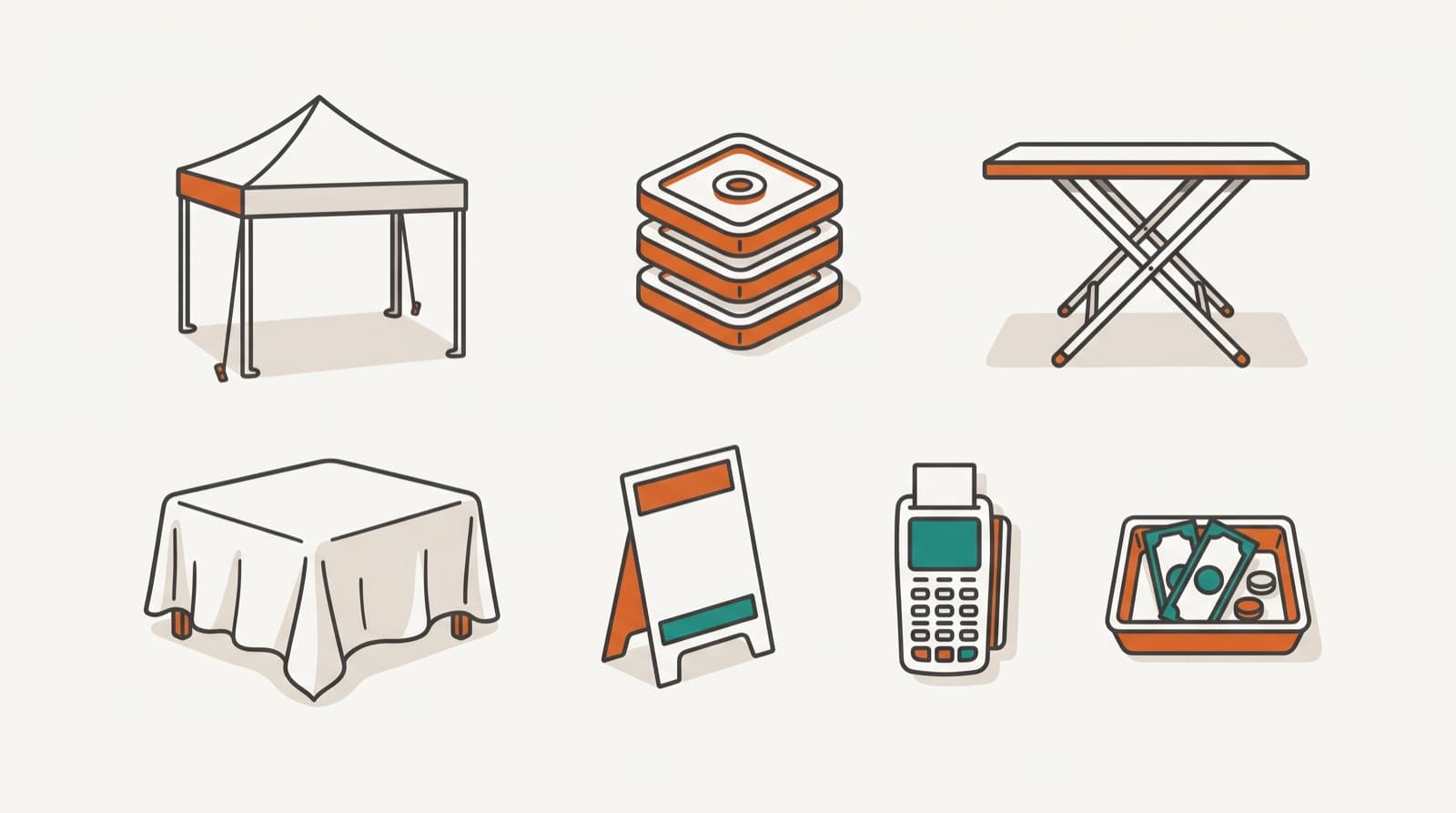
For the full rundown, our first-market essentials list and the complete packing checklist cover everything down to the painter's tape and snacks.
The Part Most New Vendors Get Wrong: Bringing Too Much
Here's where we'll be honest. The most common mistake isn't a missing permit or a flimsy tent. It's overpacking.
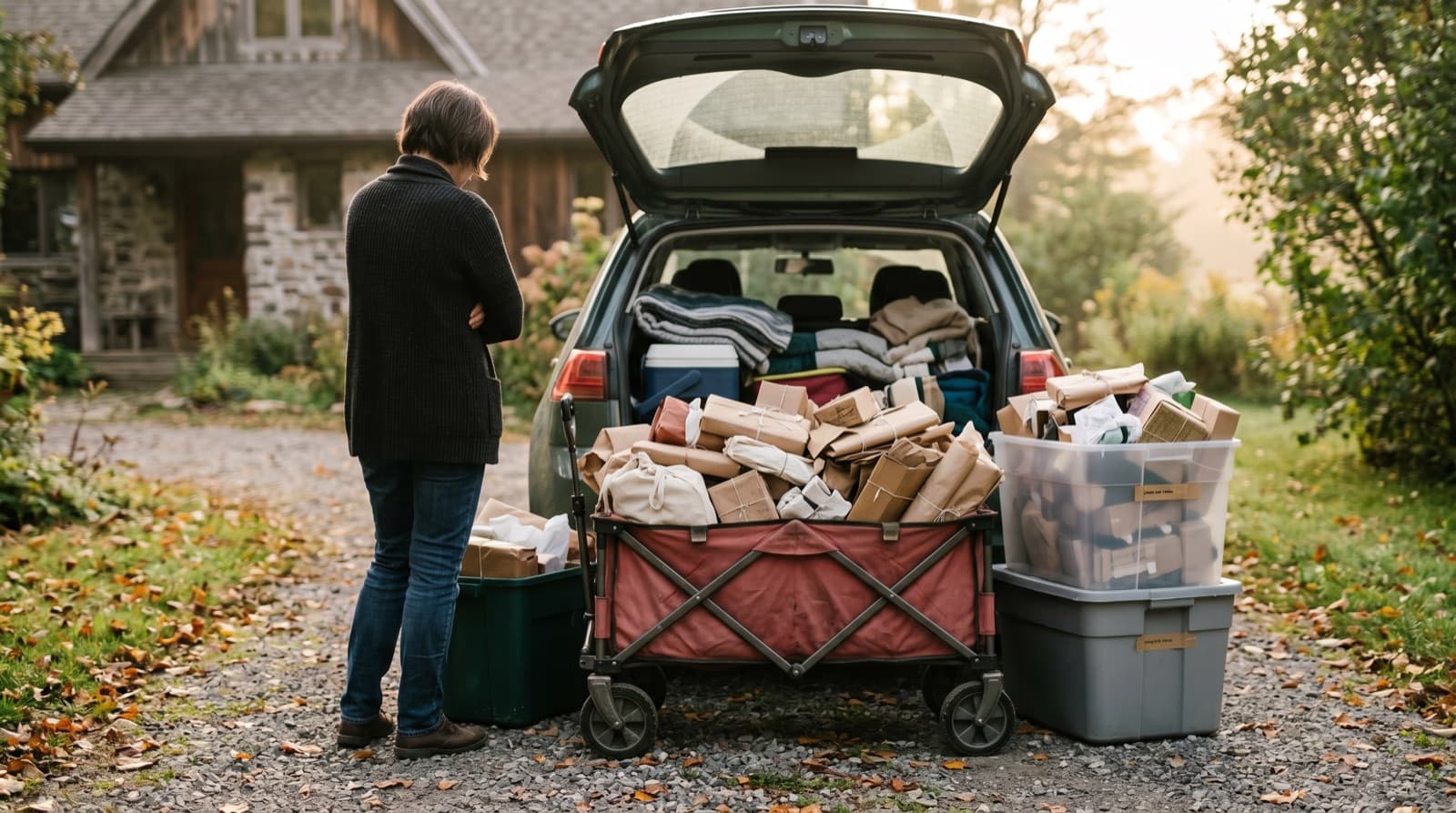
We've watched vendors (and been the vendor) who hauls three wagonloads of product to a 4-hour market and brings most of it home. It's exhausting to load, exhausting to unload, and it crowds the table so the good stuff gets lost. More product on the table does not mean more sales. It usually just means more lifting.
The instinct makes sense. You don't want to sell out and disappoint someone. But the cost of bringing too much is real, and it's quiet: a sore back, a long teardown, and no clear idea of what actually earned its spot.
When we looked at the data for one of our own products, a 3D-printed Pokemon deck box, the numbers were blunt. It took a long time to make and barely sold. We'd been bringing a full bin of them out of habit. Seeing the sell-through in black and white made the call easy: we stopped making them. That's one less thing to pack, and nothing was lost.
How Do You Decide What to Actually Bring?
If you've sold anywhere before, online or at other events, let those numbers guide you: pack more of what moves and less of what doesn't. If it's your very first market, you don't have data yet, so bring a modest, balanced spread and treat the day as research. Either way, write down what sells. After a market or two, packing turns from a gamble into a short, calm decision.
A simple way to start, depending on where you are:
- First market, no data yet. Bring a balanced spread across your products and note what moves. The day is research as much as revenue.
- You sell online or elsewhere. Use those numbers as a starting map. What people buy there is a reasonable bet here too.
- A few markets in. Pack toward your proven winners, and give the slow movers less space or a rest.
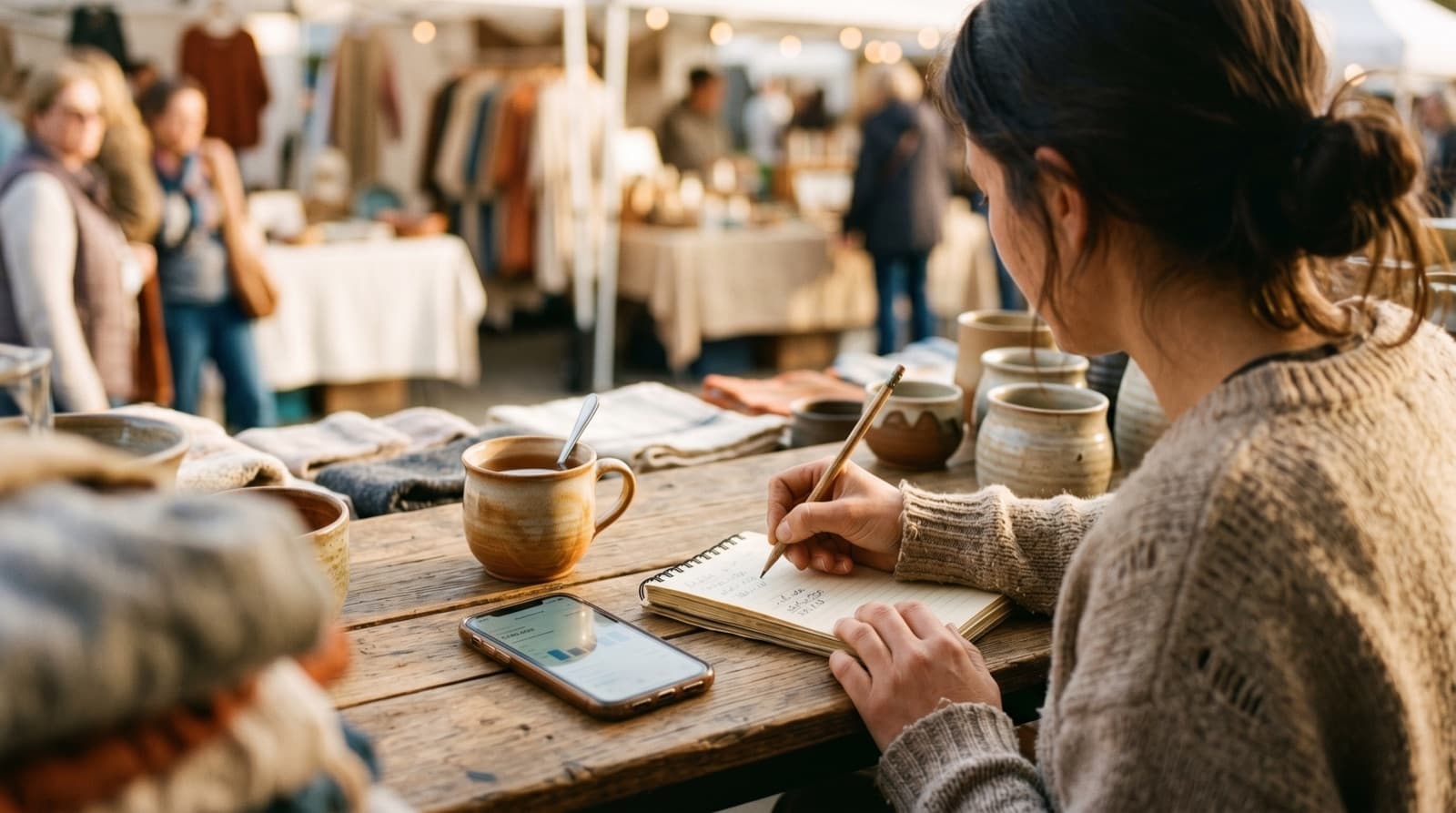
A quick post-event debrief right after teardown captures the pattern while it's fresh. Over a few markets the winners get obvious, and if you use Square you can turn your sales reports into a packing plan.
Once you trust the data, the next step is making the right amounts in the first place. Our guide on how many of each product to make helps you match production to demand, so you're not up until midnight building things that won't sell. This is exactly what MyEventPrep is built for: tracking what sold so the next market is lighter and clearer.
Wrapping Up
Selling at a farmers market comes down to a few plain steps: find a market, apply, pay the stall fee, sort your permits, and set up a tidy 10' x 10' booth. None of it is as hard as the night-before nerves make it feel.
The part that separates a draining day from an easy one isn't effort. It's bringing the right amount, based on what your past sales actually show. Start small, write down what happens, and let each market make the next one simpler.
When you're ready to stop guessing what to pack, sign up free at MyEventPrep and let your own sales data do the heavy lifting. Your back will thank you.
Frequently Asked Questions
How much does it cost to sell at a farmers market?
A standard booth typically runs somewhere between $20 and $60 a day, though busy urban markets can charge $75 to $100 or more. Expect a separate one-time application fee of $25 to $50, which is usually non-refundable. Seasonal spots often cost $400 to $800 for the full run, which works out cheaper per day than paying weekly.
Do I need a license to sell at a farmers market?
In most states you need a sales tax permit to collect and remit tax on what you sell, and many markets also require proof of general liability insurance. If you sell homemade food, your state's cottage food law sets what you can make at home without a commercial kitchen. Rules vary by state and county, so check with your local agencies and the market manager.
How do I get a booth at a farmers market?
Find the market's website, email the manager, and complete the vendor application, which asks for your business details, what you sell, and your preferred dates. Some markets review applications by committee, taking 2 to 4 weeks. Apply early, since many markets close new-vendor applications before the season starts and popular spots fill fast.
What do I need to bring to a farmers market booth?
For a standard 10' x 10' space, bring a pop-up canopy, weights for each leg (outdoor markets often require 20 to 40 lbs per leg), a folding table, a tablecloth, a chair, clear signage, and a way to take payment. Add your product, a cash float, and a small survival kit with water and snacks. Then bring less product than you think you need.
How much product should I bring to my first market?
For a first market, bring a reasonable spread across your products rather than a full load of everything, and track what sells. Overpacking is the most common rookie mistake: it tires you out and crowds the table without adding sales. After a market or two, your sell-through data will show what's worth bringing, so you can pack lighter and smarter.