Farmers Market Booth Setup and Ideas: A Calm Guide to a Booth That Sells

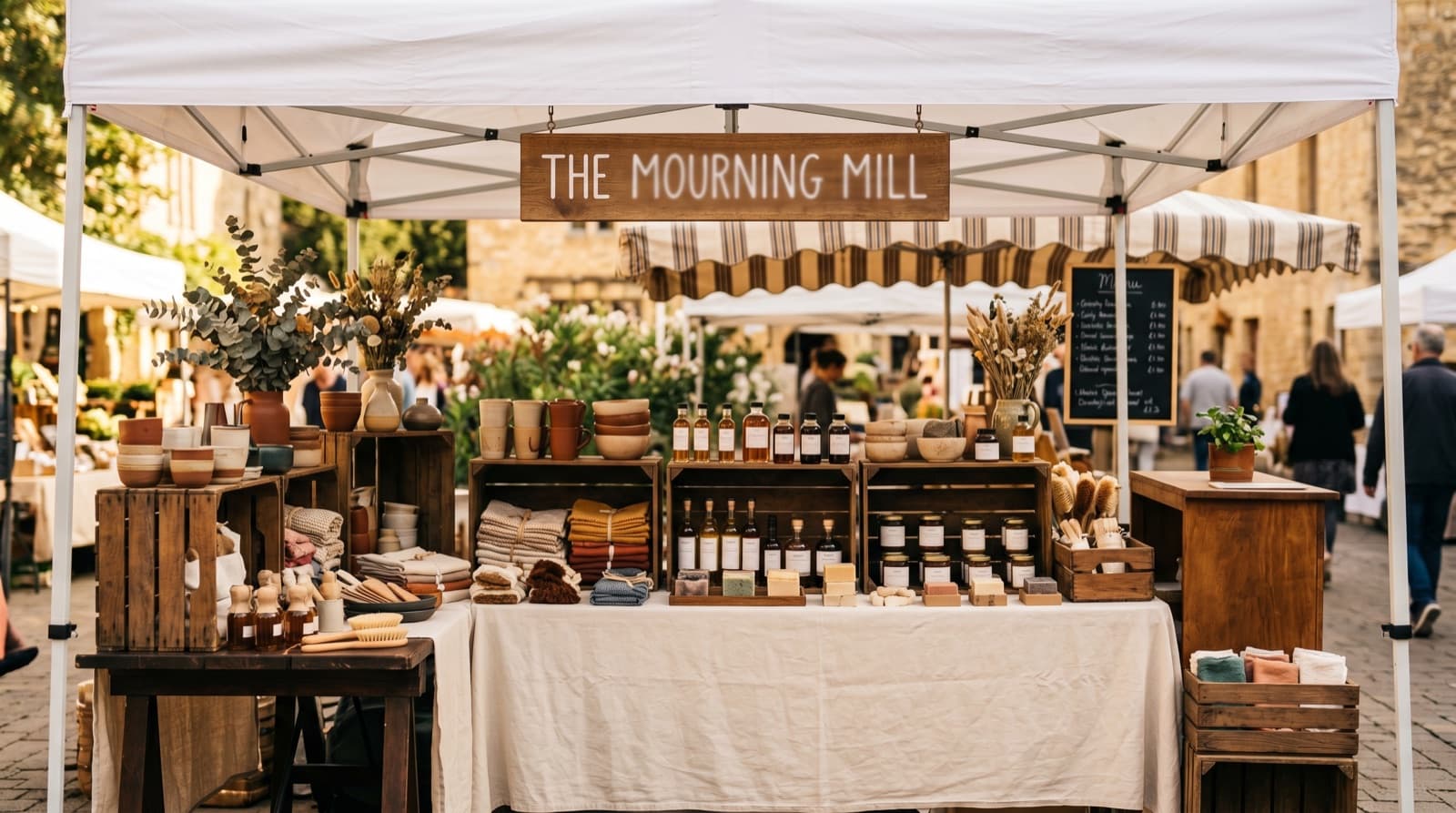
Your farmers market booth is the whole store. It's the sign, the shelves, the checkout, and the first impression, all packed into a 10' x 10' square you build from scratch in 20 minutes. No pressure.
Here's the reassuring part: a booth that sells isn't about money or a perfect aesthetic. What matters more than budget is intention. A booth that looks like someone thought about the layout will outsell one where products got dumped on a table. That's good news, because thinking is free.
This guide covers the full farmers market booth setup, from the gear you need to the layout tricks that pull people in, plus the one mistake that quietly costs sales. We'll keep it practical, and we'll keep it calm. For the steps before setup (applying, fees, permits), start with our pillar guide on how to sell at a farmers market.
What Do You Need for a Farmers Market Booth?
A farmers market booth needs a 10' x 10' pop-up canopy, weights for each leg, a folding table, a tablecloth, clear signage, and a way to take payment. That's the core kit. Everything else is an upgrade, not a requirement.
Here's the starter setup at a glance:
| Item | Why it matters | Rough cost |
|---|---|---|
| 10' x 10' pop-up canopy | Your shelter and your storefront | $100 to $250 new |
| Weights (one per leg) | Often required; wind and tents don't mix | $40 to $80 |
| 6-foot folding table | Display surface; one is enough to start | $40 to $70 |
| Tablecloth (floor length) | Hides bins, looks finished | $15 to $30 |
| Signage | Name and prices readable from a distance | $20 to $60 |
| Payment kit | Card reader plus a small cash float | $0 to $50 |
Two pieces of gear get underbought, so plan for them now. Outdoor markets often require 20 to 40 lbs of weight on each leg, because a gust can turn a tent into a sail. And signage: your name and prices should be readable from 10 to 15 feet away, or shoppers drift past without slowing down.
For the rest of the load-out, our first-market essentials list and the complete packing checklist cover the small stuff that's easy to forget, like a cash float, tape, and water.
How Do You Set Up a Farmers Market Booth That Sells?
Set up a booth that sells by adding height, grouping products by type, and pricing every item. Stand beside your table, not behind it, so you can greet people without a barrier between you. Shoppers should understand what you sell within a few seconds of glancing in.
A few moves that consistently help:
- Build up, not just out. Shelves, crates, and risers draw attention from farther away and let browsers actually see what's on offer. A flat table reads as empty even when it's full.
- Group like with like. Cluster products by type so customers grasp your full range fast, and color-block them to signal variety at a glance.
- Step out from behind the table. Pull your table back a foot or two so you can stand at the front and greet people instead of being trapped behind a wall of product.
- Price everything. Shoppers who can't find a price often won't ask. They'll just move on.
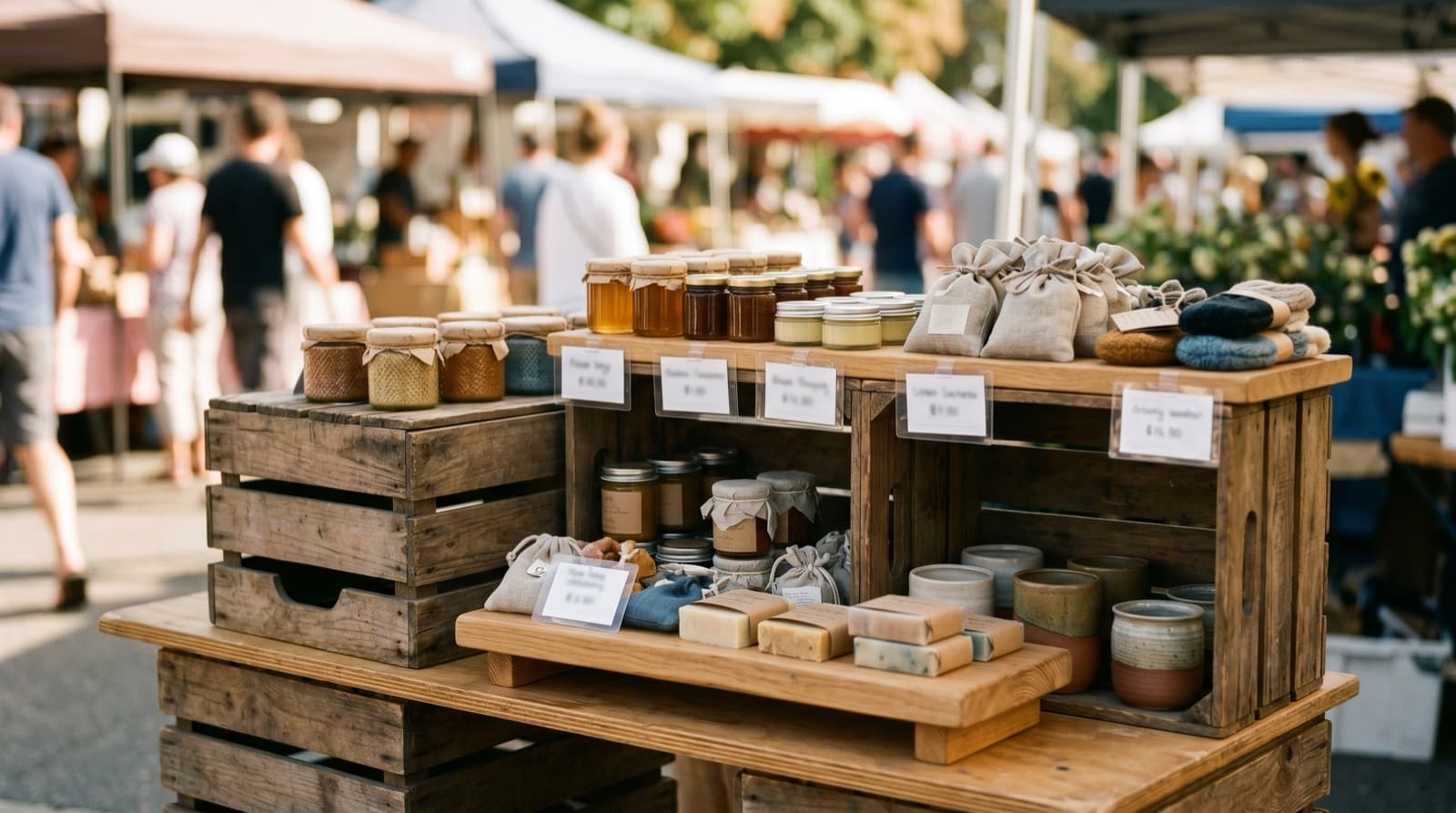
If you're laying out a larger or corner space, our booth layout guide walks through arranging the footprint for flow.
Farmers Market Booth Ideas on a Budget
You can build a warm, polished booth for under $100 in extras. The trick is borrowing height and texture from things you already own or can thrift.
A few ideas that punch above their cost:
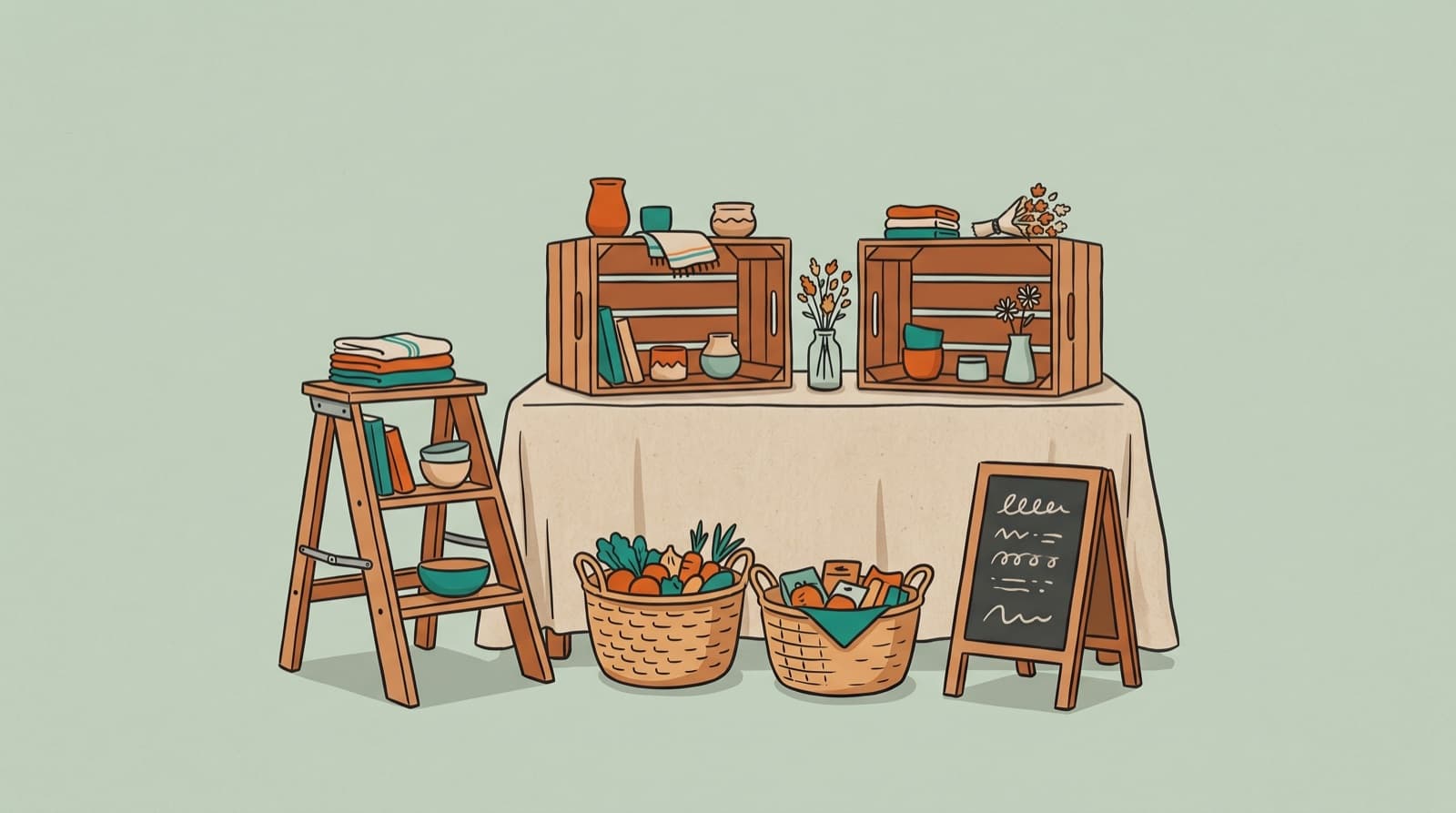
- Wooden crates flipped on their sides make instant shelving, and stack for free tiers.
- Baskets corral small items and add a gathered, handmade feel.
- A floor-length tablecloth hides bins and folding legs, which instantly makes a booth look more finished and intentional.
- A small chalkboard (about $10) flexes from your name one week to a special the next.
- Repurposed household pieces like a step stool or ladder add the height that gets you noticed, at no cost.
One clear, well-made name sign does more than a dozen scattered labels. If you sell outdoors, plan for sun and wind before they plan for you. Our outdoor event survival guide covers weights, shade, and the rain plan that saves a market day.
How Much Does a Farmers Market Booth Cost?
A farmers market booth has two costs: the gear (a one-time $150 to $400 for canopy, table, weights, and signage) and the stall fee (commonly $20 to $60 per market day). The gear is mostly a one-and-done expense; the stall fee is the recurring one.
The fee is the number worth watching, and it deserves real math rather than a gut call. Our full guide to farmers market booth fees breaks down flat versus percentage fees, the hidden add-ons, and how much you need to sell to justify a spot. The free booth fee evaluator gives you a quick read before you commit.
The Mistake Most Vendors Make: A Crowded Table
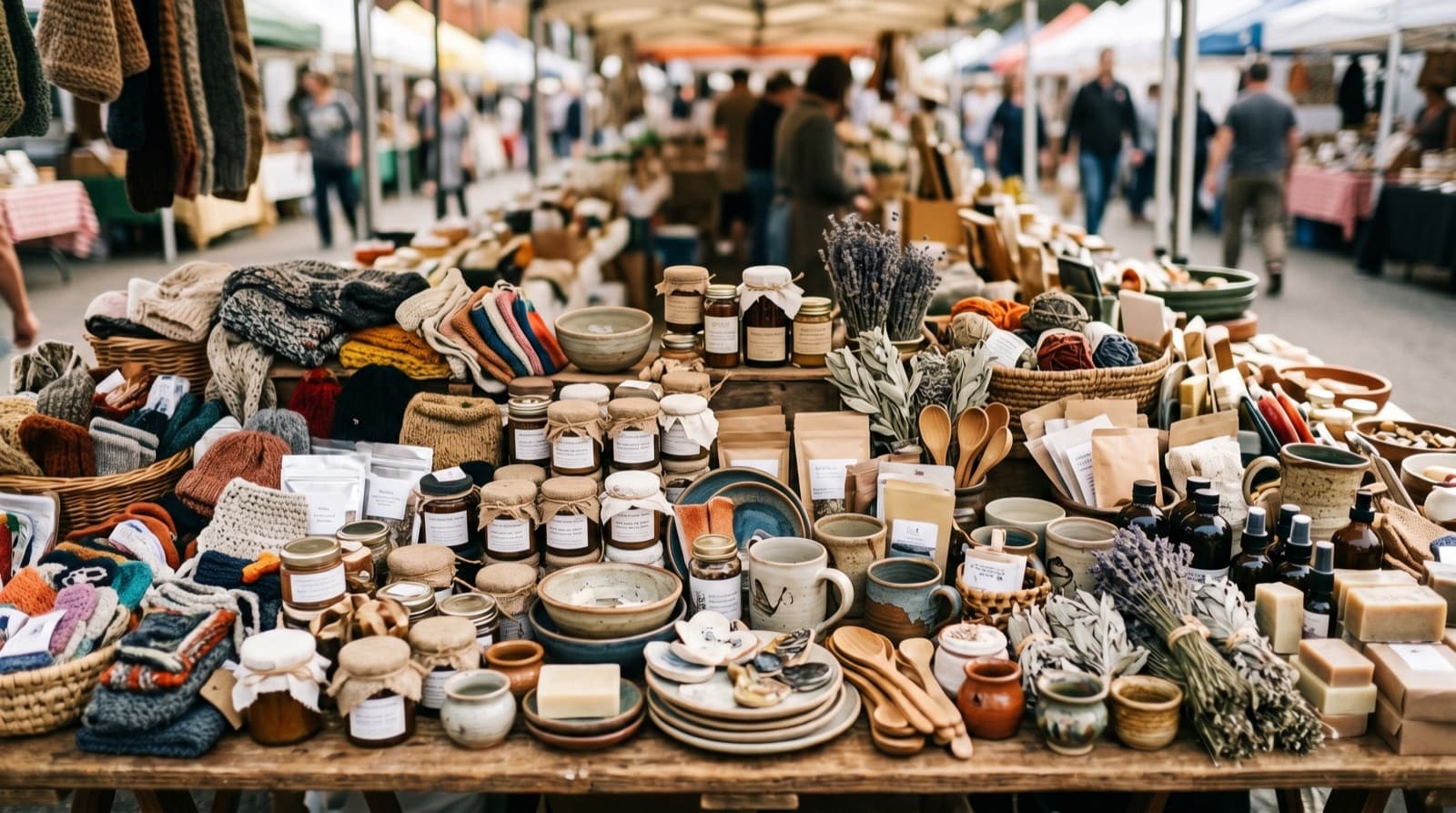
Here's the honest part. The most common booth problem isn't a flimsy tent or a dull sign. It's too much stuff on the table.
We get the instinct. More product feels like more chances to sell. But a packed table hides your best items in the clutter, and shoppers can't tell what to look at. The eye needs room to land somewhere.
A booth with breathing space reads as curated, not picked-over. Fewer items, shown well, almost always beat a full table where everything competes for attention. Less really can sell more.
How Do You Decide What to Put on the Table?
Decide what to display by looking at what actually sells, not what you happen to have. Track each product's sell-through, then give your proven winners the prime, eye-level spots. Slow movers get less space, or stay home. A focused table is easier to set up and easier to shop.
If you've sold before, online or at other events, those numbers are your starting map. If this is your first market, bring a sensible spread and treat the day as research, writing down what moves.
A quick post-event debrief right after teardown captures the pattern while it's fresh. Over a few markets, your winners become obvious, and you can turn your sales data into a packing and display plan. That's exactly what MyEventPrep is built to do: show you what earns its spot, so your booth gets sharper every time.
Wrapping Up
A farmers market booth that sells comes down to three things: solid basics (weighted canopy, table, signage), a layout with height and clear prices, and a table stocked with your real winners instead of everything you own.
None of it requires a big budget or a design degree. It just takes a little intention, and a willingness to bring less once your sales data shows you what's worth the space.
When you're ready to build each booth around what actually sells, sign up free at MyEventPrep. Your setup gets easier, and your table gets smarter, one market at a time.
Frequently Asked Questions
What size is a farmers market booth?
The standard farmers market booth is a 10' x 10' space, which fits one 10' x 10' pop-up canopy and one or two tables. Some markets offer larger or corner spots for a higher fee. Always check your space size before buying gear, since a few markets use 8' or 12' widths.
How much does it cost to set up a farmers market booth?
Expect a one-time gear cost of roughly $150 to $400 for a canopy, table, weights, tablecloth, and signage. On top of that, most markets charge a stall fee of $20 to $60 per market day, or $400 to $800 for a full season. Buying used gear can cut the startup cost significantly.
Do I need weights for my farmers market canopy?
Yes. Most outdoor markets require 20 to 40 lbs of weight on each canopy leg, because wind and pop-up tents are a dangerous mix. Weight plates work on pavement, while stakes work on grass. Many markets will check, and some won't let you set up without them.
How do I make my farmers market booth stand out?
Add height with shelves or crates so people see you from a distance, group products by type, and put a clear price on everything. Keep the table uncluttered so your best items get noticed. A clean, intentional booth almost always outsells a crowded one.
What should I put on my farmers market table?
Lead with your proven sellers at eye level, and give them room to breathe. If you don't have sales history yet, bring a balanced spread and note what moves. After a few markets, let your sell-through data decide what earns the prime spots.