Farmers Market Booth Fees: What They Cost and When They're Too High

If you're pricing out farmers market booth fees for the first time, you'll notice something quickly: the fee is the easiest number to find and the least useful one on its own. A $40 booth at a busy Saturday market can be a bargain. A $25 booth at a market nobody visits is expensive.
The fee only means something next to 2 other numbers: what it actually costs you to show up, and what you can realistically sell once you're there.
This post covers what booths really cost (including the add-ons that don't show up in the listing), how markets structure their fees, and the simple math for deciding when a fee is too high for your business. If you're new to markets entirely, our guide on how to sell at a farmers market walks through the whole process. If you're still building your list of events, start with finding events near you, then come back and run the numbers.
How Much Do Farmers Market Booth Fees Cost?
Most farmers market booths cost $20 to $50 per day. In a Farmers Market Coalition survey of 66 markets, the majority charged vendors less than $26 per week for a stall. Seasonal passes typically run $200 to $450. Craft fairs are pricier: $25 to $100 for community markets, and $700 or more for premium juried shows.
The spread is real, so here are concrete examples. The Bozeman Farmers Market charges growers $20 a week. Sandpoint Farmers' Market runs $15 to $40 for a single day depending on booth size, with seasonal passes from $200 to $450. On the craft side, TheCraftMap's fee guide puts community events under $100, standard fairs in the low hundreds, and established juried festivals well beyond that.
What drives the price up: attendance, location, market reputation, and whether the event is juried. A high fee isn't automatically a bad deal. Bigger fees often buy bigger crowds. The question is whether they buy your crowd, and that's a question fees alone can't answer.
Flat Fee, Percentage, or Both?
Markets charge in 3 ways: a flat fee per day or season, a percentage of your sales (usually 5 to 10%), or a hybrid of the two. Flat fees reward strong sales days. Percentage fees lower your risk on slow days, since a bad market costs you less.
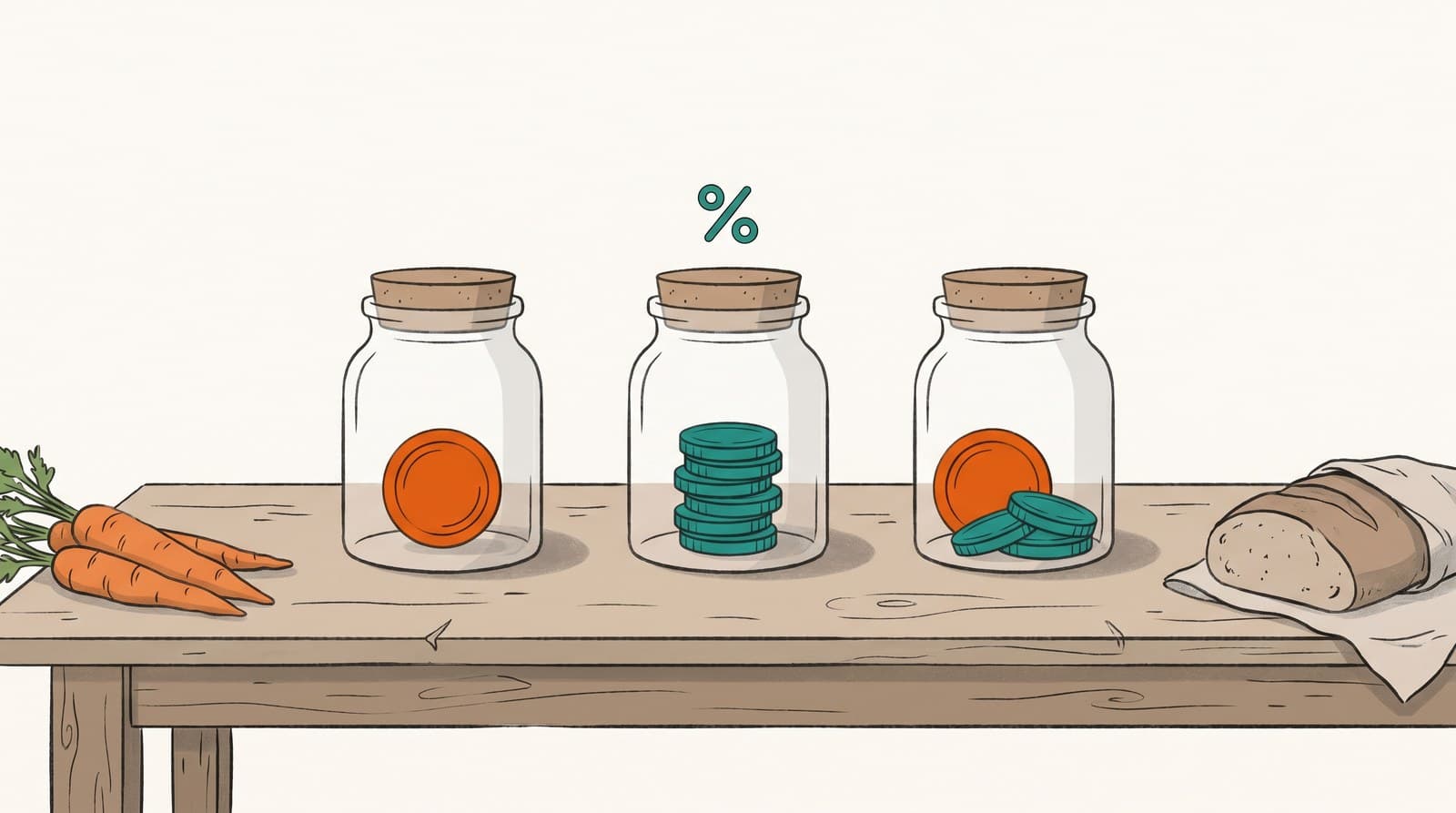
The flat vs. percentage trade-off mostly comes down to predictability versus protection. Markets like flat fees because revenue is steady. Vendors with proven products tend to prefer them too: on a $1,000 day, a $35 flat fee beats 6% every time.
Hybrids split the difference. The Farmers Market Coalition cites a market that charges a $35 minimum, then 5% of sales past $700, so small days stay cheap and big days share the upside.
If you're new and unsure what you'll sell, a percentage market is a gentler place to find out. If you've got sales history that says you'll clear $800, take the flat fee and keep the difference.
The Add-Ons Nobody Mentions
The advertised booth fee is the floor, not the price. Before you commit, look for these:
- Application and jury fees. Often $20 to $50, and usually nonrefundable whether you get in or not. Renegade Craft charges a $35 application fee per fair just to be considered.
- Electricity. Commonly $25 to $100 extra per event, and sometimes limited to certain spots that go early.
- Cleanup or damage deposits. Refundable if your space is spotless, but it's still cash out of pocket on the day.
- Your own costs. Gas, parking, table, tent, weights, signage, payment hardware. Made Urban counts 10 distinct costs of selling at events, and the booth fee is only 1 of them.
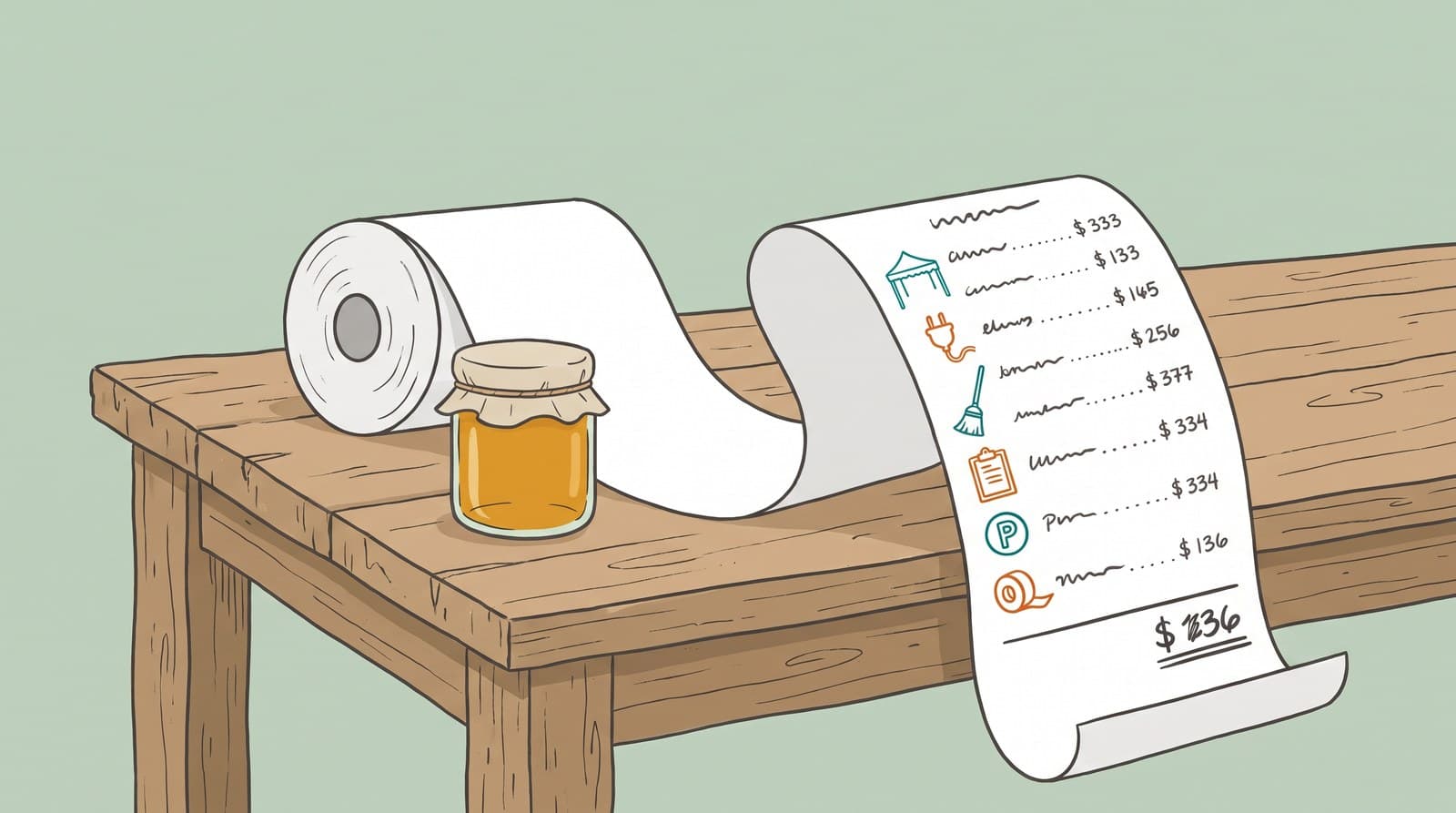
None of these are scams. They're just the difference between the number on the application and the number that matters: your true cost to show up.
How Much Do You Need to Sell to Justify a Booth Fee?
The common rule: gross at least 3x your total event cost to break even after expenses, and aim for 7-10x the booth fee for a show that's truly worth your time. So a $50 booth wants $350 to $500 in sales, and a $200 booth wants $1,400 or more.
You'll see versions of this everywhere: SmartAsset cites 10x as the mark of a profitable show, and vendor guides suggest planning inventory around 8-10x the fee.
But rules of thumb are someone else's averages. The honest version requires your own numbers. The University of Maryland Extension tells the story of a farmer who "made $300" at a $15 market, until he counted transport, equipment, supplies, and the 4 hours behind the table. The $300 shrank fast. Your version of that math needs your material costs, your drive, and your hours.
That's also why revenue per hour is a better lens than gross sales. A $400 day at a 4-hour market can beat a $600 day at a 10-hour festival. After the event, the show profit calculator will tell you what you actually kept.
When Is a Booth Fee Too High?
A booth fee is too high when you can't realistically gross 3x your total event cost with your products, your prices, and that market's crowd. Not the crowd the organizer promises. The one that actually shows up.
Some signals worth respecting:
- The math doesn't work at your average sale. If your average transaction is $12 and the fee plus costs total $250, you need 60+ sales to break even. Has any event ever given you 60 sales?
- The fee is out of scale with the event. A $300 fee for a first-year market with no attendance history is a gamble priced like a sure thing. For food vendors especially, a full market day can already cost $150 to $400 before the fee does anything.
- Stacked nonrefundables. Application fee, jury fee, then a booth fee due before acceptance. Each is normal alone; together they're a sign to read the fine print. Our guide to craft fair red flags covers the patterns that should make you pause.
- Festival-tier pricing without festival-tier draw. Budgeting guides for festival artists assume thousands of attendees behind those bigger fees. If the attendance isn't there, the price shouldn't be either.

And 1 more that's easy to forget: a fee can be too high this year and fine next year, once you have more products, higher prices, or better data about what sells.
Do the Math Before You Apply
You don't need a spreadsheet for any of this. Our free Booth Fee Evaluator takes the booth fee, your product category, your drive, and your prep time, and gives you a calm, honest read on whether the show is likely to pay for itself. No account needed.
And once you're tracking events in MyEventPrep, every event page shows a live breakeven number as you enter the booth fee, travel, and supplies, so you know the revenue you need to clear the day before you've packed a single bin. After the show, a 5-minute post-event debrief turns that day into data for the next decision.
The Fee Isn't the Decision. The Ratio Is.
Booth fees are wildly variable, and that's fine. $20 markets and $700 festivals can both be great deals, and both can be money pits. The fee tells you almost nothing until you put it next to your total cost to show up and your realistic sales for that crowd.
So before your next application: add up the real cost, multiply by 3 for your floor, and be honest about whether that number matches anything you've sold before. 2 minutes of math beats a season of expensive Saturdays. And once the fee checks out, the next step is setting up a booth that sells.
Run your next event through the free Booth Fee Evaluator and get your answer before you pay anyone. And if you want the breakeven math done for every event automatically, MyEventPrep is free to start.
Frequently Asked Questions
How much does it cost to get a booth at a farmers market?
Most farmers market booths cost $20 to $50 per day, and a Farmers Market Coalition survey found the majority of markets charge under $26 per week. Big-city and high-traffic markets can run $100 or more per day, while small community markets can be $15 or less.
Why are some craft fair booth fees so expensive?
Higher fees usually reflect attendance, advertising, location, and jurying. An established juried festival spends heavily to draw thousands of shoppers, and vendors pay for access to that crowd. The fee is only overpriced when the draw doesn't match it, so always check attendance history before paying festival-tier prices.
Is a seasonal market pass worth it?
A seasonal pass (often $200 to $450) is worth it when the per-week math beats the daily rate and you're confident you'll attend most weeks. Divide the pass price by the number of markets you'll realistically make, not the number on the calendar, and compare that to the drop-in fee.
What percentage of sales is a fair market fee?
Percentage-based markets typically charge 5 to 10% of your daily sales. That structure protects you on slow days and costs you more on great ones. If your sales are proven and strong, a flat fee usually works out cheaper; if you're new or seasonal, a percentage fee lowers your risk.
How do I know if a booth fee is worth it before applying?
Add up the full cost to attend: fee, travel, parking, supplies, and any application or electricity charges. Then check whether 3x that total is a realistic sales day for your products at that event's crowd size. If it isn't, skip it. A free tool like MyEventPrep's Booth Fee Evaluator runs this math in about a minute.