Craft Fair Vendor Applications: How to Apply (and Actually Get In)


Filling out your first craft fair vendor application can feel like applying to college all over again. There are photos to upload, fees to pay, deadlines that sneak up, and a jury you'll never meet deciding whether you're in. The good news: most of it is figure-out-able, and a few small habits make a real difference.
We sell 3D-printed goods at local shows, so we've sat on both sides of the "did we get in?" email. The shows worth doing usually have some kind of gate. That gate isn't there to keep you out. It's there to keep the show balanced and the quality high, which protects you too.
This post is the practical version. We'll cover how applications work, where to find shows, what they ask for, how to handle the photos, what the fees mean, and why good applications still get turned down. If you're still hunting for events, start with our guide on how to find craft fairs near you and come back here to apply.
How do craft fair vendor applications work?
A craft fair vendor application is a form (usually online) where you tell a show who you are, what you sell, and why you'd be a good fit. Non-juried shows accept you once you pay. Juried shows add a review step, where an organizer or panel scores your application before deciding. Both end the same way: a yes, a no, or a waitlist.
The difference between the two matters more than it sounds.
- Non-juried (or "first come, first served") shows. You apply, you pay, you're in. These are great for getting started and testing your products with low stakes.
- Juried shows. A panel of reviewers scores applicants on quality, originality, and fit. As Jackalope Arts explains, juried events use this process to keep the work fresh and the categories balanced.
Juried shows tend to be more competitive and more polished. They often draw bigger crowds, which is part of why people put up with the extra steps. Neither type is "better." They're different tools for different stages.
Where do you find and apply to craft fairs?
Most craft fairs take applications in one of three places: a dedicated application platform like ZAPP, the show's own website, or a local form shared by the organizer. Larger juried art and craft shows lean on platforms. Smaller community markets usually use a simple form or email. Start where the show tells you to.
Here's the short version of each.
- ZAPP (ZAPPlication.org). This is the big one for art and craft shows. ZAPP is the application and jurying system used by hundreds of events, and it lets you apply to many shows and upload your photos in one place. It's free for artists to use.
- Other platforms. Some shows use systems like EventHub, Eventeny, or Juried Art Services. Same idea, different login.
- The organizer's own site. Plenty of well-run shows just post a Google Form or a PDF. Smaller doesn't mean worse.
When you're scanning listings, watch for the warning signs we cover in craft fair red flags to watch for. A vague application or a fee that feels off is worth a second look before you commit.
What a craft fair application asks for
Applications vary, but they ask for a lot of the same things. Having these ready in one folder turns a 40-minute scramble into a 10-minute task. Here's what tends to show up.
- Product photos. Usually 3 to 6 clear images of your work, per Craftybase's juried show breakdown. More on these below, because they matter most.
- A booth shot. One photo of your setup. If you've never done a show, a clean mock setup at home works.
- A maker statement. A short description of who you are, your materials, and your process. Be specific. As one organizer puts it, "I make jewelry" says far less than "I make oxidized sterling silver earrings inspired by coastal plants."
- Your category or medium. Jewelry, ceramics, fiber, paper, and so on. Shows use this to balance their vendor mix.
- Business details. Many shows ask for a sales tax permit number, and some ask for a local business license. TheCraftMap notes that organizers usually list these requirements right on the application, so read carefully before you start.
- Links and history. Your website, Instagram, and any shows you've done before.
How do you take jury photos that actually get accepted?
Strong jury photos are sharp, well lit, and shot against a clean, simple background. Show one product per image so the jury sees the work clearly, then include detail shots and a booth photo with no people in it. This is where most applications are won or lost, so it's worth slowing down here.
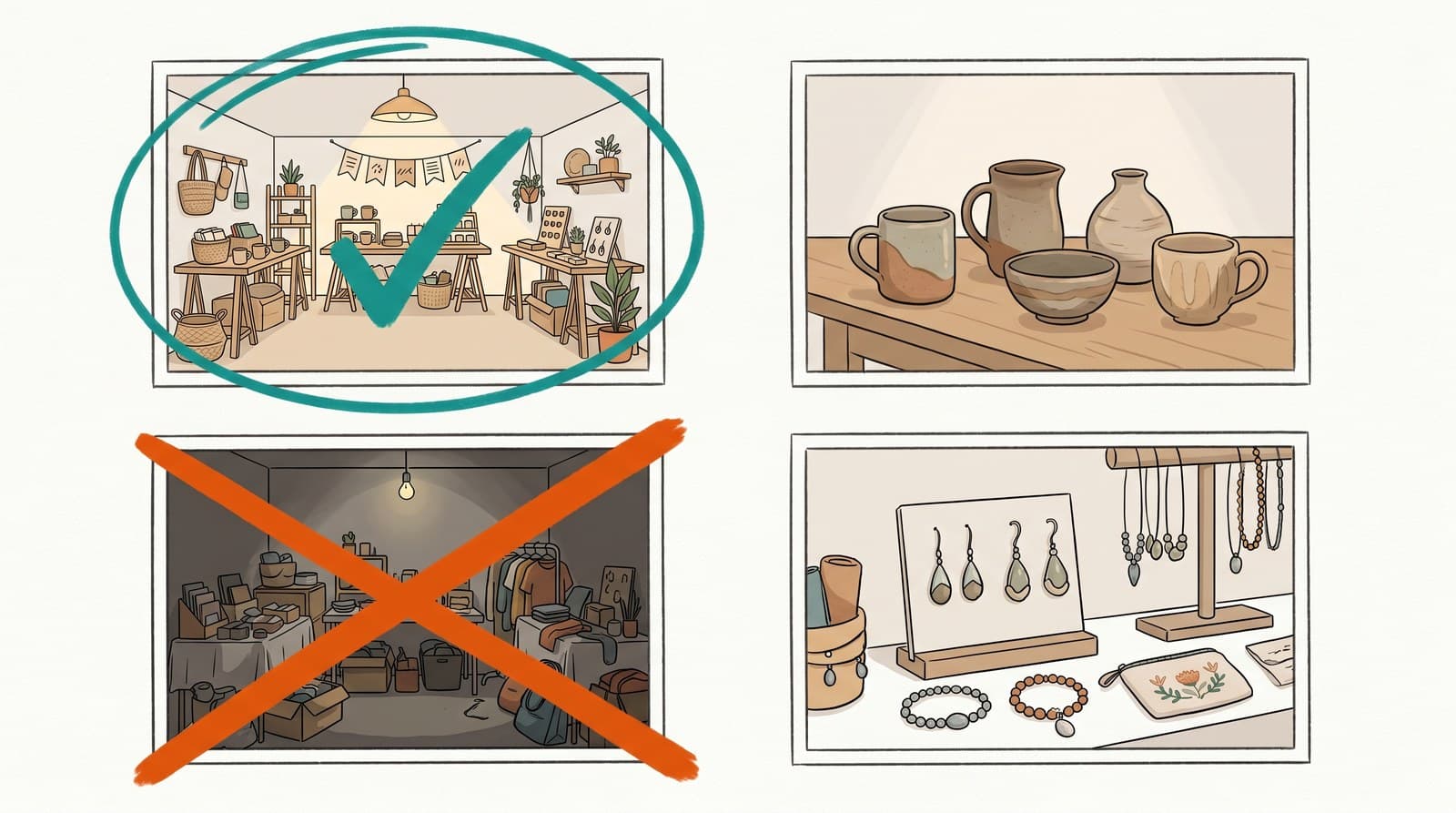
Juries review dozens, sometimes hundreds, of applications. Blurry or dark photos get passed over no matter how good the actual product is. A few habits help.
- Use natural light. A window on an overcast day is kinder than a harsh overhead bulb. Avoid your camera flash.
- Keep backgrounds plain. A white sheet or neutral wall lets the product be the star.
- One object per photo. Photography guidance for juried shows suggests a single object per image unless the pieces are meant to be seen as a set.
- Always include the booth shot. Veteran juror Harriete Estel Berman warns that a missing booth shot can cost you points, and a single point can be the line between accepted and waitlisted.
- No people in the booth photo. Just the setup, so jurors picture the display, not the crowd.
If you're building that booth shot from scratch, our booth layout guide can help you stage something that reads well in a photo and in person.
What are application and jury fees, and what's normal?
Most shows charge a small, non-refundable application or jury fee just to review you, often $5 to $50. That's separate from the booth fee, which you only pay if you're accepted. On ZAPP, for example, the standard jury fee is around $20 per show. The booth fee is the bigger number.
Here's how the two compare.
| Fee type | What it covers | Typical range | When you pay |
|---|---|---|---|
| Application / jury fee | The review of your application | $5 to $50 | When you apply |
| Booth fee | Your space at the show | $25 to $800+ | Only if accepted |
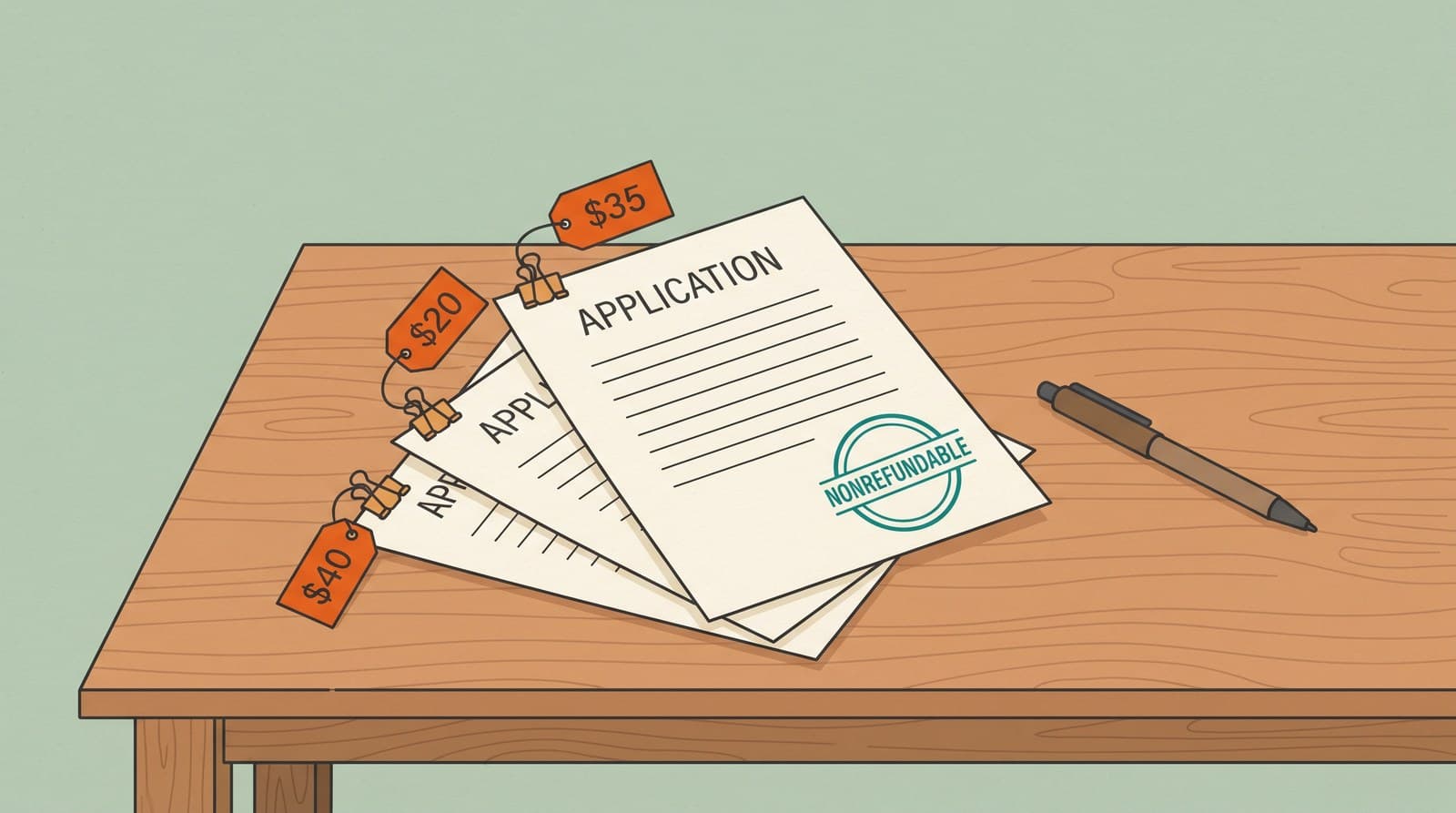
Booth fees swing widely by show. Getboothly's 2026 pricing guide puts community markets at $25 to $100, standard craft fairs at $100 to $400, and established festivals higher. Premium juried shows charge more. The Philadelphia Museum of Art Craft Show, for instance, lists a $50 non-refundable processing fee just to apply.
A simple gut check before you spend: many vendors aim to gross at least 3 times their booth fee, a rule TheCraftMap's fee guide describes well. Our booth fee evaluator does that math for you, and the profit calculator helps you check the margins underneath it.
Why craft fair applications get rejected
Even good makers get turned down, and it's usually not personal. Knowing the common reasons helps you avoid the avoidable ones.
- Too many in your category. A show wants variety. If you were 1 of 25 jewelry makers, you may have been a coin-flip cut, as Meghan Makes Do points out. That's nothing you did wrong.
- Weak or unclear photos. Back to the images. This is the most fixable reason on the list.
- Not following the instructions. Missing a deadline or ignoring the guidelines is a quiet but common reason work never gets considered.
- Wrong fit for the rules. Some shows cap sizes, restrict mediums, or want only handmade work. If your products don't match, it's a mismatch, not a verdict on quality.
- Thin track record. A few shows favor established makers with a portfolio or sales history. New vendors aren't shut out, but a strong application matters more.
A rejection isn't the end of the relationship. Plenty of vendors get in the next year with the same products and better photos.
What to do after you apply
After you apply, you wait, and the wait can be long. Juried shows often post deadlines 6 to 8 months ahead of the event, so plan early. When the decision lands, you'll get one of three answers: accepted, waitlisted, or declined. Each has a sensible next move.
Timelines run further out than most people expect. Craft Professional notes that many juried shows close applications many months before the event, so applying early (especially in a crowded category) is one of the few edges fully in your control.

Here's how to handle each outcome.
- Accepted. Pay your booth fee by the deadline, read the vendor packet, and start prepping. Tracking what sells from day one makes every future application stronger, which is the whole idea behind tracking your craft fair performance.
- Waitlisted. Stay ready. Spots open up when accepted vendors drop out, sometimes close to the date. Keep your dates flexible.
- Declined. It's fine to send a short, gracious note asking for feedback. Organizers are busy, but some will tell you what to improve. A simple "thank you for reviewing my work, I'd love to apply again" keeps the door open.
A quick word on pricing before you commit: if a show is a stretch, our pricing guide for your first craft fair helps you set numbers that make the booth fee worth it.
Wrapping up
Craft fair vendor applications look intimidating from the outside, but they come down to a few repeatable parts. Get clear photos. Write a specific maker statement. Apply early, before the deadline catches you. And remember that a "no" is often about the show's mix, not your work.
The makers who get in consistently aren't the ones with the fanciest products. They're the ones who keep good photos on hand, track what actually sells, and apply to the right shows for what they make. That last part gets easier with a little data behind you.
MyEventPrep helps you keep that data in one place, from what you brought to what came home unsold. Sign up free and walk into your next application knowing exactly which products earn their spot on the table.
Frequently Asked Questions
What is a juried craft fair?
A juried craft fair is a show where an organizer or panel reviews applications before accepting vendors. They score your photos, products, and maker statement on quality, originality, and fit. Jackalope Arts describes the process as a way to keep the show balanced and the work high quality, which is why juried shows often draw bigger crowds than open markets.
How much does it cost to apply to a craft fair?
Most shows charge a small, non-refundable application or jury fee, often $5 to $50, just to review you. On ZAPP the standard jury fee is around $20. That's separate from the booth fee, which you pay only if accepted and which can range from $25 to $800 or more depending on the show.
How far in advance should I apply to a craft fair?
Apply as early as you can. Juried shows often post deadlines 6 to 8 months before the event, and Craft Professional notes that applications close well ahead of the show date. Applying early matters most in crowded categories like jewelry, where spots fill fast.
What photos do I need for a craft fair application?
Most juried shows ask for 3 to 6 clear product photos plus one booth shot. Use natural light, a plain background, and one product per image. Veteran jurors warn that a missing booth photo can cost you points, which can be the difference between getting in and being waitlisted.
Do I need a business license to sell at a craft fair?
Many shows ask for a sales tax permit number on the application, and some areas require a local business license too. TheCraftMap notes that organizers usually list these requirements right on the application form, so read it carefully and gather your documents before you start filling it out.