How to Find Craft Fairs and Markets Near You (and Pick the Right Ones)

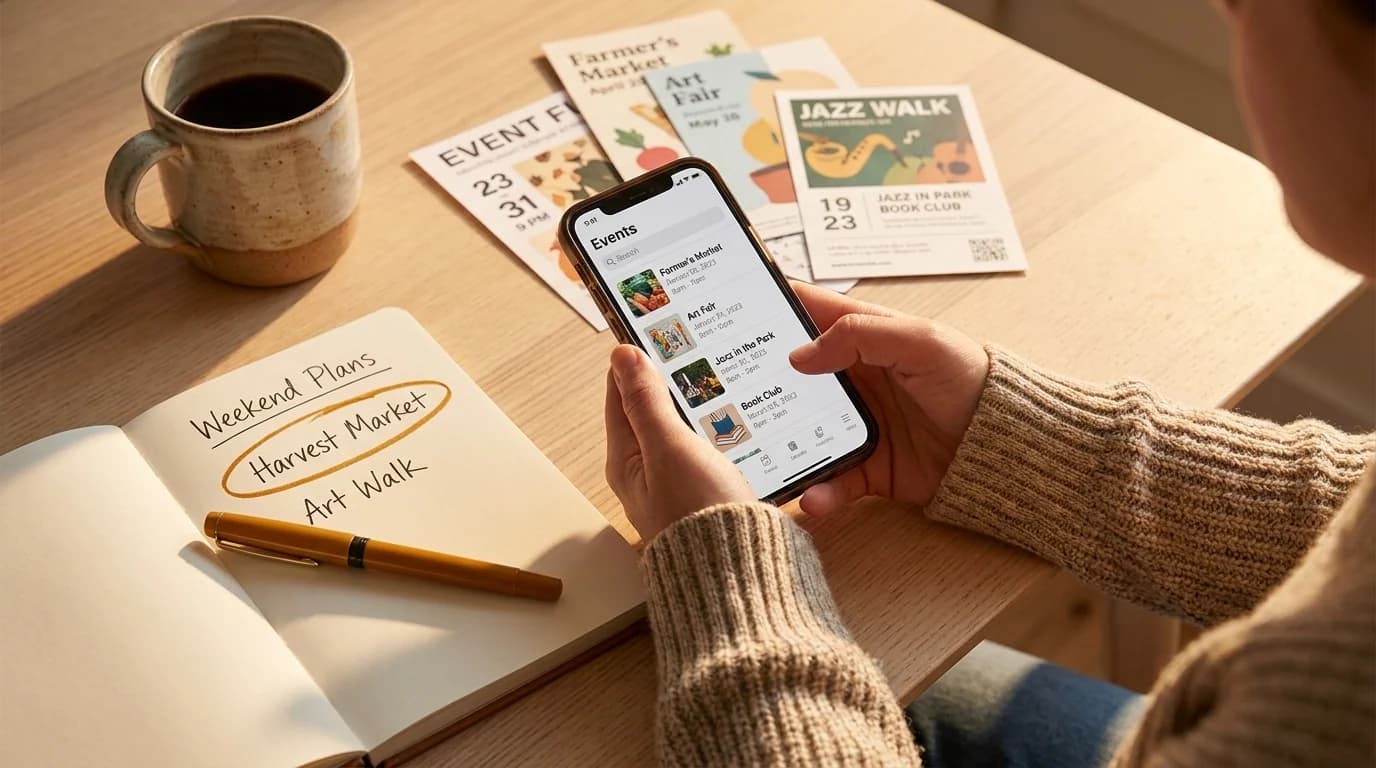
Search "craft fairs near me" and you'll drown in results. Directories, Facebook groups, Instagram hashtags, community boards, Eventbrite listings. There's no shortage of events to find. The problem is figuring out which ones are worth your weekend, your booth fee, and three weeks of production time.
Most advice stops at "here are ten websites to check." That's like handing someone a phone book and saying "find a good restaurant." It gets you a list, not a decision.
This post goes further. It gives you a framework for the entire process: where to look, how to evaluate what you find, and how to build a seasonal calendar you can actually plan around. We call it Find, Filter, Commit. The finding part is table stakes. The filtering and committing are where you stop wasting weekends on the wrong shows and start building a circuit that works for your business.
In this guide:
- Where to find craft fairs and markets (the best sources, ranked)
- How do I know if a craft fair is worth applying to?
- Red flags that should make you think twice
- How do I evaluate whether the booth fee is worth it?
- What's the difference between a juried and non-juried craft show?
- Building your seasonal event calendar
- How do I find craft fairs if I'm just starting out?
- Find broadly, filter ruthlessly, commit intentionally
Where to find craft fairs and markets (the best sources, ranked)
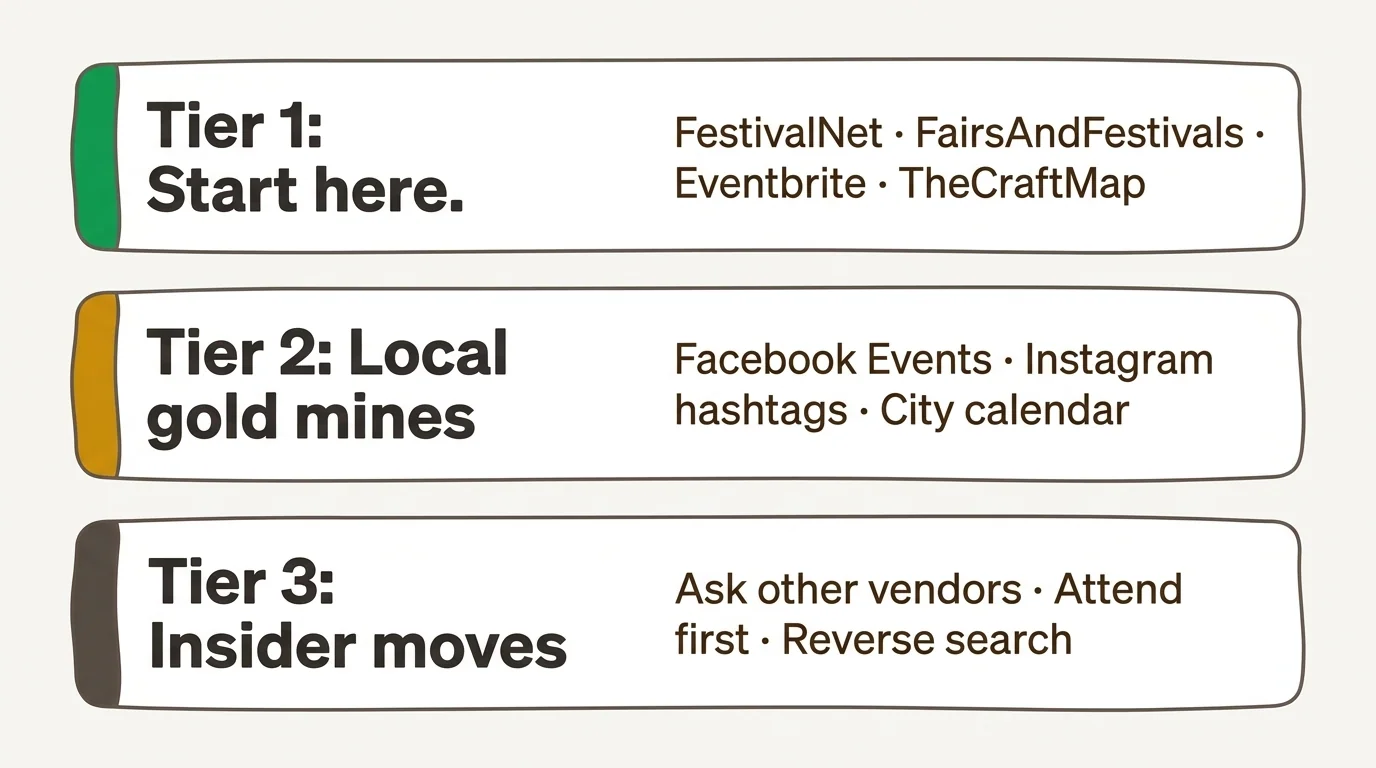
Not all listing sites are created equal. Here's an honest, opinionated ranking of where to look, grouped by how useful they actually are.
Tier 1: Start here
Note: Many of these sites are currently US based and US focused.
FestivalNet is the most robust search tool. Free membership, and you can filter by month, state, radius, and event type. The listings include booth fee ranges, expected attendance, and vendor categories. If you only check one directory, make it this one.
FairsAndFestivals.net has over 28,000 listings and is strong for browsing by state. The search isn't as refined as FestivalNet, but the sheer volume means you'll find events the other directories miss.
Eventbrite is surprisingly deep for local markets and pop-ups. Search your city plus "craft fair," "vendor market," or "makers market." Many smaller community events only list here because the organizers use Eventbrite for ticketing and vendor registration.
TheCraftMap lets you search by driving distance on an actual map, which is great for planning a circuit of shows within a reasonable radius.
Tier 2: Local gold mines
Facebook is still the single best source for small, local events that never make it to national directories. Search "craft fair" or "vendor market" plus your city in the Events tab. Also join local maker and vendor groups; organizers post calls for vendors there constantly.
Instagram works the same way. Search hashtags like #[yourcity]craftfair, #[yourcity]makersmarket, or #[yourcity]popupshop. You'll find organizers promoting upcoming events and vendors tagging the shows they're doing.
Your city or county event calendar is another overlooked source. Municipal websites often list community fairs, farmers markets, and seasonal festivals that are too small for national directories but perfect for testing a new market.
Tier 3: The insider moves
Ask other vendors directly. The best shows spread by word of mouth, not directory listings. If you know a maker whose work you respect, ask which shows they like. Most vendors are generous with this information.
Attend a show as a customer before you apply as a vendor. Walk the aisles, count the crowd, check the vendor mix, and notice how the organizer runs things. This is the single most reliable way to evaluate an event, and almost nobody does it.
"Reverse search" by finding vendors you admire on Instagram and looking at which shows they tag. If three makers you respect all do the same spring market, that's a strong signal.
How do I know if a craft fair is worth applying to?
Look for five green flags: the event has a vendor application or jury process, the organizer shares expected attendance or past-year numbers, the booth fee is proportional to the event's size and marketing effort, you can find photos or social media from previous years, and the vendor mix is curated to exclude mass-produced resellers and MLM products.
No single flag is a dealbreaker on its own. But the more green flags an event shows, the more likely it is to be a well-run show with real foot traffic and buyers who came to shop.
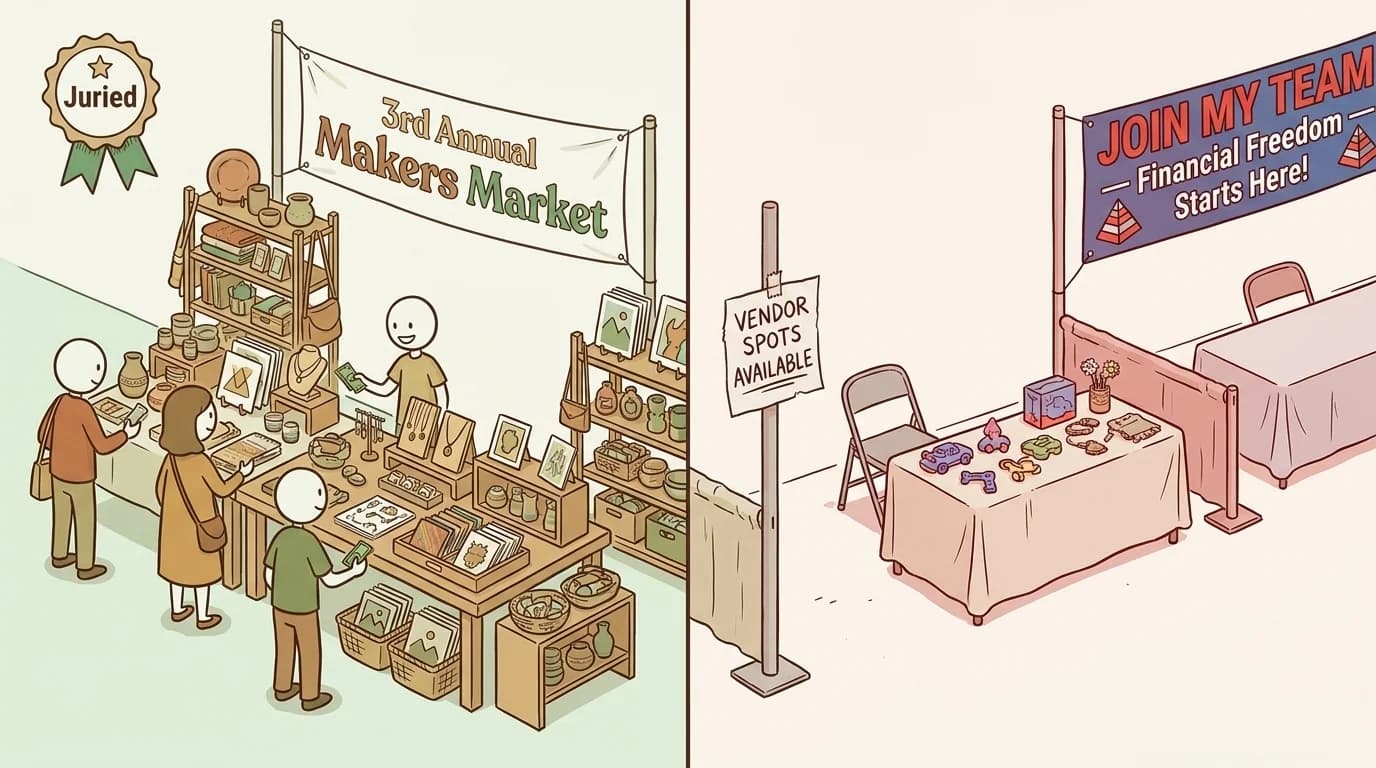
An application process is the strongest signal. Juried craft shows require vendors to submit their work for review. This means the organizer is investing effort in quality control, which protects you from being placed next to a table of mass-produced imports. It also means the audience trusts the show, because they've learned that the vendors are vetted.
Past-year photos are another strong indicator. If the organizer's social media shows packed aisles, happy customers, and well-designed booths, you're looking at a show that takes itself seriously. If there are no photos from previous years, or the social accounts are dormant, that's a yellow flag.
Finally, ask the organizer questions. How many vendors will there be? What's the expected attendance? Is there a marketing plan? Professional organizers welcome these questions. Evasive ones should make you cautious.
Red flags that should make you think twice
Not every craft fair deserves your application. Here are the warning signs.
First-year events with high booth fees. A brand-new show has no track record, no proven attendance, and no returning customers. That's not necessarily a dealbreaker at $50, but it's a real gamble at $300. If a first-year event is charging premium prices, ask what justifies it. If the answer is vague, walk away.
No application process. Open, first-come-first-serve events can work for beginners testing the waters. But shows with zero vetting tend to have inconsistent vendor quality, which affects everyone's sales. When mass-produced goods and MLM tables sit next to handmade vendors, the whole show's perceived value drops.
No marketing plan or social presence. If the organizer isn't actively promoting the event, who's bringing the customers? A show that relies entirely on "people will just walk by" is a show betting on luck. Check their Instagram, Facebook, and website. If you can't find them, shoppers won't either.
The event is primarily something else. A music festival with a few craft booths along the walkway. A church fundraiser where the craft tables are an afterthought. A county fair where the rides and food vendors draw 95% of the attention. When crafts aren't the main attraction, craft vendors are usually the first to feel it in their sales.
The booth fee exceeds 25% of your realistic sales estimate. If you'd need a miraculous day to cover your costs, the math isn't on your side. More on this in the next section.
How do I evaluate whether the booth fee is worth it?
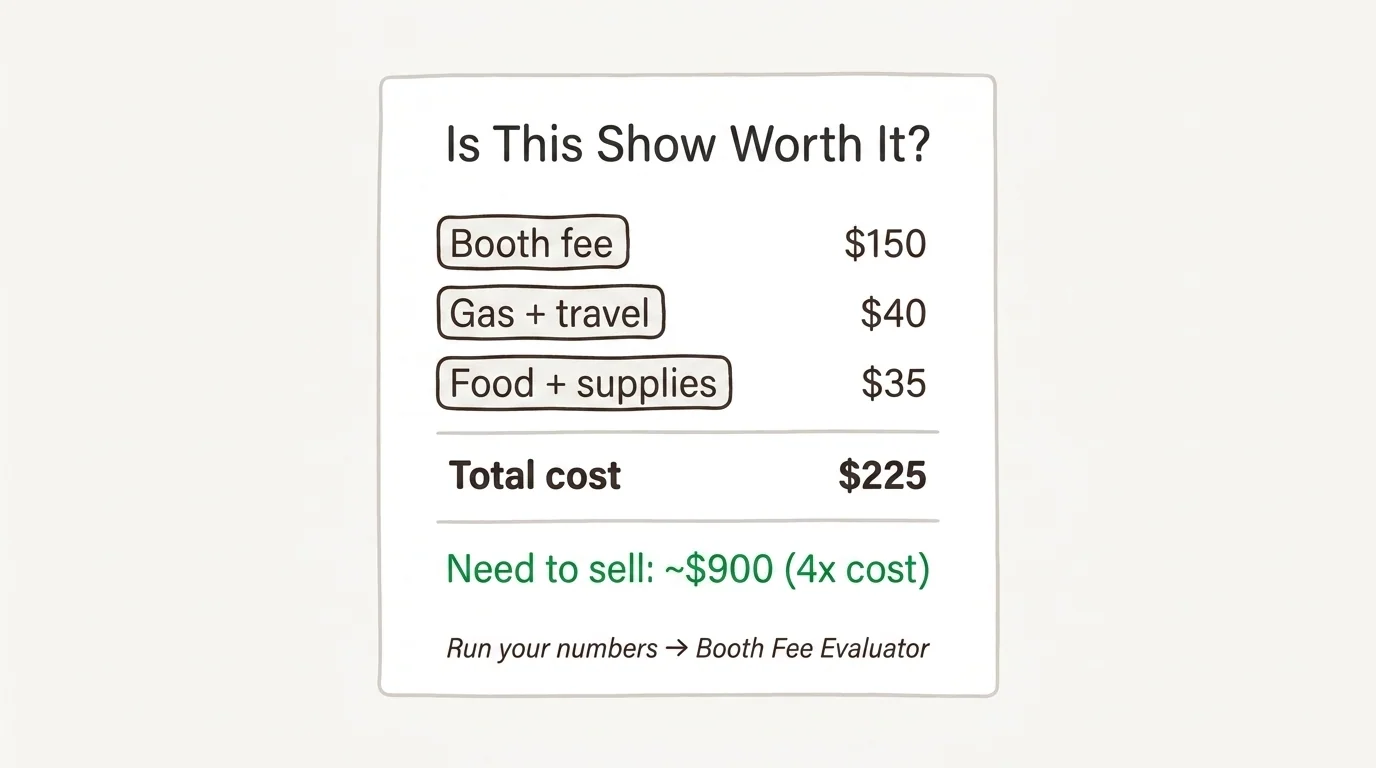
Compare the booth fee to your realistic sales estimate using a simple test: if you can't reasonably expect to sell 4 to 5 times the total cost of doing the show (booth fee plus travel, food, supplies, and your time), the math probably doesn't work. Total cost is the key phrase. The booth fee is just the headline number.
A worked example. Say the booth fee is $150. Add $40 for gas, $15 for lunch, and $20 for packaging supplies. Your total cost is $225. To hit a 4x return, you'd need about $900 in sales. Is that realistic for this event, given your products and price points? If yes, apply. If it's a stretch, think carefully.
Use our free Booth Fee Evaluator to run these numbers before you commit. Plug in the fee, your estimated costs, and your average sale, and it'll tell you how many transactions you need to break even and whether the show makes financial sense.
The goal isn't to avoid all risk. It's to avoid paying $300 for a show you'll need a miracle to profit from. Small, cheap community events are great for learning and testing, even if the return is modest. Expensive shows should earn their price tag with proven attendance and strong marketing.
What's the difference between a juried and non-juried craft show?
A juried craft show requires a formal application reviewed by a panel that selects vendors based on quality, originality, and product variety. A non-juried show accepts vendors first-come-first-serve with no review. Juried shows tend to attract more serious shoppers, generate higher average sales, and protect you from low-quality competition in the booths next to yours.
That said, non-juried shows have a place. They're typically cheaper, easier to get into, and perfect for newer vendors building experience and confidence. If you've never done a craft fair, a $40 non-juried community event is a far better starting point than a $400 juried show. You'll learn how to display, sell, and interact with customers, and you'll collect the product photos and booth shots you need for juried applications later.
As a general rule: start non-juried, build your portfolio, then graduate to juried shows as your products and presentation improve. The juried shows will still be there when you're ready. And you'll have the experience and photos to get accepted.
Building your seasonal event calendar
Once you've found and filtered your options, the next step is committing to a calendar you can actually plan around.
If you're newer, start with four to six events per season. If you're experienced, eight to twelve is a reasonable range. Don't overbook. Every event requires production time, packing, travel, and recovery. Cramming shows too close together leads to burnout and underprepared booths.
A few principles for building a strong calendar:
Batch your applications. Most craft fairs open vendor registration two to four months before the event. Set a reminder to check your target shows' websites in January (for spring), April (for summer), and July (for fall and holiday). Applying early matters, especially for non-juried shows that fill on a first-come basis.
Mix event types. Anchor your calendar with one or two shows you know perform well (the ones you've done before and want to repeat). Add one or two new shows each season to test. And keep one or two low-cost community events for experimenting with new products or displays without high stakes.
Debrief after every event. After each show, capture what worked, what didn't, and whether you'd return. Those notes are what turn a list of events into a real circuit. After a year, you'll know exactly which shows earn their spot and which ones don't, based on your own experience instead of someone else's recommendation.
MyEventPrep keeps your event tracking and notes in one place so your calendar decisions are informed by actual data. Which shows you've done, what you sold, your debrief notes, and whether you'd return. That's how a calendar stops being a list and starts being a strategy.
How do I find craft fairs if I'm just starting out?
Start small. Look for low-cost, non-juried community events: church bazaars, school holiday fairs, neighborhood markets, and small-town farmers markets. These shows have lower booth fees (often $25 to $75), forgiving audiences, and a relaxed atmosphere where you can learn without high pressure.
Use those first three or four events to build three things: confidence in your selling and display skills, data on what sells and what doesn't (your sell-through rates and customer feedback), and photos of your booth and products for future applications.
Don't start with the biggest, most competitive show in your region. You'll be competing against experienced vendors with polished displays and loyal followings. Earn your way there. A few solid small shows give you the inventory depth, the booth photos, and the track record that juried applications are looking for.
Our guide to how many of each product to make can help you plan production for those first events, and the packing checklist will make sure you don't forget anything on the day.
Find broadly, filter ruthlessly, commit intentionally
Three takeaways:
- Cast a wide net when searching. Use the directories, Facebook, Instagram, word of mouth, and your city calendar. The more options you start with, the better your final picks will be.
- Filter before you pay. Check for green flags (application process, attendance data, marketing plan, photos from past years). Watch for red flags (no track record, no curation, no promotion). Run the booth fee through the Booth Fee Evaluator before you commit.
- Build a calendar, not a to-do list. Plan your season, batch applications, and debrief after every event so next year's decisions are informed by this year's experience.
The craft fairs are out there. The question is which ones deserve you.
Start tracking your events in MyEventPrep free during early access. No credit card needed. See how it works on the homepage.
Frequently Asked Questions
What are the best websites to find craft fairs near me?
FestivalNet and FairsAndFestivals.net are the two most comprehensive national directories, with robust search filters and tens of thousands of listings. For local events, search Facebook Events and Eventbrite for your city plus "craft fair" or "vendor market." Many smaller community shows only list on these platforms.
How far in advance do craft fairs open for vendor applications?
Most craft fairs open vendor registration two to four months before the event. Large juried shows may open six months or more in advance, with application deadlines well before the event date. Set calendar reminders to check your target shows' websites at the start of each season so you don't miss the window.
How much should I expect to pay for a craft fair booth?
Booth fees range widely. Small community events may charge $25 to $75. Mid-size juried shows typically run $100 to $300. Large, established shows in major cities can cost $400 or more. Always factor in travel, food, and supplies on top of the booth fee to calculate your true cost. A good rule of thumb: you should be able to sell 4 to 5 times your total cost for the show to make financial sense.
Can I sell at a craft fair without a business license?
Requirements vary by state and municipality. Many small community events don't check, but larger juried shows often require proof of a business license, sales tax permit, or liability insurance. Check your state's requirements and the event's vendor packet before applying. Getting a basic business license is usually inexpensive and straightforward, and it opens doors to better shows.
How many craft fairs should I do per year?
There's no universal number, but four to six per season is a good starting range for newer vendors. Experienced vendors often do eight to twelve per season. The right number depends on your production capacity, travel radius, and recovery time between events. Quality matters more than quantity: six well-chosen shows will outperform twelve poorly chosen ones every time.