Craft fair display ideas: what gets people to stop

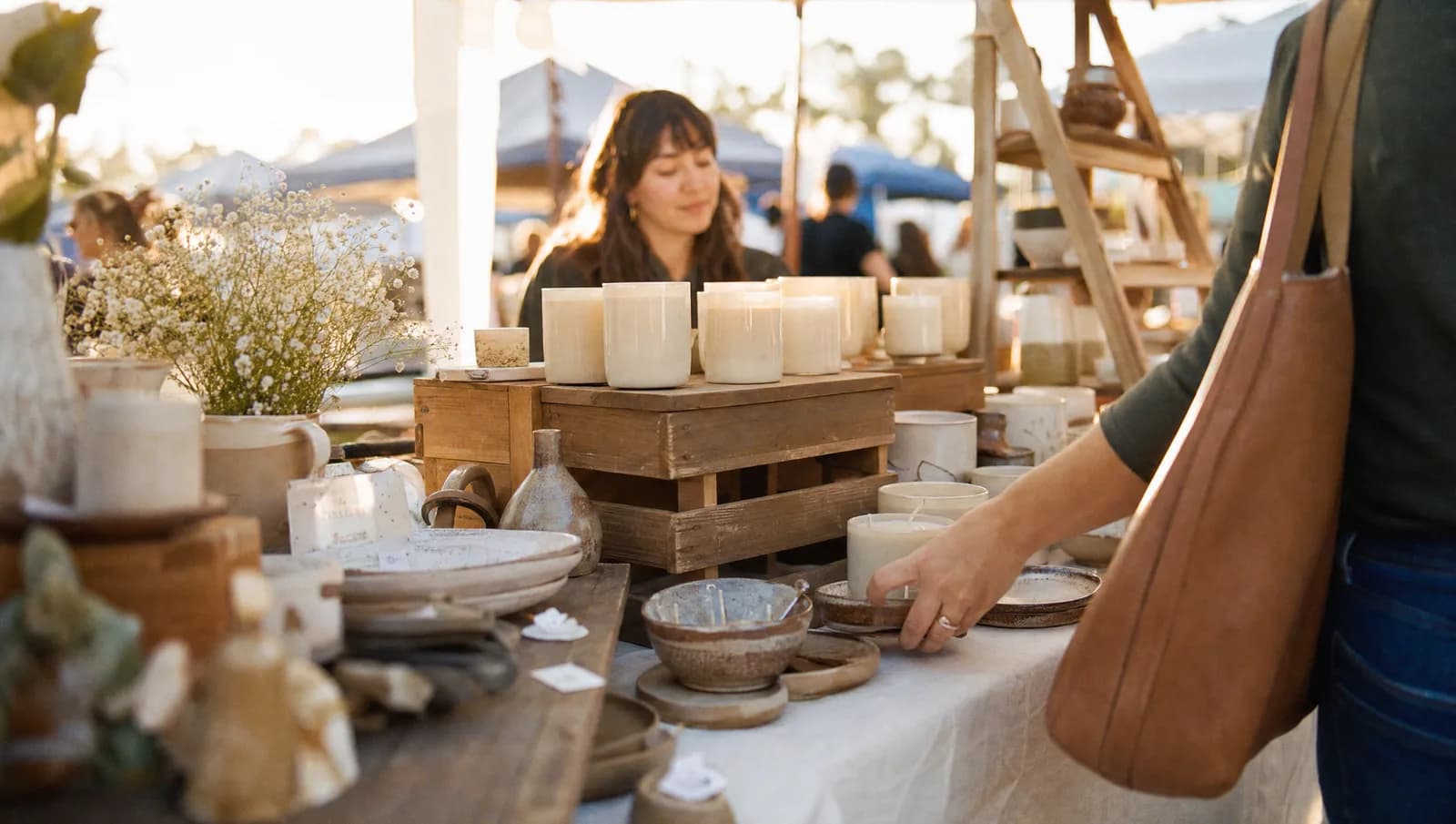
The thing most first-time vendors get wrong is treating their display like a storage solution. You've got a 10x10 space, a 6-foot table, and a season of inventory, and the instinct is to bring all of it and figure it out on the day. What you end up with is a table that looks exhausting to shop.
A display doesn't just show your products. It does the job of getting someone to slow down, step closer, and reach out to pick something up. That's the only job it has to do. Everything here is in service of that.
What makes a craft fair display actually work?
A display works when it stops foot traffic. The mechanics are simple: clear sight lines into your booth, at least one product at eye level, and a table that doesn't look so full it's hard to know where to look. Shoppers have about 8 seconds to decide whether a booth is worth stopping at. A display that makes that decision easy is doing its job.
That 8-second window isn't unique to craft fairs — it's how shoppers behave in any high-traffic retail environment, arguably more so here, because there's no signage, no shelving logic, and no familiar brand to anchor on. What you've got is a table and the first impression it makes from 15 feet away.
Most display problems aren't about the products. They're about making the products harder to notice than they need to be.
Build up, not out
A flat table is almost always a missed opportunity. When everything sits at the same height, there's no visual entry point. Your eye doesn't know where to go, so it skips to the next booth.
Risers, crates, small shelving units, and tiered stands solve this without a lot of investment. The goal is at least 2 levels, ideally 3: something at tablecloth height, something mid-range, and something at or near eye level. Eye level for a standing adult is roughly 5 to 5.5 feet from the floor. Getting your best product up there is one of the highest-return moves you can make at setup.
Retail merchandising research consistently finds that products displayed at eye level sell at meaningfully higher rates than the same products at waist height. The craft fair aisle isn't a grocery store, but the underlying behavior is the same: people buy what they see, and they see what's at eye level.
What you put up high matters. It should be your best-looking piece, your most recognizable product, or whatever you'd want someone to photograph. The piece at eye level is doing your marketing.
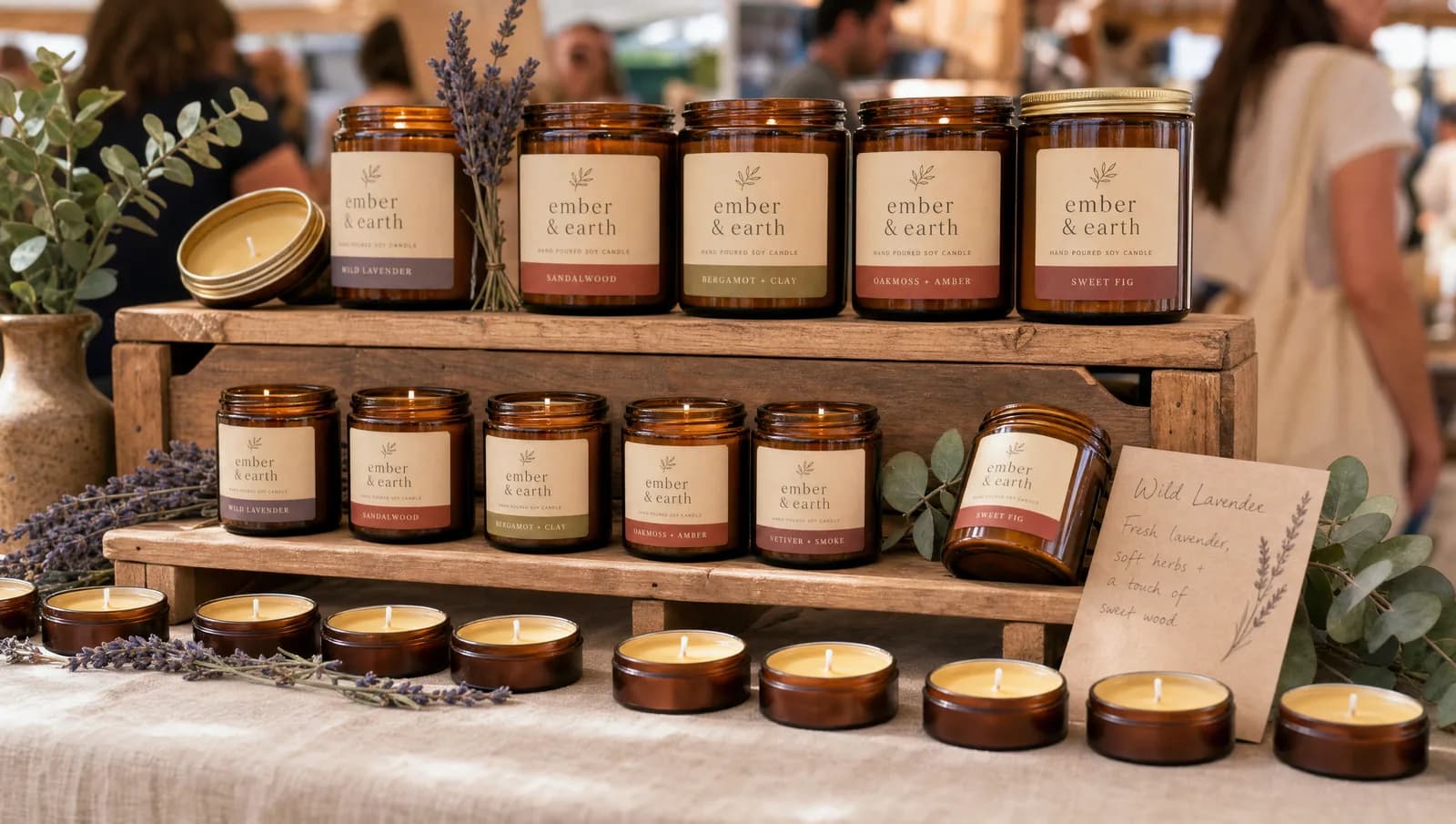
The booth layout guide goes deeper on how to structure the full 10x10, including back wall and aisle flow.
Where on the table should your best product go?
Eye level and center-right. Shoppers move left to right by habit, the same way they read, but they look first at whatever's at eye height in the center of their field of view. Put your best-selling or highest-margin product where those two things overlap: elevated, and slightly right of center on the table. That's where most hands land first.
This isn't about being clever. It's about working with how attention actually moves. People aren't analyzing your table. They're scanning it in under a second. A product already positioned where their eyes are going doesn't have to work as hard to get picked up.
Lower-ticket items and add-ons (stickers, cards, small samples) do well near the front edge of the table, at easy reach. Someone who's close enough to be interested should be able to pick something up without reaching across anything or asking for help.
Edit before you pack
There's a version of your display that feels generous, like you're giving people everything to choose from. There's another version that feels overwhelming, like you forgot to decide what you were selling.
The data on this is consistent. Made Urban's analysis of vendor sales patterns found that reducing the number of SKUs on display correlated with a 27% increase in sales at comparable events. More choices don't always lead to more buying. Sometimes they lead to no decision at all.
A full-looking table is different from an overstuffed one. Full means every item has space around it. Overstuffed means you can't pick one thing up without knocking something else over. Shoppers who can't comfortably touch things don't buy things.
The practical version of this: decide what goes on display before you leave for the event, not at the table. Bring your full inventory, but know your edit in advance. If something sells through, you've got backup to pull from. If the table stays full at the end of the day, that product is telling you something.
The how many of each product to make guide works through the math by booth size and expected sell-through if you want a starting number.
Does the color of your tablecloth actually matter?
Yes, but not in the way most vendors expect. Tablecloth color affects whether your products read clearly from a distance, which is a different question from whether the cloth looks nice up close.
The rule is contrast. Light-colored products (cream candles, white soap bars, light wood pieces) read better against a darker cloth. Dark products (resin coasters, deep-toned jewelry) read better against a lighter neutral. Colorful products need a neutral cloth so the tablecloth isn't competing for attention. An oatmeal linen, a warm charcoal, or a slate gray keeps the product as the focal point.
Busy patterns almost always hurt. They fragment attention at exactly the moment you need it concentrated. Solid cloth or very subtle texture outperforms printed patterns for most booths, most of the time.
Color psychology in tactile retail environments tends to favor warm neutrals: cream, linen, warm gray. What you're going for isn't a backdrop that looks great in its own right. You want something that makes your product the most interesting thing in the frame.
How do you know if your display is working?
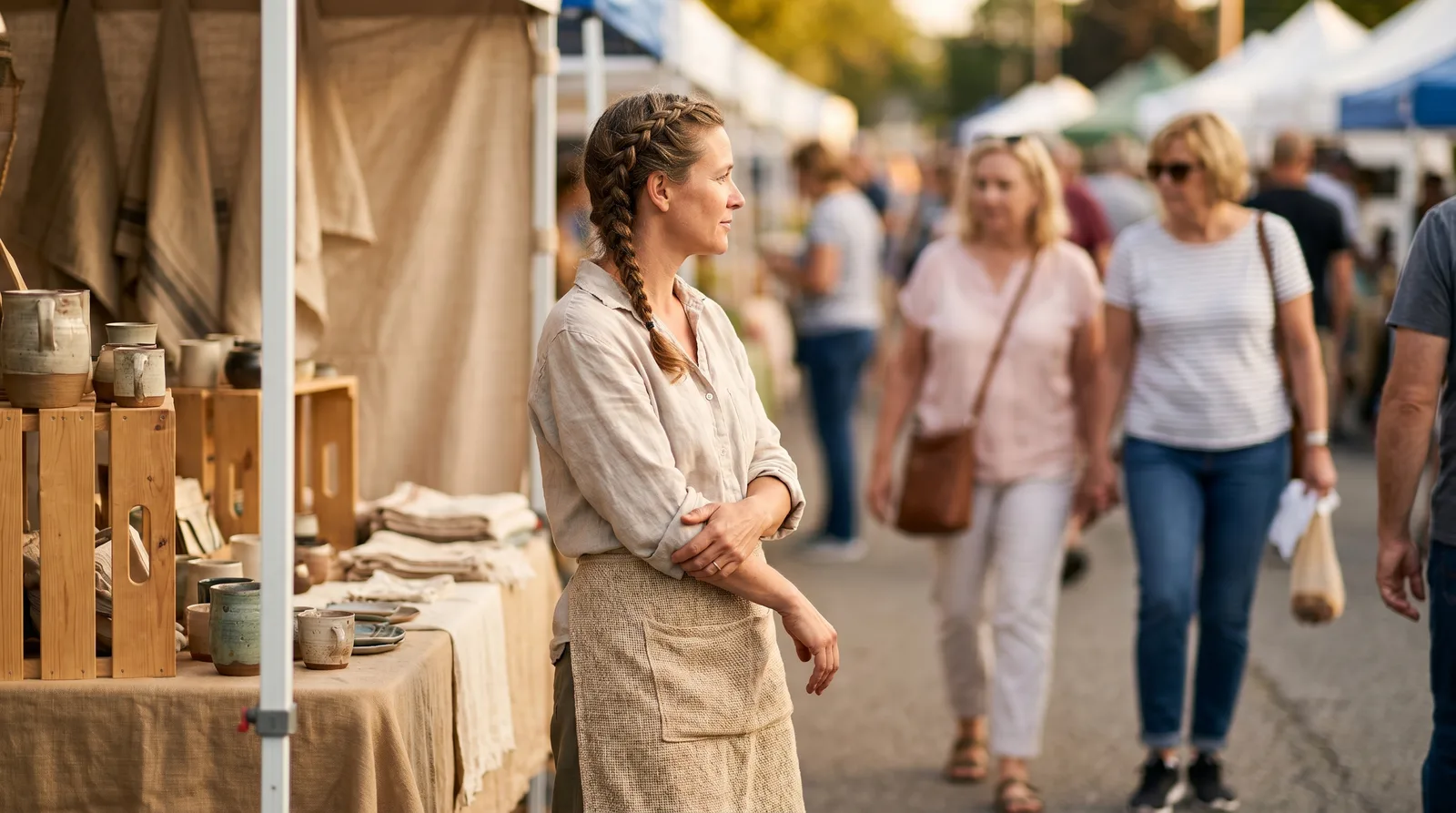
Watch where people stop, where their eyes land first, and whether they reach out to touch anything. Stopping and touching are the two signals that matter. If people are slowing down but not stopping, you're getting noticed but not pulling anyone in. If they're stopping but not touching, something about the table is making it hard to engage.
The fastest way to read this is to stand off to the side for 15 minutes near the start of the day and just observe. It's uncomfortable to do nothing for that long, but what you learn is worth it. Where do eyes go first? What gets picked up? What gets set back down immediately?
That feedback, tracked across a few events, tells you more than any display article can. The post-event debrief is a 5-minute format for capturing it while the day's still fresh, before you've packed up and moved on.
The point
A good display doesn't sell your products. It gets people close enough that the products can do that themselves.
Height creates visibility from the aisle. Your best piece at eye level puts hands on it. A table that has room to breathe invites browsing instead of a quick scan and a step back. None of this requires expensive equipment. Crates, wooden boxes, a few risers, and a consistent color palette get you most of the way there.
The goal is a booth that someone walking past at 15 feet can understand at a glance: here's what this person makes, and it looks worth stopping for.
MyEventPrep tracks sell-through and revenue across events so you can see which products are leading the table and which are just taking up space. Sign up free and connect your first event in under 5 minutes.
Frequently Asked Questions
What makes a craft fair display stand out?
Height, contrast, and a clear focal point. A booth that's all one level from across the aisle looks flat and easy to walk past. Get your best piece elevated, make sure it reads against the background, and leave enough space between items that shoppers can see each one without visual competition from the next.
How many products should I put on my table at a craft fair?
Less than you think. Most vendors overstock their tables and understock their reserve. A focused display with room between items invites picking things up. A packed table makes shoppers feel like they'll knock something over. A simple test: if you can't comfortably pick up any single item without moving another, you've got too much on the table.
What color tablecloth works best at a craft fair?
It depends on your products. The goal is contrast: light products need a darker background to read against, dark products need a lighter neutral, colorful products need a neutral cloth so nothing's competing for attention. Busy patterns almost always work against you. Solid cloth in warm neutrals (linen, charcoal, oatmeal) is the lowest-risk choice for most booths.
Where should I display my best-selling product on the table?
Eye level and center-right. Shoppers scan left to right and land first on whatever's at eye height in their field of view. Put your strongest product where those paths cross: elevated, slightly right of center on the table. That's where most hands land first.
How do I know if my craft fair display needs to change?
Watch where people look when they approach, whether they stop, and whether they reach out. If people walk past without pausing, the display isn't giving them a reason to stop. If they stop but don't touch anything, something about the table is making it hard to engage. Tracking these patterns across a few events shows you what's working and what isn't.