How Much Do You Need to Sell to Break Even at a Craft Fair?

Knowing your craft fair break-even number is the difference between a day that pays you back and a day that quietly costs you money. It sounds simple. Sell enough to cover the booth fee, right? Not quite. The booth fee is just the headline cost. Gas, parking, your display supplies, the materials in every item on the table, and the hours you spent making them all count too.
Most of us learn this the hard way. You drive home from a "sold out" market feeling great, then tally it up and realize you barely broke even. The good news: the math isn't hard, and you only have to do it once per event. This post walks through how to find your break-even point for any craft fair, with a worked example and a fast rule of thumb you can use in 10 seconds. For the bigger question of when a booth fee is simply too high, see our guide to understanding craft fair and farmers market booth fees.
What Does "Break Even" Mean at a Craft Fair?
Breaking even at a craft fair means your total sales for the day exactly cover your total costs for the day. Costs include the booth fee, travel, display supplies, the materials in what you sell, and your time. Below break-even, you lost money. Above it, you made some.
The formula is plain: add up every cost, and that's the sales figure you need to hit. Anything past that is profit. Many vendors stop at the booth fee, but that's only one line. A complete craft fair budget separates fixed costs (booth, insurance) from variable ones (materials, card fees, lunch).
There's also a more precise version that uses your profit margin. Break-even sales equal your fixed costs divided by your profit margin per item. We'll keep things friendly here and build up from a simple cost list, which gets you a number that's close enough to act on.
Every Cost You Need to Count
Your break-even point is only honest if you count everything, not just the obvious stuff. The line that trips people up most isn't the booth fee. It's the cost of materials in the items they sell, plus their own time. Skip those, and you'll think you profited when you actually worked for free.
Here are the costs to add up for a single event:
- Booth fee. The price to reserve your spot. This is usually the single biggest upfront expense, and the easiest one to remember.
- Travel. Gas, mileage, parking, and tolls. A show a few hours away can add $200 to $400 in travel once you include an overnight stay.
- Display supplies. Tablecloths, signage, bags, a card reader. These are one-time buys you spread across many events, so use a small per-event share, not the full cost.
- Materials in what you sell. The raw cost of the goods that actually leave your table. If 50 items cost you $8 each in materials, that's $400 tied up in inventory.
- Your time. Hours making product, plus prep and the day itself. Skipping labor is the top reason makers stay busy but never profitable. Even a modest $15 to $20 an hour keeps you honest.
- Small extras. Card processing fees, lunch, sometimes liability insurance. Made Urban lists 10 separate costs that quietly stack up.
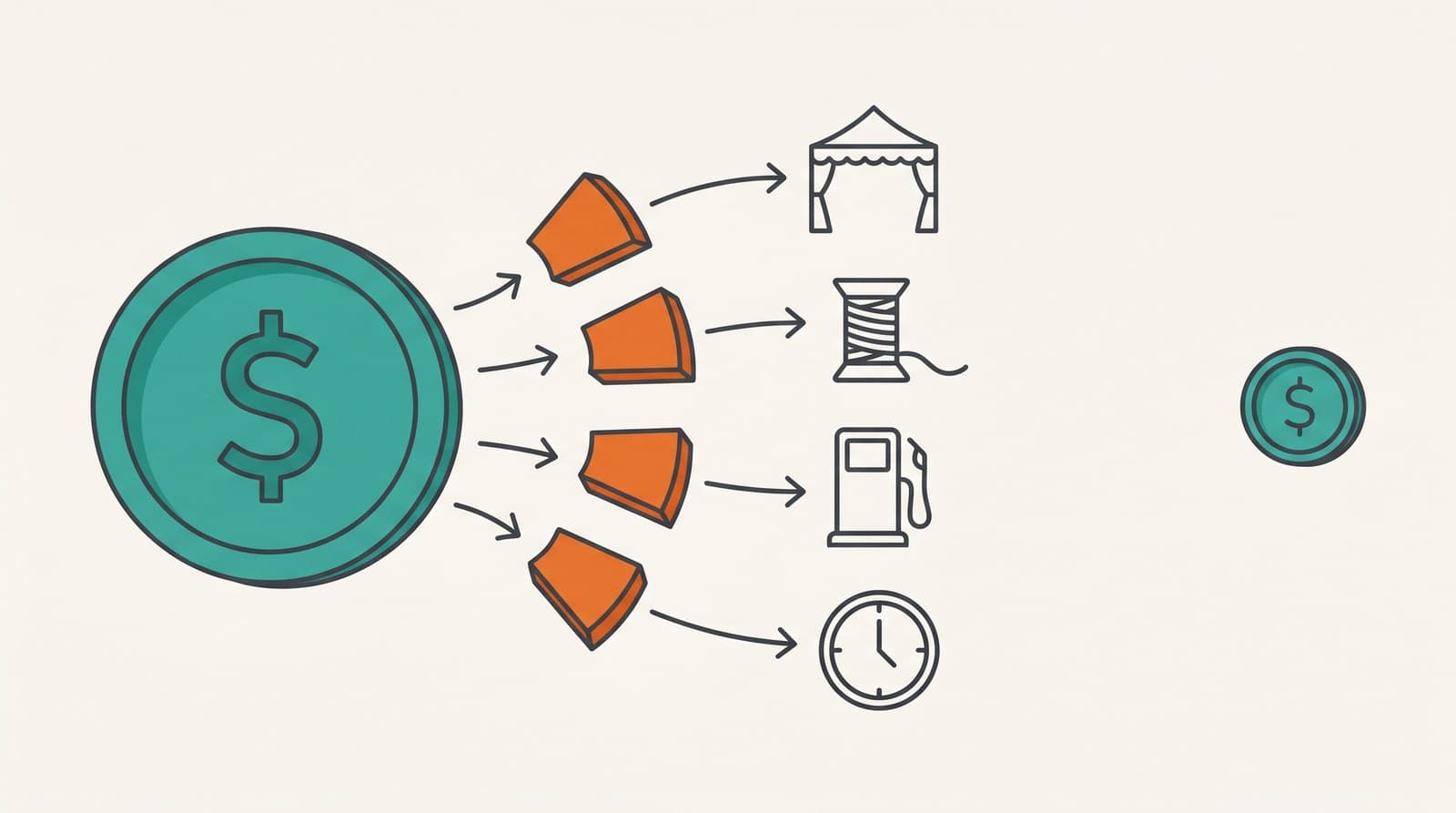
You don't need a spreadsheet to start. A note on your phone works. The point is to see the whole picture before the event, not after.
A Worked Example (With Round Numbers)
Let's run the math on a made-up but realistic local market. These are example figures, not a real event, so swap in your own.
Say you sign up for a one-day fair with these costs:
| Cost line | Amount |
|---|---|
| Booth fee | $50 |
| Travel (gas + parking) | $30 |
| Display supplies (per-event share) | $20 |
| Materials in product you expect to sell | $60 |
| Your time (8 hours at $15) | $120 |
| Card fees + lunch | $20 |
| Total cost for the day | $300 |
So your break-even is $300 in sales. Hit that, and you covered everything, including paying yourself. Anything above $300 is real profit.
Now turn that into a sell-through target. The average craft fair purchase tends to land somewhere in the $5 to $35 range, so say your average sale is $20. To reach $300, you need about 15 sales across the day. That's a number you can picture: roughly 2 sales an hour. Suddenly "break even" stops being a vague worry and becomes a concrete goal.
If you want to skip the line-by-line math, our free profit calculator handles the per-product side, so you can see your margin on each item first.
The 3x Booth Fee Rule (and Where It Falls Apart)
The 3x rule says aim to sell at least 3 times your booth fee. So a $50 booth means a $150 sales target, and a $150 booth means $450. It's a fast gut check that roughly covers your costs and leaves a little profit, which is why so many vendors lean on it.
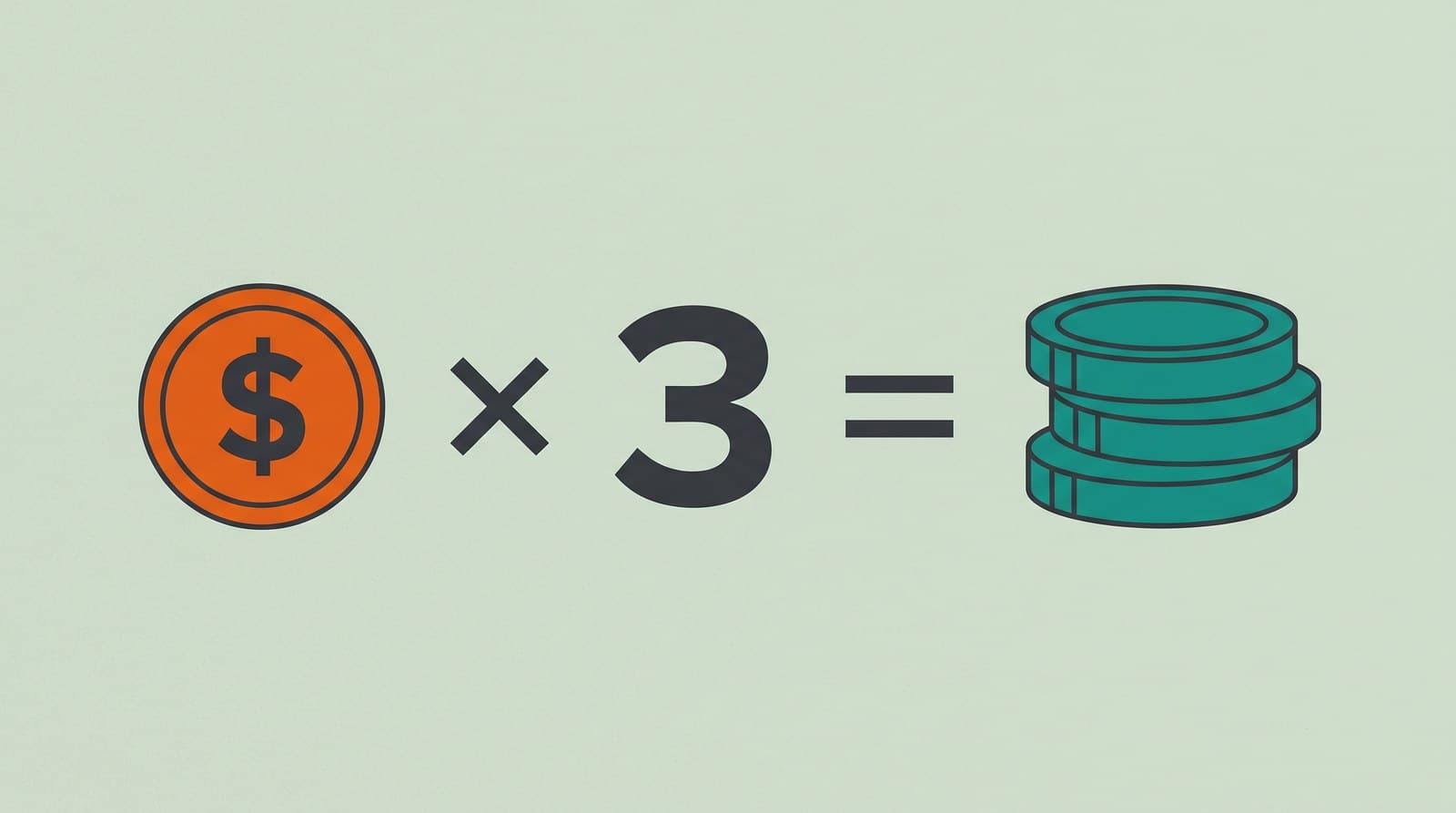
It's popular for a reason. Your break-even usually lands around 2x to 3x the booth fee in sales, so 3x builds in a small cushion. You can run it in your head while reading an event listing. No spreadsheet required.
But it's a proxy, not a law. The booth fee is only one of your costs. The 3x rule breaks down in a few common cases:
- Long travel. A far-away show with a hotel can cost more in travel than the booth itself, so 3x won't cover you.
- Low-margin products. If your materials and time eat most of each sale, you need a higher multiple. Some makers in craft circles use a 7x rule for exactly this reason.
- Tiny booth fees. A $10 community table with a $30 break-even means 3x ($30) only just covers it, with nothing left over.
Use 3x as the first filter. If an event passes, run the full cost list before you commit. If it fails 3x, it's probably not worth a closer look.
Why Your Time and Materials Have to Be in the Math
Counting your time and material costs is what turns "did I make money" into a real answer. If you only subtract the booth fee, every event looks profitable, because you're pretending your labor and supplies were free. They weren't.
The standard handmade pricing formula bakes this in. A common approach is (materials + labor) times a markup, with many makers using a 50% to 67% profit margin. That margin only exists if you've actually subtracted materials and labor first. Leave them out, and you're not measuring profit. You're measuring revenue.
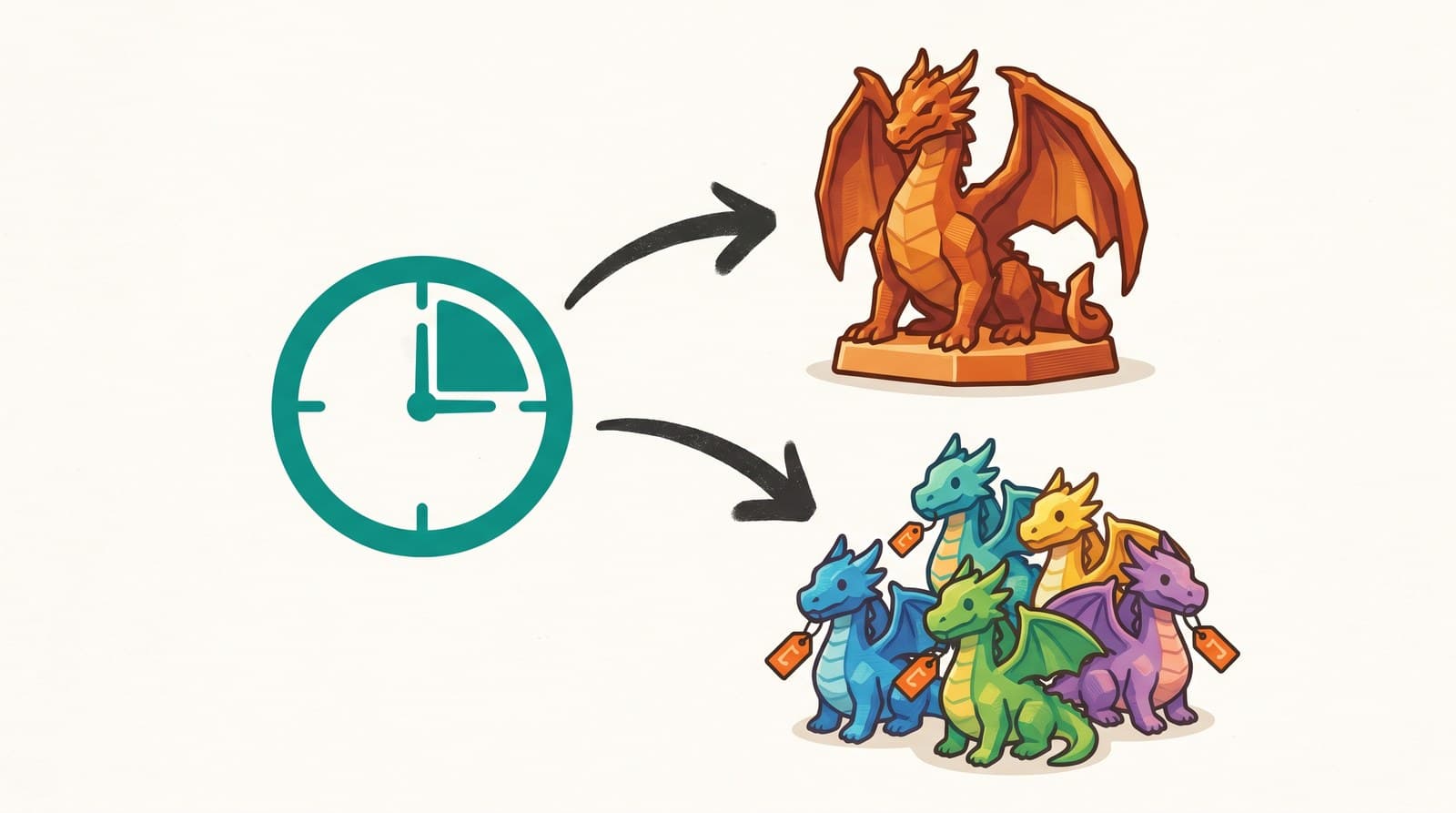
Here's the trap. You can have a busy, friendly, "great" market and still go home with less than you started. Selling lots of low-margin items just means you gave away more material and time. We learned this with our big 3D-printed dragons. They hit a $50 price point, came in several colors, and were huge eye-catchers that drew constant "oh!" and "wow" at the booth. The problem was the clock: each one took over 20 hours to print. In that same time we could make a pile of smaller $10 to $20 dragons that actually sell faster. The big ones felt like winners. The hours told a different story.
To see which of your items actually pull their weight, it helps to track your craft fair performance over a few events. Patterns show up fast, and they're rarely what you'd guess. It also feeds straight into deciding how many of each product to make next time.
How to Know Your Number Before You Apply
You can find your break-even before you ever pay a booth fee, and that's the whole point. Plug your expected booth fee, travel, supplies, and material costs into a calculator, and it tells you the sales you need to clear the day. If the number feels out of reach for that crowd, you skip the event. No regret, no lost weekend.
That's exactly what our free Booth Fee Evaluator does. You enter the fee and your expected costs, and it shows whether the event is likely to pay off. It's the fastest way to pressure-test a market before you commit, and it pairs naturally with evaluating whether a craft show is the right fit for your products and price point.
Inside MyEventPrep, this lives on every event page. As you enter your booth, travel, and supply costs, the app shows the revenue you need to break even for that specific day. No mental math mid-setup. And veteran vendors agree the time to decide is before you apply, not after the receipts are in.
When you're choosing between options, run each through the same filter. Our guide to finding craft fairs near you helps you build a shortlist, and a quick break-even check tells you which ones are worth the application.
The Bottom Line
Breaking even at a craft fair isn't about the booth fee alone. It's about covering all your costs: fee, travel, supplies, materials, and your time. Add those up, and you've got the sales number you need to hit. Use the 3x rule as a fast first check, then run the full math on anything that passes.
The smartest move is to know your number before you apply, so a slow market never catches you off guard. Run your next event through the free Booth Fee Evaluator and see in seconds whether the math works.
And if you'd rather have that break-even number waiting on every event page, with your costs and sales tracked in one place, you can sign up for MyEventPrep free. It does the math so you can focus on the table.
Frequently Asked Questions
How do you calculate break-even for a craft fair?
Add up every cost for the day: booth fee, travel, display supplies, the materials in what you sell, and your time. That total is your break-even sales figure. Hit it, and you've covered everything. For a faster estimate, aim for about 2x to 3x your booth fee in sales.
What is the 3x rule for craft fairs?
The 3x rule says to sell at least 3 times your booth fee. A $50 booth means a $150 sales goal. It's a quick gut check that roughly covers costs with a little profit left over. It works because break-even often lands near 2x to 3x the fee, but it ignores travel and low margins, so run the full math when those are high.
How much do vendors usually sell at a craft fair?
It varies a lot by event and product. A small local fair might gross $500 to $1,500, while a large juried show can do far more. The average single purchase tends to fall between $5 and $35, so your sales count depends heavily on your price points.
Should I count my own time when figuring out if a craft fair was worth it?
Yes. Leaving out your labor is the top reason makers stay busy but unprofitable. Even a modest $15 to $20 an hour for prep and the event keeps your numbers honest. Without it, every market looks profitable even when it isn't.
What costs do people forget when calculating craft fair break-even?
The usual misses are material costs, your time, and travel. Made Urban counts 10 separate vendor costs, including card processing fees and meals. Display supplies count too, but spread them across many events rather than charging the full cost to one day.