The Vendors Next to You Are Your Best Business Asset

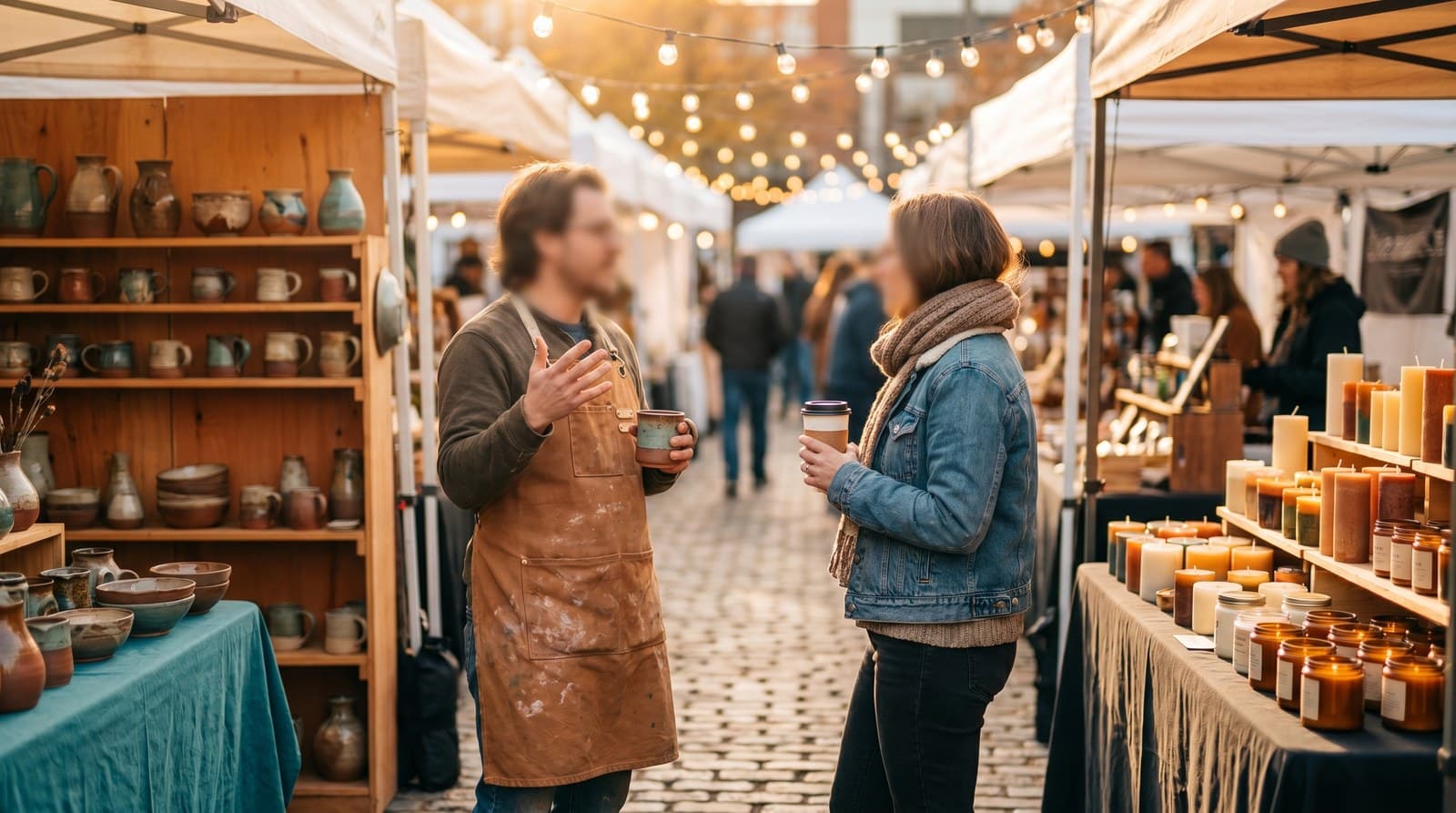
Walk most craft fairs and you'll see vendors treating each other like rivals. That's a mistake. The person setting up the booth next to you is often the most useful contact you'll make all day, and not because they're a customer. The craft fair vendor community runs on small favors: a tip about a better event, a customer sent your way, someone watching your table while you find a bathroom. These moments add up, and they're easy to lose. You meet a dozen friendly makers in a weekend, swap a few cards, feel a real spark with one or two, and a month later you can't remember a single name. This post makes the case that fellow vendors are an underrated business asset, and shows you a calm way to remember the ones worth keeping.
Why do fellow vendors matter so much?
Fellow vendors matter because they're the only people at the event who understand your day. They know what a good market feels like, which shows are worth the booth fee, and how to fix a wobbly canopy in the wind. Customers come and go. Vendors are your peers, your scouts, and sometimes your lifeline.
There's a real cost to going it alone. Around 27% of entrepreneurs struggle with loneliness and isolation, and that isolation can quietly chip away at decision-making and creativity. Selling solo at a market all day is a perfect recipe for it.
The fix is connection, and craft fairs hand it to you for free. Other vendors give you something a Slack group can't: someone standing 3 feet away who gets it. Shopify makes the same point in its guide on beating entrepreneur loneliness, noting that peer connection is one of the most reliable ways to feel less alone in the work. At a market, that peer is right there.
What can other vendors actually do for you?
Other vendors can give you insider tips, send you paying customers, watch your booth during breaks, and open doors to collaborations. None of it requires a hard pitch. It comes from being a decent neighbor for a day and staying in touch with the people you click with.
Here's what those relationships tend to look like in practice:
- Honest event intel. Vendors will tell you the good, the bad, and the ugly about a show. Before you apply somewhere new, the fastest research is asking makers who've worked it. It pairs well with the legwork in our guide on finding craft fairs near you.
- Referrals and pass-alongs. You're not competing with everyone. A jeweler can send a customer looking for candles straight to the candle booth. DFW Craft Shows puts it plainly in its vendor etiquette guide: refer shoppers to vendors you trust, because it's good business and good karma. Referral marketing works because 92% of people trust recommendations from someone they know far more than any ad.
- Booth watching. Everyone needs a bathroom break. The standard move is a swap: offer to watch your neighbor's table, and they'll cover yours. Made Urban lists this as basic craft show etiquette, and it's a small kindness that makes a long day survivable.
- Pricing and product feedback. A neighbor who's done 50 markets can save you from underpricing or overpacking your table. They'll tell you what moves and what sits.
- Collaborations down the road. The Enterprise World describes craft fairs as a hub for artisans to meet peers and form collaborations, like a potter and a jeweler teaming up on a joint piece. Those partnerships usually start as a friendly chat between two booths.
To make any of this happen, you don't need to be outgoing. Cathy of Cat Shy Crafts wrote a whole shy crafter's guide to markets, and the trick is low-key: a one-sentence intro of what you make, then a genuine question about what they make.
The hidden cost: you forget who you met
You meet a lot of people at a market, and your brain is not built to hold onto all of them. This is the part nobody warns you about. The connection felt real on Saturday. By the time you're prepping the next event, the name is gone and so is the follow-up.
This isn't a character flaw. It's how memory works. Psychologist Hermann Ebbinghaus described the forgetting curve: we lose about half of new information within an hour and roughly 70% within a day. Names are the first to go, because they don't carry built-in meaning the way a face or a craft does.
Business cards were supposed to solve this. They don't. A stack of cards with no context is just clutter. The advice from networking pros is to capture the moment fast: CNBC's roundup of memory hacks for names and a string of networking guides all land on the same fix. Jot a line or two within a few minutes, while it's fresh. Name, where you met, one standout detail, one reason to reconnect.
The trouble is, scribbling on cards mid-market is awkward, and you're busy selling. So the notes never happen, and the people fade.
How do you remember the people you meet at markets?
The reliable way to remember vendors is to capture a name and a face in the moment, with one or two quick tags about why they mattered. Do it in seconds, at the booth, while it's fresh. A photo plus a first name beats a business card every time, because your memory is wired for faces, not text.
That's exactly what we built Vendor Neighbor Notes to do. It's a small feature inside MyEventPrep for the makers next to you. The whole interaction is meant to take a few seconds:
- Snap a photo. Their table, their face, their product, whatever jogs your memory later. Faces stick where names slip.
- Type a first name. That's it. No formal contact record, no required fields.
- Add quick tags. Things like "swapped cards," "great energy," or "collab potential." A couple of taps, done.
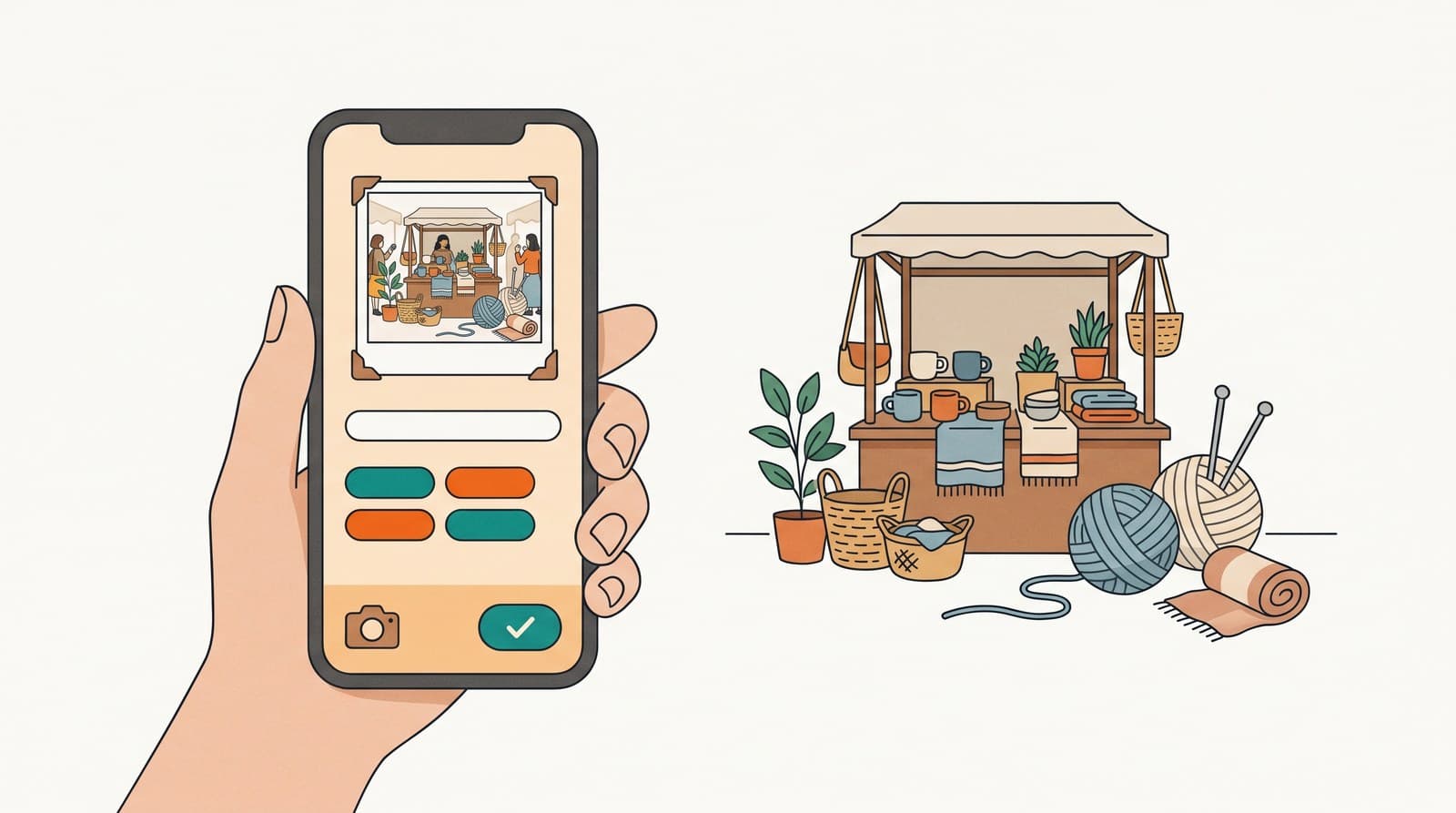
It works offline, because plenty of markets have terrible signal and you shouldn't have to fight a loading spinner mid-conversation. It also dedupes and tracks per-event sightings, so when you bump into the same potter three markets in a row, you'll see that history instead of starting from zero. If you already run a post-event debrief after each show, reviewing your neighbor notes fits right into that 5-minute routine while the day is still fresh.
The point isn't to build a database. It's to make sure the maker you genuinely connected with on Saturday is still a name you recognize next season.
What Vendor Neighbor Notes is (and isn't)
Vendor Neighbor Notes is a private, personal scrapbook for remembering the vendors you meet. It is not a CRM, a public directory, or a social network. There's no profile to maintain, no feed, no one getting notified. It's your memory, written down, and nobody else sees it.
That distinction matters, so here's the clean version:
| Vendor Neighbor Notes is | It is not |
|---|---|
| A private note just for you | A public profile or directory |
| A photo, a first name, a few tags | A full contact database with required fields |
| Offline-first, works with no signal | A social feed or messaging app |
| A memory jog for next season | A CRM with pipelines and follow-up automation |
| Quiet and personal | Anything other vendors can see |
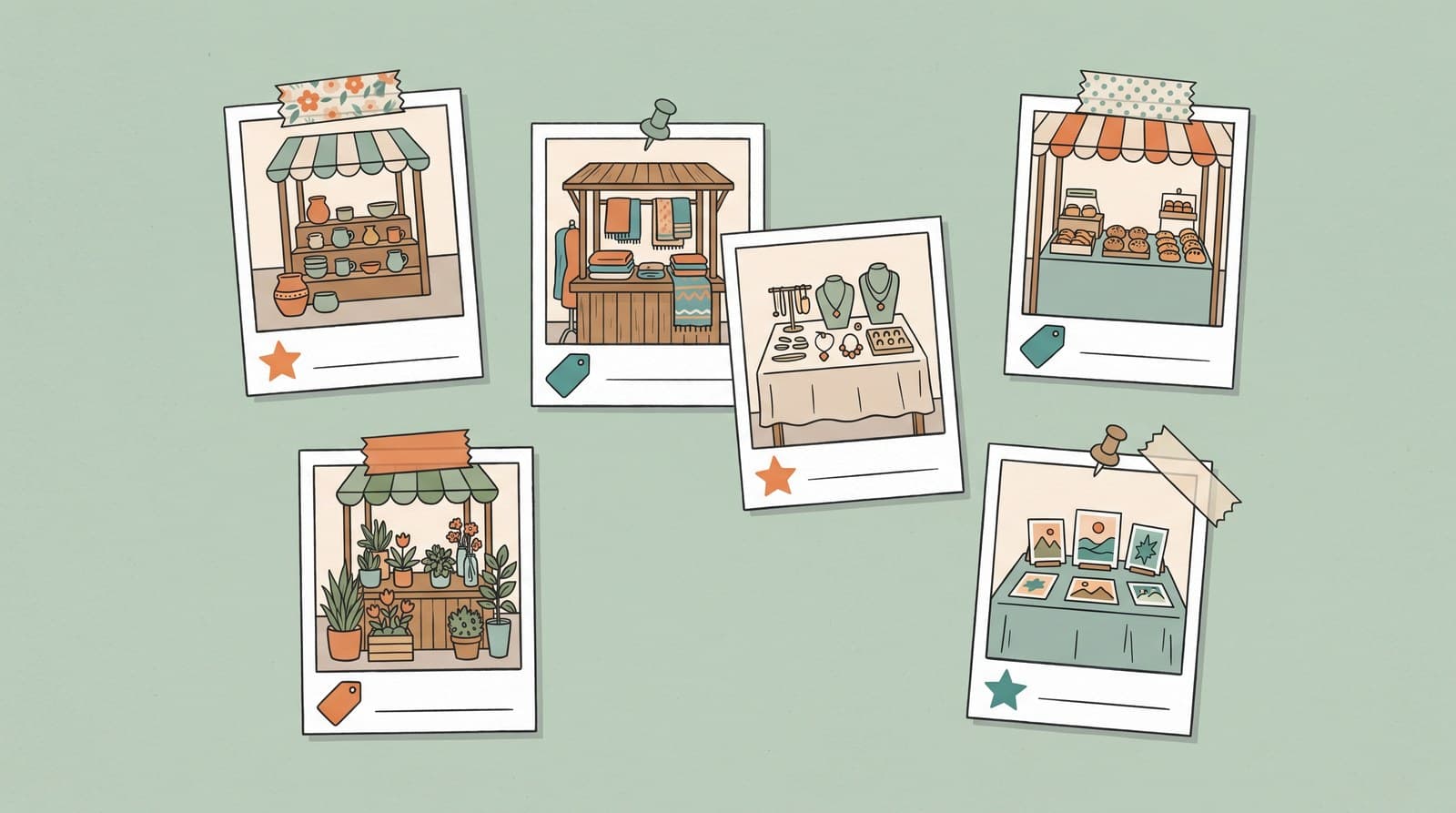
We're makers too, and we didn't want one more app demanding profiles and pings. The booth next to you is a relationship, not a lead. This just helps you keep it. If you want to see how it sits alongside the rest of your event-day tools, the features overview lays it out.
Be a good neighbor, and remember who was good to you
The vendors beside you are not your competition. They're your scouts, your booth-watchers, and the only people at the show who truly get the day you're having. Treating them as a community pays off in tips, referrals, collaborations, and a lighter load on a hard day.
Two things make it stick. First, be the neighbor you'd want: introduce yourself, offer to watch a table, send a shopper their way. Most makers will happily return it. Second, write down who you met before your brain quietly deletes them, because a photo and a first name on Saturday is worth more than a forgotten card in a drawer.
You can start free. Sign up at myeventprep.app/signup, and the next time you meet a maker worth remembering, you'll actually remember them.
Frequently Asked Questions
Is networking with other vendors at craft fairs really worth it?
Yes. Fellow vendors share honest event reviews, send referrals your way, and watch your booth during breaks. Around 27% of entrepreneurs struggle with isolation, and a booth neighbor who understands your day is a rare, free source of both business intel and support. The relationships often matter more than any single sale.
How do I network at a market if I'm shy or introverted?
Keep it low-key. Prepare a one-sentence summary of what you make, then ask your neighbor about theirs. You don't need to pitch. A genuine question and a small favor, like offering to watch their table during a bathroom break, builds more goodwill than any sales talk.
Why do I keep forgetting the vendors I meet?
It's normal. The forgetting curve, described by psychologist Hermann Ebbinghaus, shows we lose about half of new information within an hour and roughly 70% within a day. Names fade fastest because they lack built-in meaning. Capturing a photo and a quick note in the moment is the most reliable fix.
Is Vendor Neighbor Notes a CRM or a directory?
No. It's a private, personal scrapbook just for you. There are no public profiles, no feed, and no notifications to anyone. You snap a photo, type a first name, and add a few tags. Other vendors never see it. It exists only to jog your own memory next season.
Does Vendor Neighbor Notes work without internet?
Yes. It's offline-first, which matters because many markets have weak or no signal. You can capture a name, photo, and tags with no connection, and it syncs later. It also dedupes and tracks per-event sightings, so repeat encounters with the same vendor build a simple history over time.