Rain in the Forecast: A Craft Fair Rain Plan for the Week Before an Outdoor Market

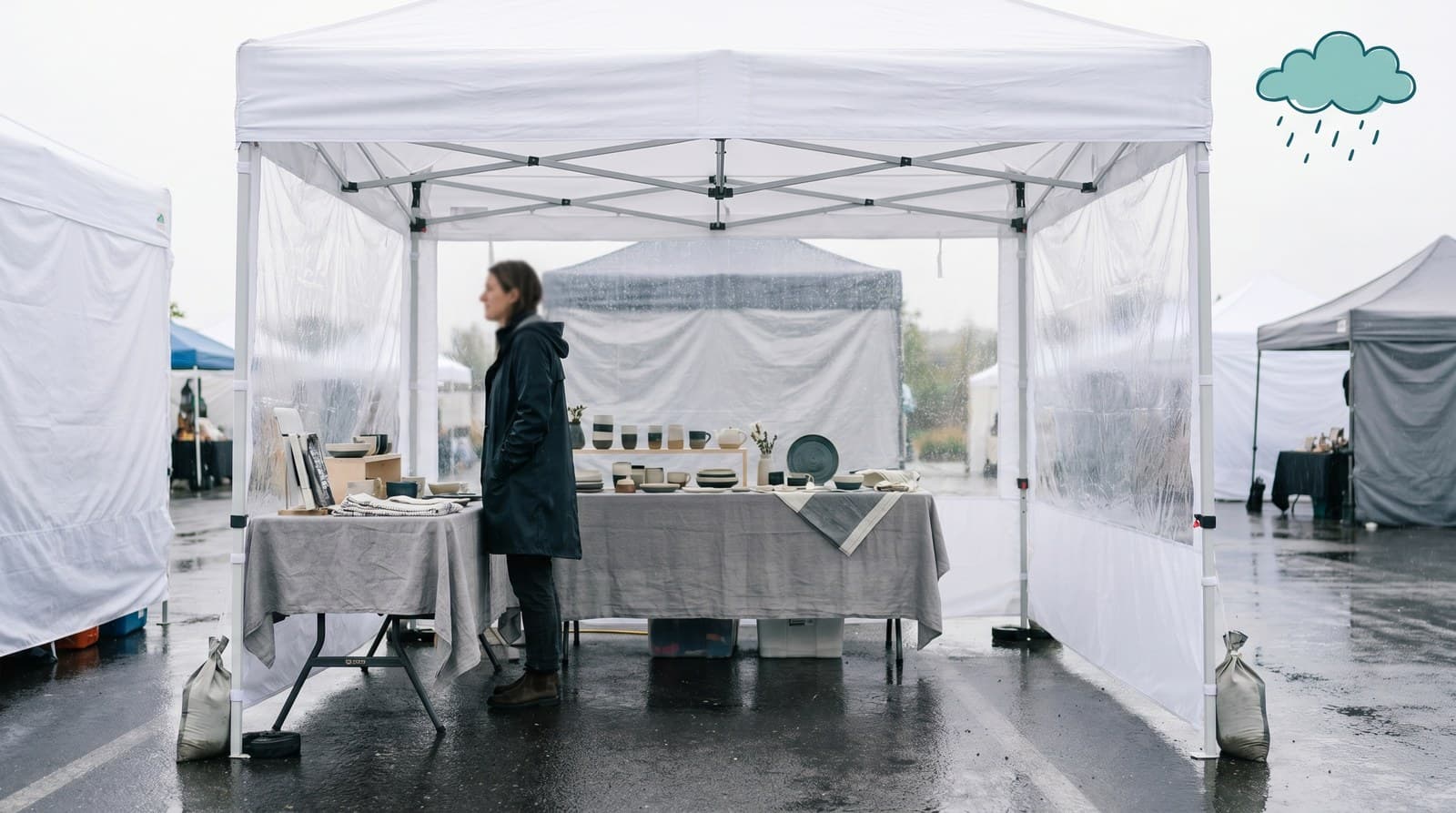
Few things rattle a maker like a rain icon popping up on the 5-day forecast 3 days before an outdoor show. Your craft fair rain plan is what turns that little gray cloud from a panic into a checklist. Most of us have stood at the kitchen window the night before a market, refreshing the radar, wondering if we should bother loading the car. Rain is annoying, but it's rarely a reason to write off the whole day.
This guide walks through the week before an outdoor market when rain is in the picture. We'll cover how to actually read the forecast, how to decide between going, prepping harder, or skipping, and how to keep your product and booth dry if you go. It pairs with our outdoor craft fair survival guide, so we'll stay focused on the decision part here.
Does rain actually hurt craft fair sales?
Yes, but less than you'd think. Heavy rain can cut market attendance by up to 70% on the worst days, so fewer people show up. The flip side: the ones who do come usually came to buy, not browse, which can push per-customer sales higher.
So rain thins the crowd, but it also thins the casual foot traffic that was never going to buy anyway. Vendors who show up in bad weather tend to build loyalty with the regulars who appreciate seeing a familiar booth. If half the other vendors stay home, the shoppers who came have fewer booths to spread their money across, and that can land in your favor.
The honest read is that a rainy show is a smaller show, not a dead one. A quick gut check with our booth fee evaluator can tell you what you'd need to sell to make the trip worth it, rain or not.
How do you read a rainy forecast the week before?
Read 2 numbers: the probability of precipitation (PoP) and how far out the forecast is. A "40% chance of rain" doesn't mean it rains 40% of the day. Per the National Weather Service, it means there's a 4 in 10 chance of measurable rain at your spot during that window. Treat it as odds, not a clock.
Timing matters as much as the percentage. A forecast that puts rain at 7 a.m. but clearing by 10 is a very different day than steady rain through your whole event. Look at the hourly breakdown, not just the daily summary.
Distance from the event changes how much to trust it. Forecasts 3 days out run around 90% accurate, while precipitation forecasts drop to roughly 60-65% accurate by days 6 and 7. So a scary rain icon 6 days out is worth noting, not panicking over. The closer you get, the more the forecast firms up.
Here's what tends to work:
- 5 to 7 days out. Note it, do nothing drastic. The forecast will likely change.
- 3 to 4 days out. Start prepping. Pull your weights, sidewalls, and bins.
- 1 to 2 days out. This is your real read. Decide go, prep harder, or skip.
Should you go, prep harder, or skip when rain is forecast?
Most of the time, go and prep harder. Skipping should be rare, because most outdoor craft fairs are rain-or-shine with no refunds if you stay home. If you've already paid the booth fee, that money is spent whether you show or not, so the math usually favors going.
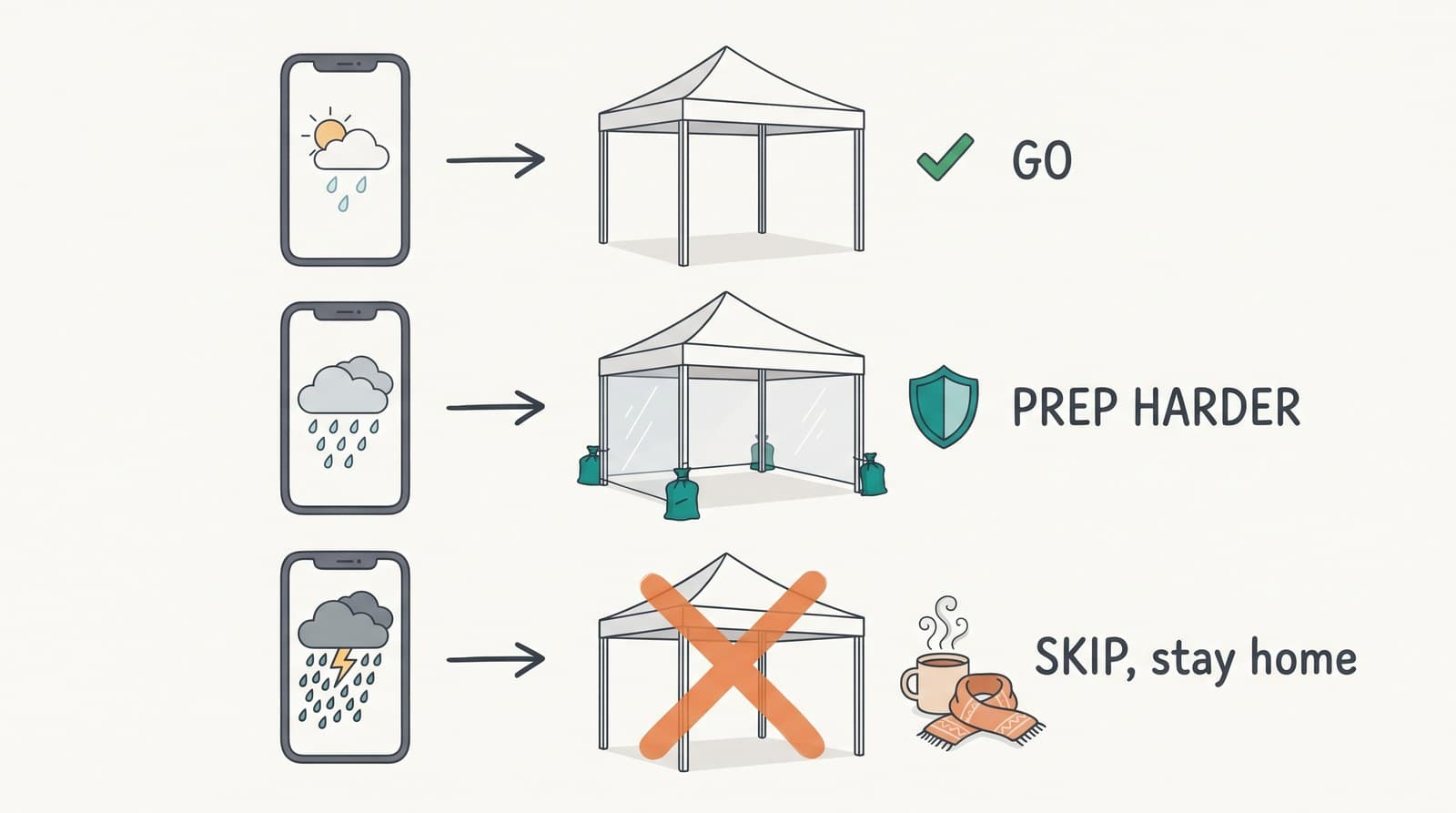
A few things tip the scale toward skipping. Lightning and high wind are safety issues, not just comfort ones. If your product genuinely can't survive damp air (think raw paper goods or anything that warps), a soaking day may cost you more in ruined stock than you'd make. And a no-call no-show can hurt your standing for future shows, so if you do skip, tell the organizer.
Here's a simple way to frame the decision.
| Situation | Lean toward |
|---|---|
| Light rain, fee paid, durable product | Go and prep |
| Steady rain, short drive, sidewalls ready | Go and prep harder |
| Lightning or high wind forecast | Skip, tell organizer |
| Product ruined by moisture, no protection | Skip, tell organizer |
Whatever you choose, log how it went afterward. Tracking whether rainy shows are worth it for your specific products is exactly the kind of call our post-event debrief habit is built to support.
How to weatherproof your booth for rain
This is where a little prep pays off the most. Wind, not water, is what actually wrecks booths, and rain often brings wind with it. The most important move is weighting your canopy properly.
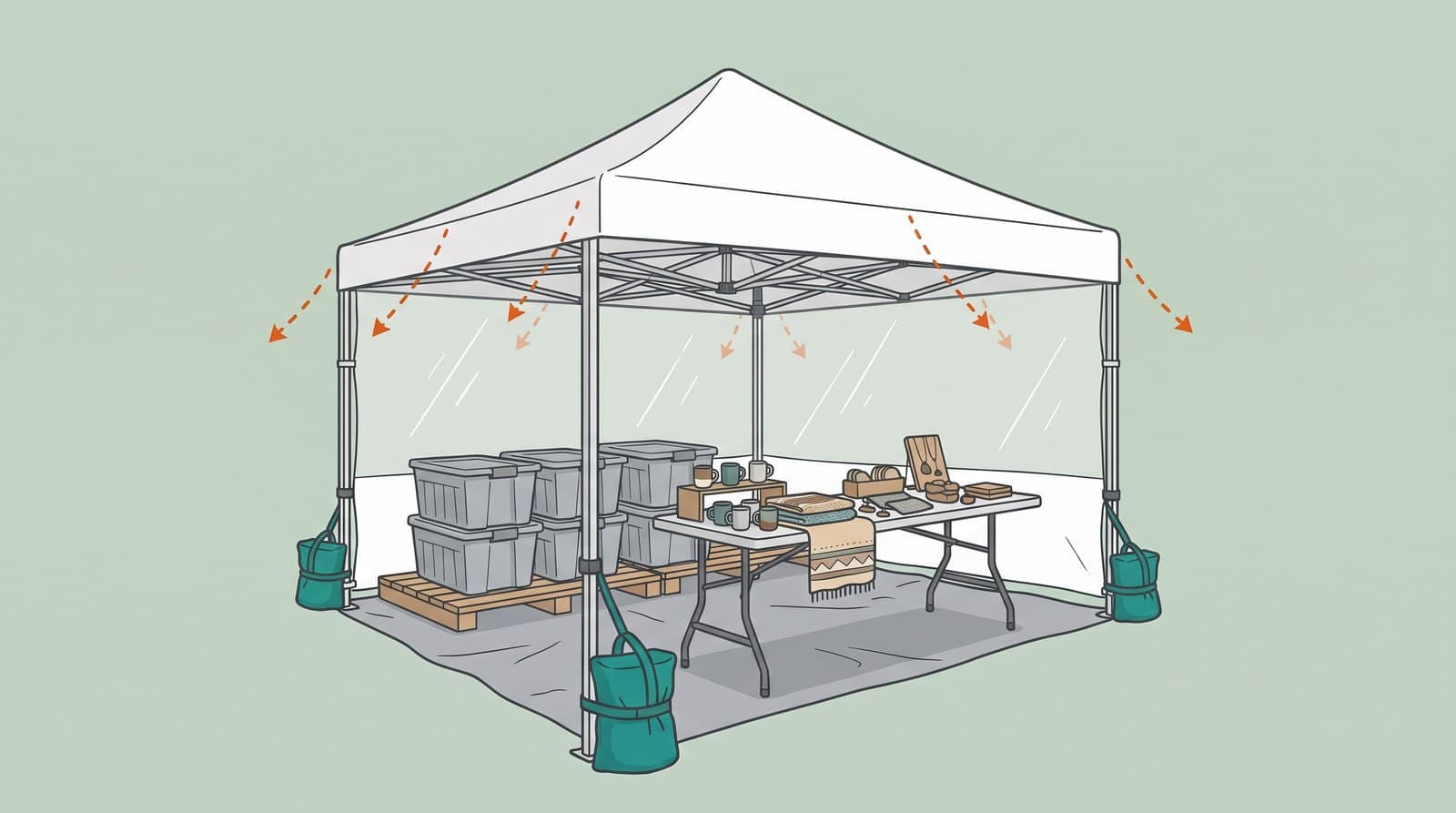
Weight every leg. Outdoor markets commonly require at least 40 pounds per leg on hard ground. If wind is in the forecast, bump that toward 75 to 100 pounds per leg. Sand-filled canopy bags made for the frame work better than loose bricks.
Stop water from pooling. A sagging canopy that collects water can collapse under the weight and soak everything under it. A pool noodle slid under each corner of the canopy lifts the sag so water runs off the edges instead of puddling on top.
Add sidewalls. Blowing rain comes in sideways, and a single sidewall on the weather side keeps most of it off your table. Clear shower curtain liners hung from the front let shoppers still see in while staying dry.
If you're rethinking the whole setup for weather, our booth layout guide covers how to position tables so the wettest edge isn't where customers stand.
How do you protect your products from rain?
Bag first, display second. The cheapest insurance is a few clear plastic shower curtains and a stack of contractor trash bags. If a downpour hits, you can sweep product into bags or throw a curtain over the table in under a minute. Keep them within arm's reach, not buried in the car.
Plastic bins do double duty here. They keep stock dry on the drive, raise your display off a wet table, and give you somewhere to dump inventory fast if the sky opens up. Lidded bins beat open boxes every time in the rain.
A couple more habits that help:
- Raise everything off the ground. Water pools under tables and wicks into bottom boxes. A pallet, crate, or even a tarp fold keeps stock off the puddle line.
- Pack a towel roll. Microfiber towels wipe down tables, dry your hands, and mop the inevitable drip line along the canopy seam.
- Bring your own bags for buyers. A clear or zip bag for each sale means your product leaves dry, which matters as much as keeping it dry on your table.
Your full craft fair packing checklist likely already has bins and tarps on it. Rain just moves them from "nice to have" to "load first."
What to pack when rain is in the forecast
Keep a small rain kit packed and ready so a wet forecast doesn't mean a frantic morning. The point is to grab one bin and go, not to rebuild your load-out from scratch every time clouds roll in.
A solid rain kit includes:
- 4 canopy weights, 40 pounds or more each, sand bags preferred.
- 2 sidewalls plus zip ties or clips to attach them fast.
- 4 pool noodles, one per canopy corner, to stop water pooling.
- Clear shower curtain liners for the front and weather-side walls.
- Contractor trash bags and lidded bins for fast product cover.
- A towel roll and a change of socks. Dry feet keep a long wet day bearable.
- Cash and a backup power bank, since damp days can be hard on card readers.
Turn one rainy day into a reusable craft fair rain plan
The best craft fair rain plan gets a little smarter every season, and that only happens if you write things down. After a wet show, jot the actual weather, what sold, and what you wished you'd packed. Next time rain shows up on the forecast, you're reading from notes instead of guessing.
This is the whole idea behind MyEventPrep. Each event shows the forecast as the day approaches, and after the show you record what the weather actually did. Over time you build a real record of how your booth and your sales hold up in the rain, so the go-or-skip call gets easier.
We've watched the sky the night before a show plenty of times, and the calls got easier once we had past rainy days to look back on. Memory is unreliable; notes aren't. Some makers find their durable products barely notice the rain while a few fragile items aren't worth the risk, and that pattern is hard to see without a season of records behind you.
The calm version of a rainy forecast
A rain icon 3 days out isn't a crisis. It's a prompt to read the forecast properly, weight your canopy, bag your product, and decide with a clear head. Most rainy shows are smaller, not ruined, and the makers who show up often do fine.
Here's the short version. Read the PoP as odds, not a guarantee. Trust the forecast more as the day gets closer. Prep your booth for wind first and water second. And write down what actually happened so next time is easier.
You can start building that record for free. Sign up at myeventprep.app/signup, add your next outdoor event, and let the forecast and your own notes do the worrying for you. Rain or shine, a little prep beats a lot of panic.
Frequently Asked Questions
Does rain cancel most outdoor craft fairs?
Usually no. Most outdoor craft fairs run rain-or-shine and don't refund booth fees if you skip on your own. Organizers typically only cancel for safety threats like lightning or high wind, and even then they often offer a credit toward a future event rather than a refund.
What does a 40% chance of rain mean for my market day?
It means there's a 4 in 10 chance of measurable rain at your location during that forecast window, per the National Weather Service. It does not mean it rains 40% of the day or that 40% of the area gets wet. Check the hourly forecast to see if the rain overlaps your actual event hours.
How much weight does my canopy need in the rain?
Plan on at least 40 pounds per leg on hard ground for a typical outdoor market. If wind comes with the rain, increase that toward 75 to 100 pounds per leg. Sand-filled bags made for canopy frames hold better than loose weights.
How do I keep water from collapsing my canopy?
Stop it from pooling on top. A sagging canopy that collects water can collapse under the weight and soak everything below. Slide a pool noodle under each corner so the canopy sheds water off the edges, and push off any puddle you see forming during the day.
Is it worth doing a craft fair if rain is forecast?
Often yes, since fewer vendors show up and the shoppers who come usually came to buy. Heavy rain can cut attendance up to 70%, but per-customer sales can rise. Run the numbers against your booth fee, check that your product survives damp air, and decide from there.