Should You Do That Craft Fair Again Next Year? A Simple Verdict System

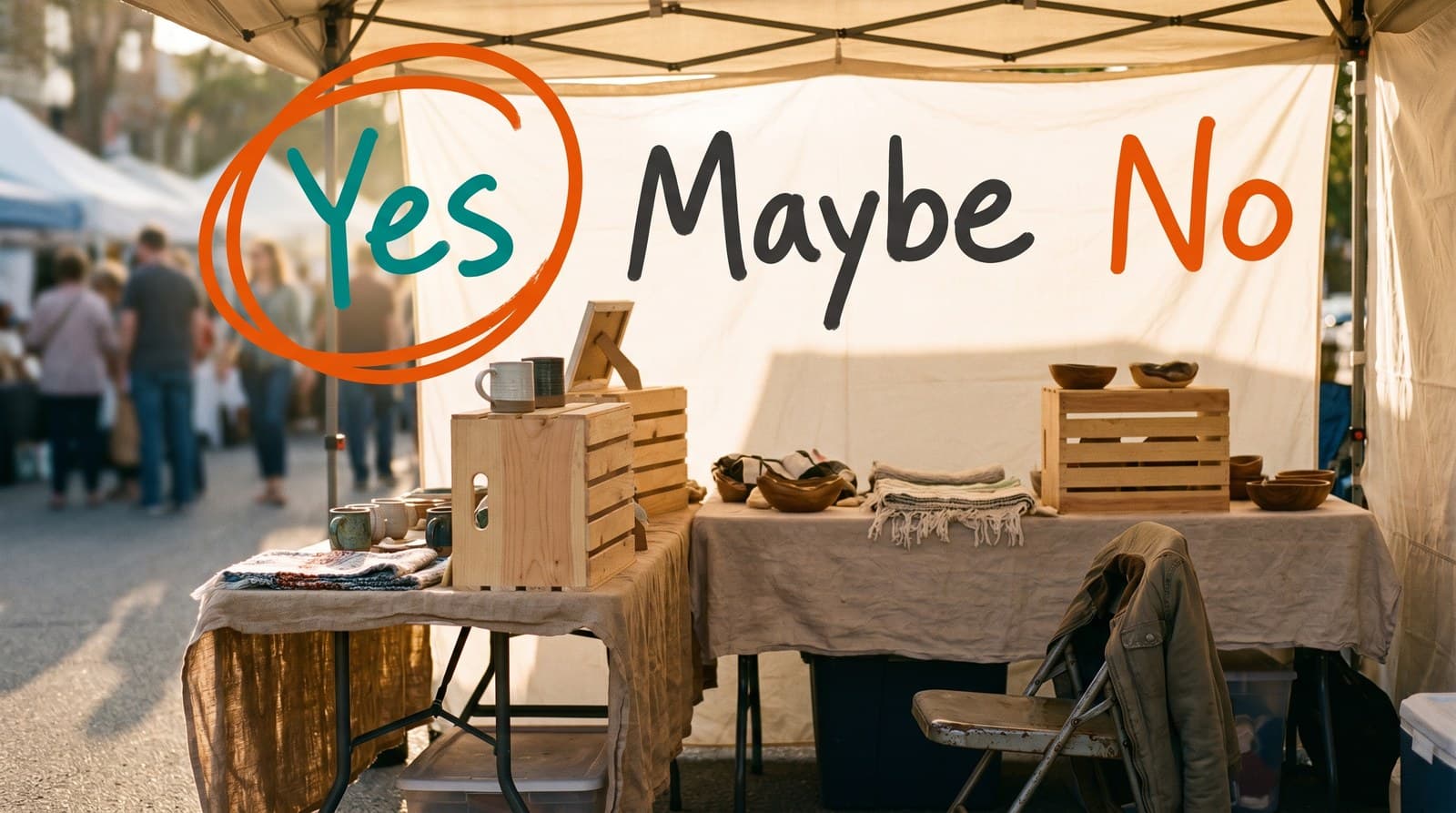
The application for that craft fair just landed in your inbox. Early-bird pricing, deadline in two weeks. And you genuinely cannot remember if last year was good.
You think it was fine? The weather was rough, or maybe that was a different show. You sold a decent amount, you think. Or you packed up early. The details have gone soft, and now you're making a real decision (time, money, a whole weekend) on a feeling you can't quite trust.
We've been there. It's easy to keep doing the same shows out of habit, then wonder in spring why the calendar feels heavy. The good news is you don't need a spreadsheet full of formulas to decide. You need a simple verdict system: a profit target, a Yes / Maybe / No call, and one honest note written while it's all still fresh. Here's how that works.
Why Do We Keep Going Back to Shows That Don't Pay Off?
We keep going back because of habit, loyalty, and the money we already spent. The booth fee feels wasted if we quit, even though it's already gone. That pull has a name: the sunk cost fallacy. It nudges us to repeat events that aren't really earning their spot.
The sunk cost fallacy is our tendency to keep investing in something just because we already put time or money into it. Those past costs are gone either way. They shouldn't drive the next decision, but they do. Even large companies fall for it, doubling down on weak bets to avoid admitting the first one didn't work.
For vendors, it shows up in quieter ways:
- Habit. It's easy to make the same items and set up the same booth, year after year, without asking if the show still fits.
- Loyalty. You like the organizers. You like the regulars who stop by your table. The emotional side of vending is real, and familiar faces are genuinely nice.
- Fuzzy memory. Without a record, a so-so day rounds up to "pretty good" by the time you decide again.
None of that makes you bad at this. It makes you human. A verdict system just gives the decision something firmer to stand on.
What Should "Worth It" Actually Mean for One Event?
"Worth it" should mean the event cleared a profit target you set in advance. Add up your costs (booth fee, travel, supplies, your time), then decide what profit makes a weekend worth giving up. If sales beat that number, the show paid off. If they didn't, it's a candidate to drop.
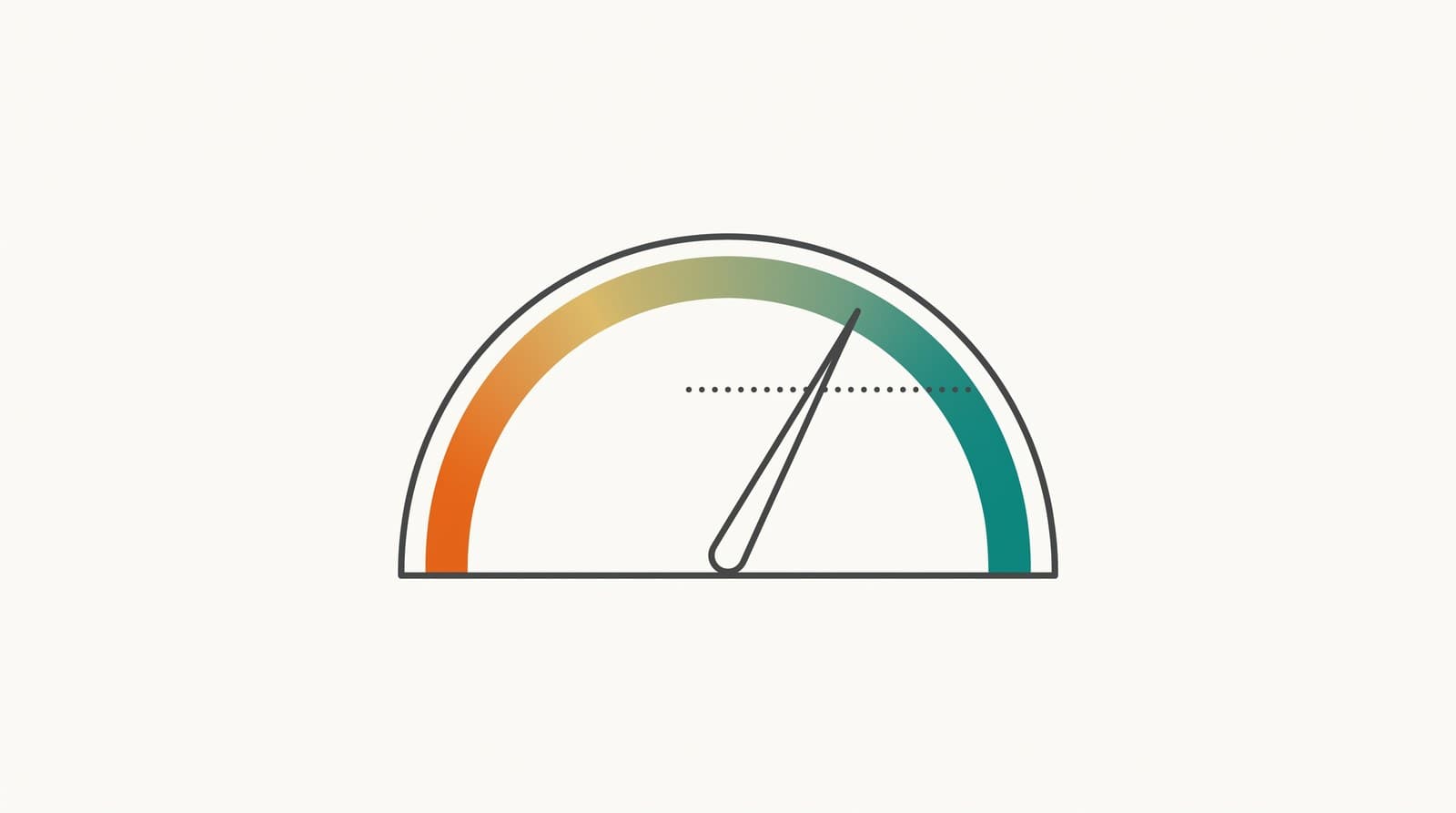
The key word is "you." There's no universal pass mark. A common rule of thumb is to gross about 3 times your booth fee, so a $150 booth aims for around $450 in sales. That's a fine starting point, but your target is yours to set based on your costs and your time.
A booth fee that eats too much of your sales is a warning sign. TheCraftMap suggests it's worth a second look once the fee passes about 25% of your realistic sales estimate. Travel can quietly double your costs too, which changes the math fast.
You don't need fancy accounting here. Revenue minus your real costs, measured against a target you picked. That's it. If you want help with the per-event math before you commit, our booth fee evaluator and profit calculator do the arithmetic for you. The point isn't precision to the penny. It's a clear line that turns "I think it was okay" into "it cleared my target" or "it didn't."
The Yes / Maybe / No Verdict
Here's the whole system. After an event, once you know your sales and your costs, give the show one of three verdicts. Keep it simple on purpose.
| Verdict | What it means | What you do |
|---|---|---|
| Yes | Cleared your profit target with room to spare. Felt right. | Rebook without much debate. |
| Maybe | Close to your target, or mixed signals (good crowd, slow sales). | Flag it. Decide with the notes you wrote. |
| No | Missed your target, and not for a one-off reason. | Skip it next year, or only return if something changes. |
That's the verdict. Three buckets, not a 10-point rubric you'll never fill out.
Pair the verdict with a profit grade and it gets even clearer. In MyEventPrep, the "Was it worth it?" check grades each event against your own profit target as Strong, OK, Weak, or Loss. Then you log the simple "Do this event again?" call as Yes, Maybe, or No, with one line of context. The grade tells you the numbers. The verdict tells you what to do about them.
A quick warning. Don't let a single rough day kill a strong show forever. Bad weather, a scheduling clash, or a slow year can drag down an event that's usually solid. That's exactly why the next part matters.
What Should You Write Down While It's Still Fresh?
Write down one or two honest lines: your sales versus your target, and why the day went the way it did. Note anything that would change your mind next year, like weather, foot traffic, your booth spot, or what actually sold. A short note beats a perfect report you'll never write.
Speed matters more than you'd think, because memory fades fast. The Ebbinghaus forgetting curve shows we lose a big chunk of new details almost right away. In some studies, people forget around 50% within an hour and up to 70% within a day. By the time you're tearing down the tent, the specifics are already slipping.
So capture the things that won't survive the drive home:
- The numbers. Your sales and roughly what the day cost you, against your target.
- The why. "Slow until noon, then packed." "Rained all morning." "My usual neighbor wasn't there."
- What sold (and what didn't). This feeds your production planning and tells you what to bring next time.
- One feeling. "Drained but happy" or "fine, not worth the drive." Future-you will want that.
If you'd like a fuller routine, our 5-minute post-event debrief walks through it. Reflection is where the learning lives. Looking back at a finished event is how you spot what to repeat and what to change. The verdict is the headline. The note is the story behind it.
How Do You Make Sure You Actually Remember Next Year?
You attach the note to the event itself, so it resurfaces when the decision returns. A verdict scribbled on a sticky note is gone by spring. A verdict tied to the event shows up right when the application reopens, turning a hazy guess into a clear reminder of what you really thought.
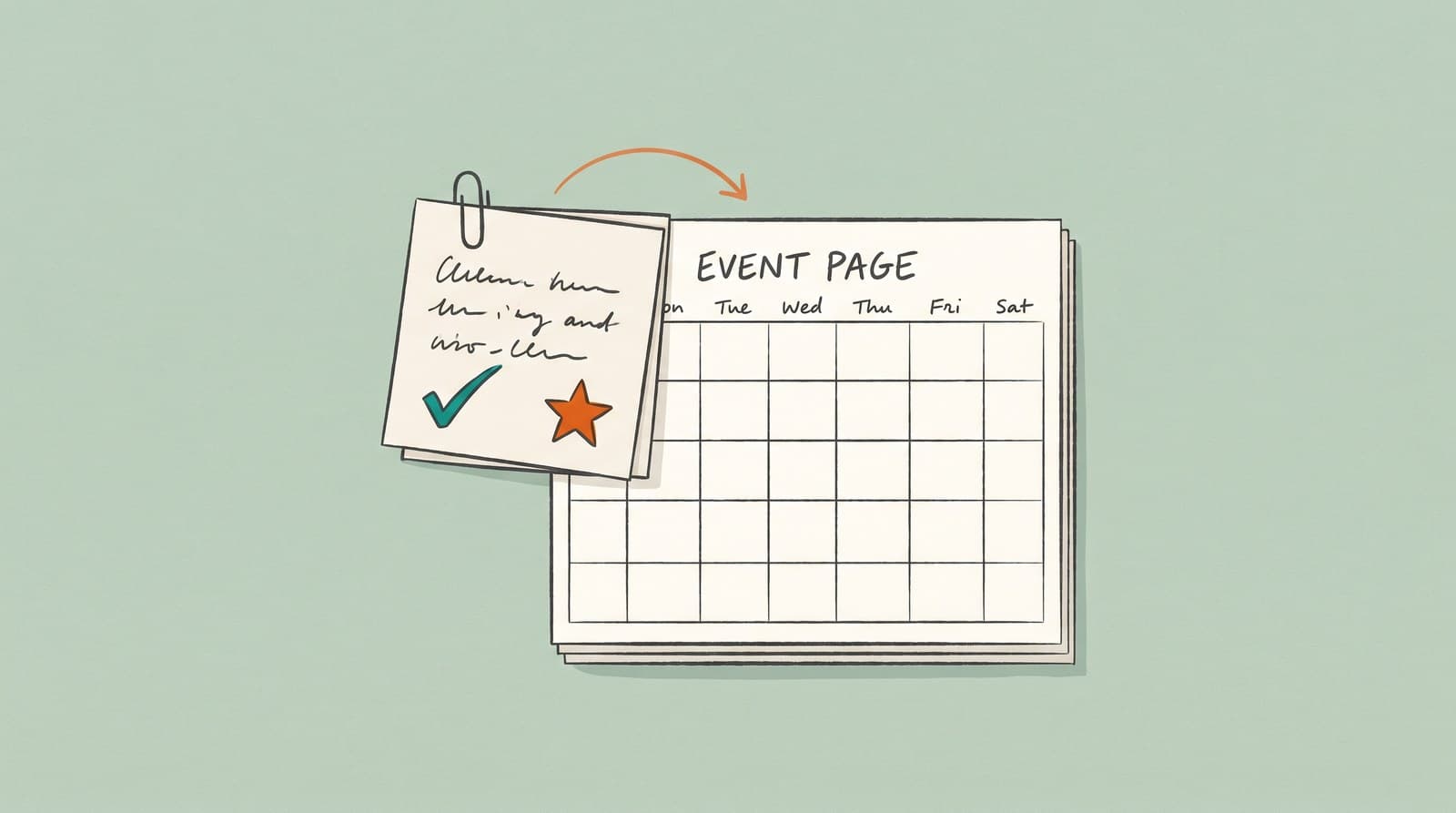
This is the gap most vendors hit. You learn the lesson in October and lose it by March. Tracking your stats over time only helps if the right note meets you at the right moment, which is the day you're deciding to apply again.
MyEventPrep handles this with "Notes from last time." When you duplicate an event to plan next year's version, last year's verdict and notes come along for the ride. You see your Yes / Maybe / No call and your one-line reason before you commit a single dollar. No digging through old messages or trying to recall a day that's mostly faded.
You can do a lighter version on paper, of course. Keep a simple log, one line per show, and actually read it before you fill out applications. The tool just removes the "did I write that down, and where" problem. However you do it, the goal is the same: let past-you brief present-you.
What Do You Do With a "Maybe"?
A "Maybe" is the most useful verdict, because it's where your notes do the heavy lifting. Don't rebook on autopilot and don't drop it in a huff. Read what you wrote, then decide if the thing that held it back was a one-off or a pattern.

Most shows won't be a clean Yes or No. They'll be a Maybe, and that's fine. The trick is asking one question: was the problem fixable or built in?
- Probably worth another shot. Bad weather, a one-time scheduling clash, a slow spot you could request to change, or a year you brought the wrong mix of products.
- Probably not. Thin crowds two years running, a fee that keeps outpacing sales, a buyer who isn't your buyer, or a long drive the numbers never justify.
When you're weighing a Maybe, compare it against your other options. If you're hunting for craft fairs near you, a weak Maybe might lose its slot to a fresh show worth testing. A strong Maybe with a clear, fixable reason usually earns one more try.
And if your notes show certain items barely moved, that's a separate decision worth making. We once kept making a product that looked popular but took forever and rarely sold. The data said drop it, so we did. Knowing your best and worst sellers can rescue a Maybe show, because sometimes the event was fine and the lineup wasn't.
Bringing It Together
Deciding whether to do a craft fair again doesn't have to come down to a fuzzy memory and an early-bird deadline. Set a profit target so "worth it" means something. Give each show a Yes, Maybe, or No. Write one honest line while it's fresh, and keep it where it'll find you next year.
That's the whole system. It's calm, it's quick, and it respects the fact that you've got a hundred other things to pack. Over a few seasons, those one-line verdicts turn into a calendar you actually trust, full of shows that earn their spot.
If you'd rather not juggle sticky notes and spreadsheets, MyEventPrep keeps your profit verdict, your Yes / Maybe / No call, and your "Notes from last time" all attached to the event, ready when you reapply. You can start free and see how it fits your next show. See the full feature overview if you want the bigger picture first.
Frequently Asked Questions
How do I decide if a craft fair was profitable?
Add up everything the event cost you (booth fee, travel, supplies, and your time), then subtract that from your sales. Compare the result to a profit target you set in advance. A common starting benchmark is to gross about 3 times your booth fee, but the target that matters is the one based on your own costs and time.
Why do vendors keep doing craft shows that lose money?
Usually habit, loyalty to the organizers and regulars, and the sunk cost fallacy, which is our urge to keep investing because we already spent time or money. Fuzzy memory adds to it. Without a record, a mediocre show tends to round up to "pretty good" by the time you decide whether to return.
What metrics should I track to evaluate a craft fair?
Start with total profit against your target, then add sales per hour and sell-through rate (the share of what you brought that actually sold). Many vendors aim for around 75% of inventory to sell. Tracking a few simple stats per show lets you compare events fairly instead of guessing.
How soon after an event should I write my notes?
As soon as you can, ideally the same day. Memory fades fast: the Ebbinghaus forgetting curve suggests we can forget roughly half of new details within an hour. A couple of honest lines written right after teardown will be far more accurate than a report you try to reconstruct a week later.
What should I do with a "Maybe" event?
Read the notes you wrote and ask whether the problem was a one-off or a pattern. Bad weather or a scheduling clash is fixable and usually worth another try. Thin crowds two years running or a fee that keeps outpacing sales is a pattern, which points toward skipping it or testing a new show instead.