Best Selling Items at Craft Fairs (And Why the Lists Lie)

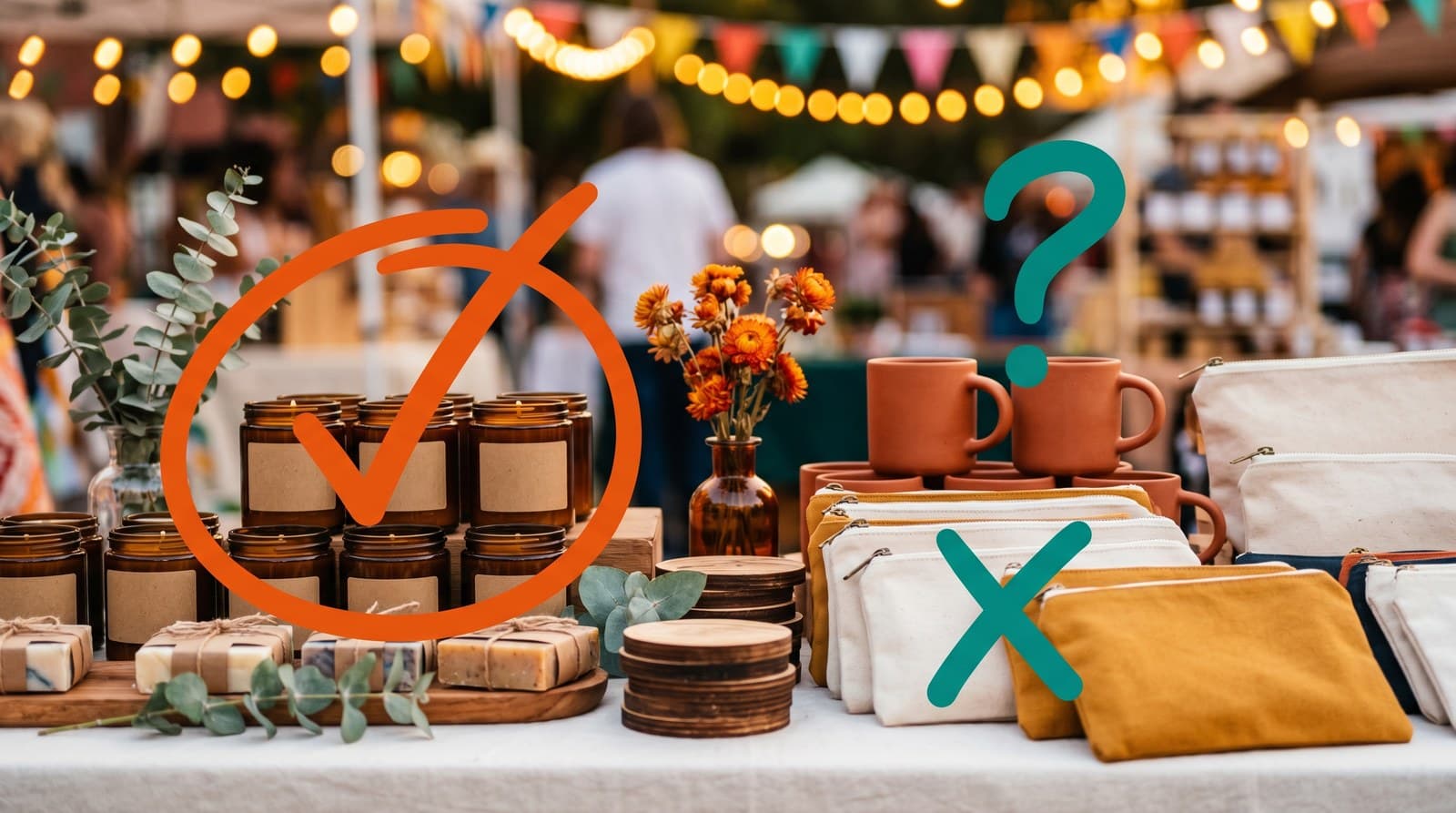
If you're searching for the best selling items at craft fairs, you're probably deciding what to make for your next show. And every list you've found says roughly the same thing: jewelry, candles, ornaments, bath products. Those lists haven't changed much in a decade, and there's a reason for that. They're not wrong, exactly. They're just not about you.
Craft fairs are still where handmade shopping happens. In one survey of 1,000 shoppers, 53% of handmade buyers said they'd purchased at craft fairs, more than any other place, including online. The demand is real. The question is whether the generic lists can tell you how to capture it.
We'll give you the honest version of the list first, because it's a fair starting point. Then we'll show you why it stops being useful after your first event or two, and what to use instead.
What Are the Best Selling Items at Craft Fairs?
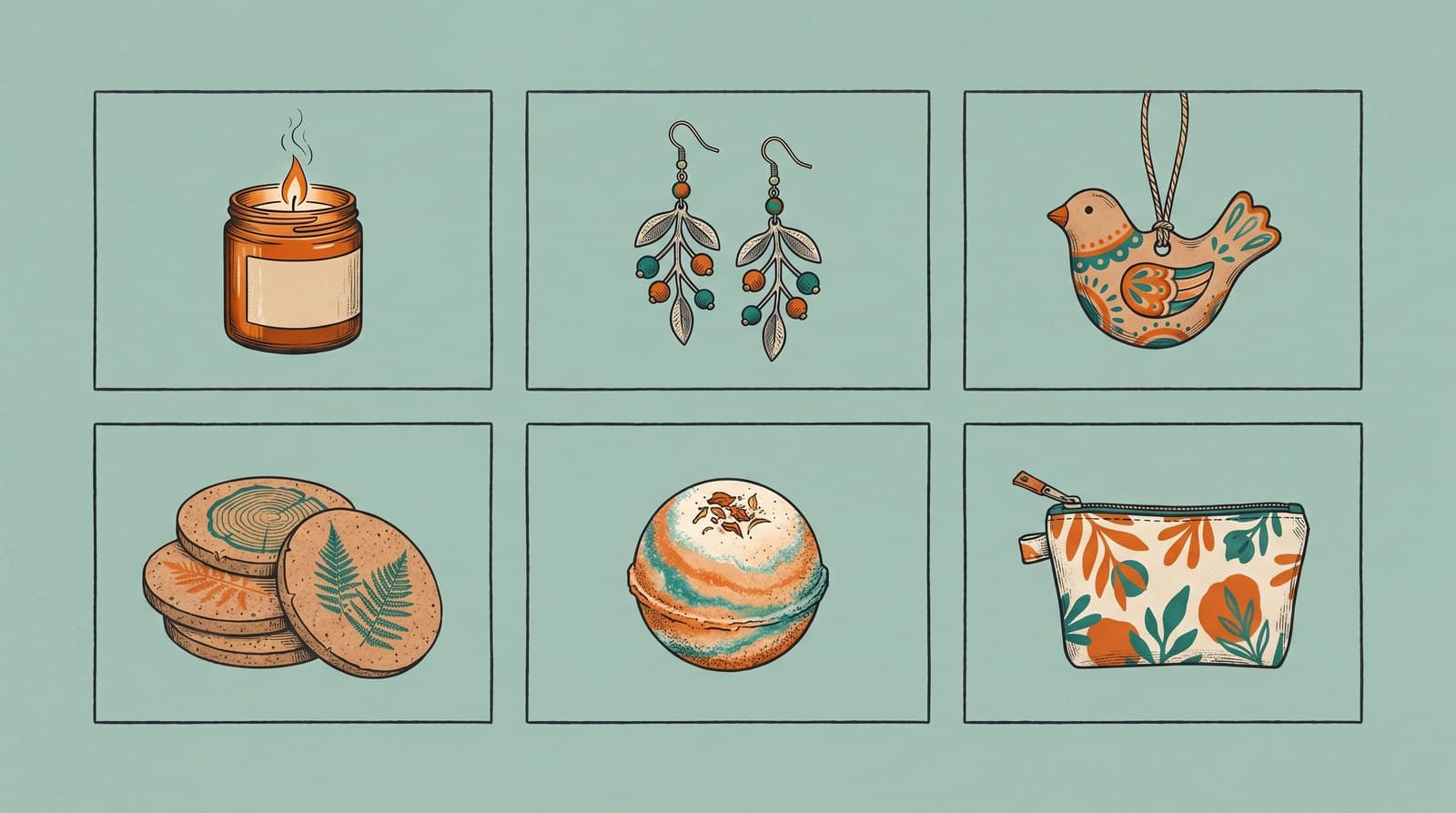
The best selling items at craft fairs are consistently jewelry, candles, bath and body products, seasonal ornaments, and small functional items like coasters, magnets, and zipper pouches. Items priced under $25 sell fastest, and seasonal items dominate fall and holiday shows. These categories hold up across most published lists and vendor reports.
If you just want to know what sells best at craft fairs, here's the short version every published list agrees on:
- Jewelry — earrings lead the category
- Candles — plus wax melts
- Bath and body — soap, bath bombs, lip balm
- Seasonal ornaments — the fall and holiday workhorse
- Small functional items under $25 — coasters, magnets, zipper pouches, keychains
That's the answer the lists give, and it's a reasonable one. Sites like Made Urban and TheCraftMap publish versions of it every year. Vendor blogs back it up with real experience: small, functional, giftable items come up again and again. Pouches, hats, earrings, potholders.
If you're brand new and have no sales history at all, this list is a fine place to start. It tells you what tends to work across thousands of booths.
But notice what it can't tell you: whether your candles will sell at your Saturday market, against the 3 other candle vendors who had the same idea.
Why Bestseller Lists Can't Tell You What You'll Sell
A bestseller list is an average. Your booth is not an average.
The same product can be a hit at one show and invisible at the next. One guide gives a perfect example: an $8 quirky bookmark sells well at a student-heavy street fair, then dies at a high-end show where attendees came to spend hundreds on 1 perfect piece. Same product. Same price. Different crowd, different result.
Event type changes everything. A farmers market crowd shops differently than a juried art fair crowd, and different events attract entirely different buyers. If you also work the produce-and-jam circuit, what to sell at a farmers market covers a different mix entirely. Season matters too. Ornaments that carry a November show won't do much in June.
So when a list says "candles sell," what it means is: candles sell, on average, somewhere, to someone. Whether they sell at your next event depends on the venue, the season, the crowd, and what's 2 booths over. The list doesn't know any of that.
You do. Or at least, your sales history does.
What Price Points Sell Best at Craft Fairs?
Items in the $5 to $25 range sell fastest at craft fairs. These are impulse buys: shoppers don't deliberate, they just add them to the day. The strongest booths pair a low-priced impulse item with mid- and higher-priced pieces, so the cheap item draws people in and the bigger item earns the profit.
Experienced vendors treat this like retail. Made Urban recommends a dedicated impulse-buy zone, the craft-fair version of the checkout counter rack. And a spread of price points gives every kind of shopper a way to say yes.
There's a catch, though, and it's the same one as before. A $5 item that sells 40 units sounds great until you count the hours it took to make 40 units. Craft show veterans will tell you the low-price item's real job is drawing people toward the higher-priced work. If your impulse item is all labor and no margin, it's not a bestseller. It's a busy way to break even.
If you're still working out your numbers, our guide to pricing your products walks through it.
How Do You Find Out What Actually Sells for You?
Track what you sell per product, per event. After 3 or 4 events, your own data will tell you more than any published list: which products sell at which event types, what your sell-through rate is, and which items earn the most per hour of work. That's a bestseller list for an audience of 1: you.
If you take payments with Square, most of this data already exists. The dashboard has per-item sales reports, and you can export any date range to CSV. Filter to a single event day and you have that show's results in black and white. We wrote a full walkthrough on using Square sales reports to plan your next market.
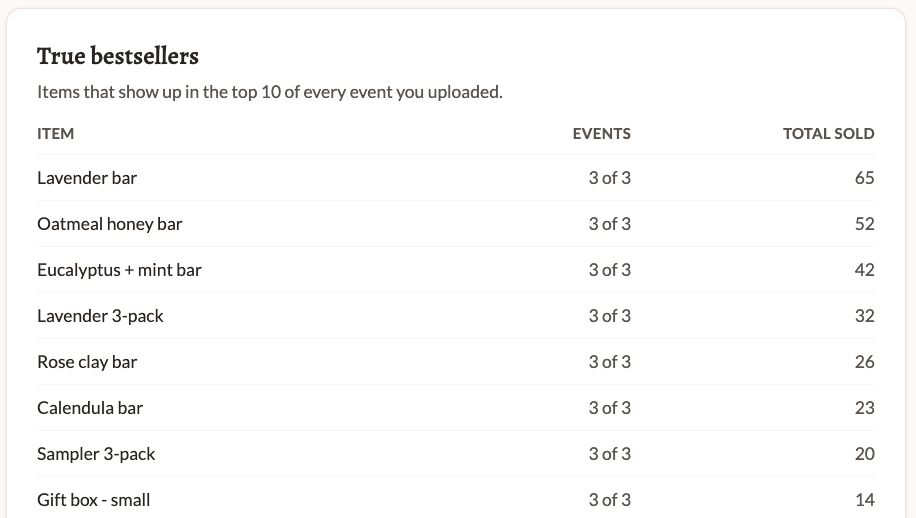
The habit that makes the data useful is small: a 5-minute post-event debrief while the day is fresh. What sold out, what didn't move, what people picked up and put back down. Pair that with your numbers and you'll start seeing patterns by your third show. Sell-through rate, the percentage of what you brought that actually sold, is the single most honest metric in your booth.
The 60 Chapstick Holders That Taught Us Everything
Here's ours. Stanley mugs were everywhere, so we licensed a design for a tiny 3D-printed Stanley mug chapstick holder keychain. Cute as anything. We printed about 60 of them in a rainbow of colors, plus a tiered display with built-in signage to show them off.
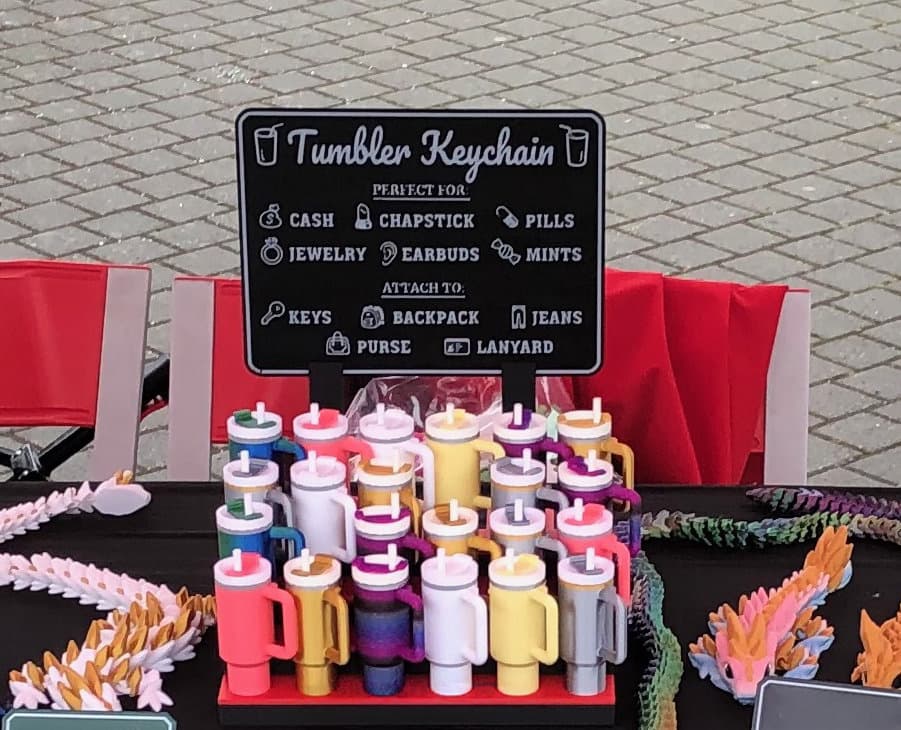
The display worked, in a sense. Teenage girls clustered around it at every show. They picked them up, showed their friends, said "oh my gosh" a lot.
And then they put them back.
Over 3 months and 5 shows, we sold 6. A 10% sell-through, on an $8 item that each needed assembly: attach the lid, glue the top, add the keychain hardware. We weren't running a product line. We were running a small museum of things teenagers admire.
The painful part is that without the numbers, we'd probably have kept making them. The booth traffic felt like success. Every show, the crowd around that display told us the chapstick holders were working. The sales data told us the truth: attention isn't revenue, and 54 unsold keychains is a lot of glue.
We retired them. No list could have warned us, because no list knows what a trend item costs us to make or what our particular crowds actually open their wallets for. Our own data knew by show 3. We just had to look.
How Do You Track Best Sellers Without a Spreadsheet?
The lightest path: connect your Square account to a tool that organizes sales by event automatically. MyEventPrep imports your Square catalog and sales history, matches sales to each event, and shows which products sell at which event types. Your prep sheet for the next show starts from that history instead of from a generic list.
That's the core of how MyEventPrep works. Each event you log makes the next plan smarter, including how many of each product to make so you're not hauling 3 wagonloads to a 4-hour show.
Not ready to connect anything? Drop a Square CSV into our free Square Insights tool and get per-event results in your browser. No account, no upload, no commitment. It's the fastest way to see your own bestseller list for the first time.
Your List Beats Their List
The generic lists are a fine first move. If you've never done a show, make some small functional items under $25, add something seasonal, and spread your price points. That's the wisdom of averages, and averages are better than guessing.
But from your very first event, you're collecting something better: evidence. What sold, what stalled, what earned the most per hour at your table. By show 3 or 4, your own data should be making your decisions, not a list written for everyone and no one.
We learned it from 54 unsold chapstick holders. You can learn it from a few minutes of tracking instead.
Start your free MyEventPrep account and turn your next few events into a bestseller list that's actually about you.
Frequently Asked Questions
What sells the most at a craft fair?
Jewelry, candles, bath and body products, seasonal ornaments, and small functional items like coasters, pouches, and magnets sell best across most craft fairs. Items under $25 move fastest. Results vary a lot by event type and season, so treat these categories as a starting point rather than a guarantee.
What sells best at craft fairs during the holiday season?
Ornaments, seasonal scents, stocking stuffers, and giftable items under $25 dominate fall and holiday shows. Shoppers at these events are usually buying for other people, so packaging and grab-and-go price points matter more than at summer markets.
How many of each product should you bring to a craft fair?
Base it on your past sales rather than a rule of thumb. After a few tracked events you'll know your typical sell-through per product per show. If you're new, bring a modest amount of a wide assortment, note what sells, and let the data set your quantities for the next event.
Are bestseller lists worth following at all?
Yes, for your first 1 or 2 events. They reflect real averages across many vendors and they're better than guessing. After that, your own per-event sales data will outperform any list, because it accounts for your products, your prices, and your local crowds.
How do I track what sells at my craft fairs?
Record per-product sales for each event. If you use Square, export the item sales report for the event date, or connect Square to a tool like MyEventPrep that matches sales to events automatically. Add a short post-event note about what got attention but didn't sell. Patterns usually show up within 3 or 4 events.