Your Craft Fair Prep Sheet: What to Make, How Many, and How Long It'll Take

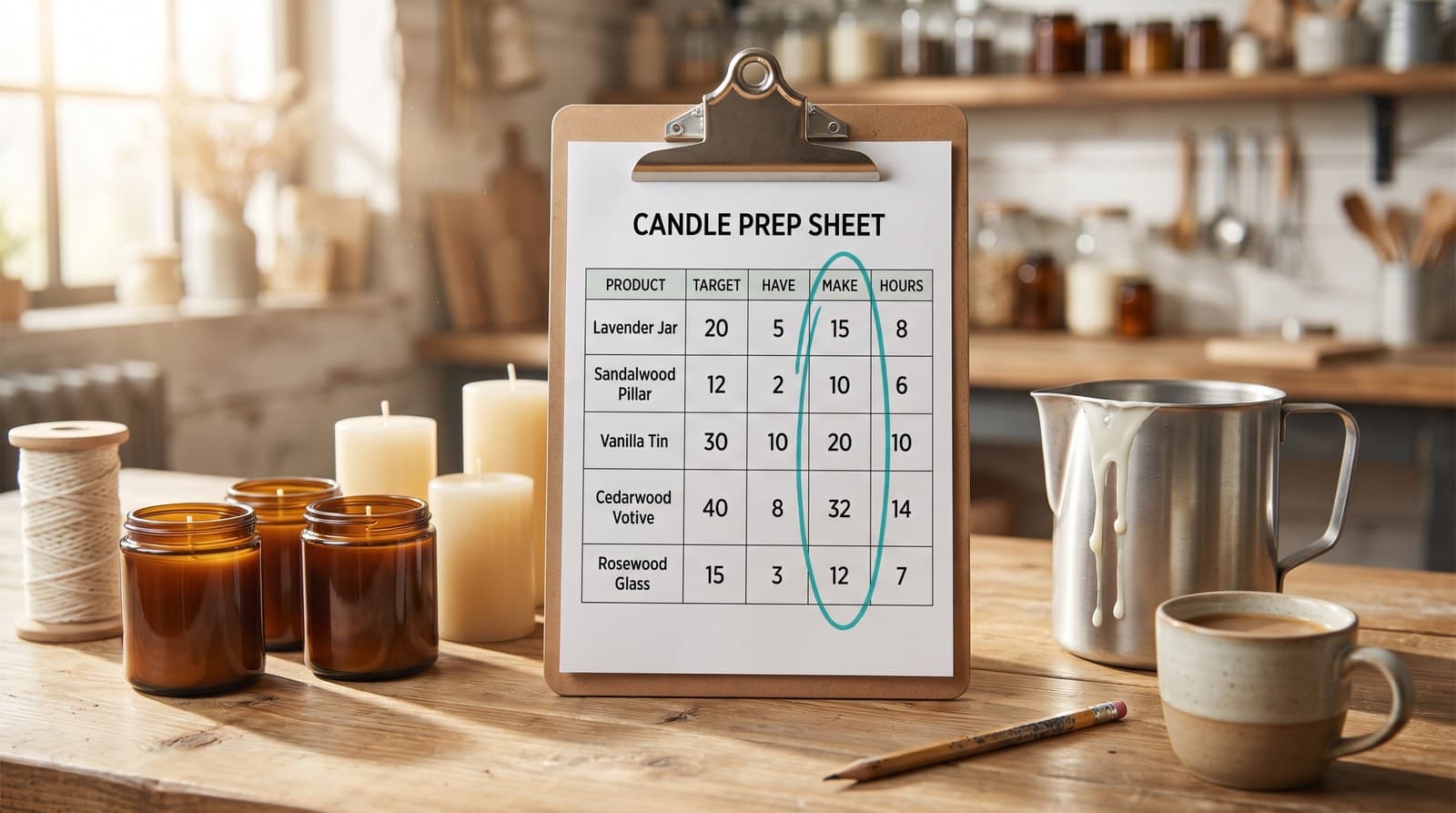
If you have ever stood in your workspace the week before a market wondering what to make and how much, you already know why a craft fair prep sheet helps. Learning how to plan production for a craft fair is mostly about answering three plain questions: what to make, how many, and how long it will take. A prep sheet puts those answers on one page.
The honest version is that most of us guess. We make a big batch of whatever we made last time, haul it all, and bring half of it home again. Then we do it again at the next event.
There is a calmer way. You build a short list of products, set a target for each one from what actually sold before, subtract the stock you already have, and total up the hours. That is the whole method. You can do it on paper, in a spreadsheet, or let a tool handle the arithmetic. We will walk through all of it.
What Is a Craft Fair Prep Sheet?
A craft fair prep sheet is a single page that lists each product you plan to sell, your target quantity, how many you already have on hand, how many you still need to make, the hours per unit, and the total production hours. It turns a vague to-do list into a clear, finite plan you can finish before event day.
The columns do the thinking for you. Here is what each one holds:
- Product. The item, ideally a short list. Many makers do well with just 6 to 10 products at a show rather than a sprawling catalog.
- Target quantity. How many you want to have for the event, based on past sales.
- On hand. What you already have made and ready to sell.
- To make. Target minus on hand. The only number that becomes work.
- Hours per unit. How long one finished, tagged, packed item takes.
- Total hours. To-make quantity times hours per unit.
Knowing what is in your inventory at all times is crucial for fair and festival vendors, no matter what you sell. The prep sheet is where that knowledge lives.
How Do You Set Target Quantities From Past Sales?
Set each target from what sold at similar past events, not from a guess. Look at how many of each product you sold last time, adjust for the size of the event, and use that as your target. If you sold 30 sticker packs at a comparable market, 30 to 40 is a reasonable target. Past sales beat gut feel almost every time.
If you have sold at shows before, review previous sales to estimate demand. That history is the foundation. The real value of any inventory sheet shows up after the event, when you can see which products sold fastest and which came home.
No history yet? Use a simple starting estimate, then correct it later. A few common ones:
- Hourly sales method. If you expect roughly 3 sales an hour over a 6-hour fair, that is about 18 items, plus backups to restock the table.
- Share of past sales. If one product was a third of your sales last time, give it a third of your target units this time.
- Conservative ceiling. Made Urban suggests bringing enough that you turn a profit even if you only sell 75% of it, since booths rarely sell out.
After 4 to 6 events, you will have enough sales history to spot patterns and your targets get sharper. For more on this step, see our guide on how many of each product to make. If you run a card reader, your Square sales data can set these targets for you.
Why Subtract What You Already Have on Hand?
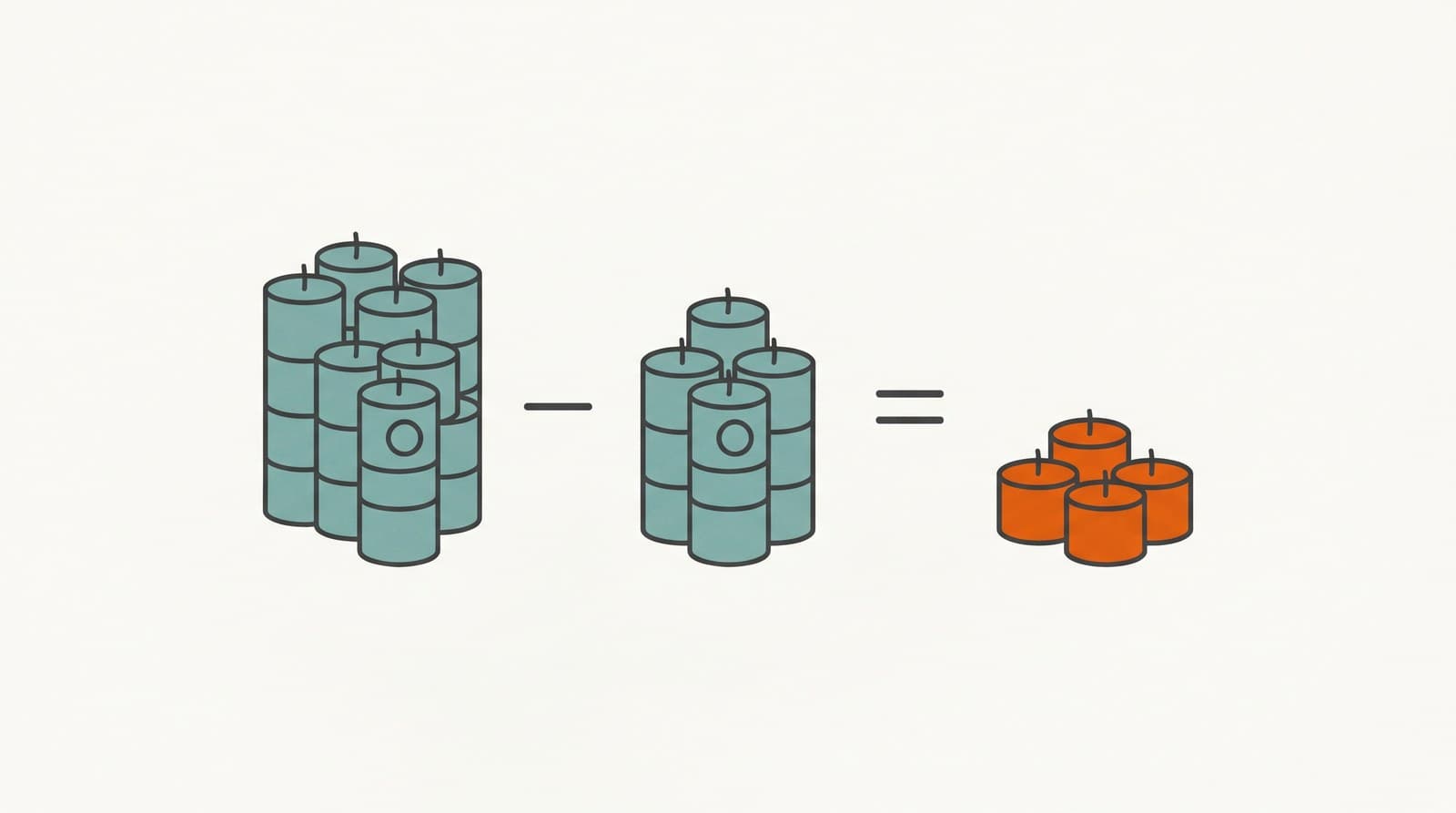
Because the only thing worth your time is the gap. Your target is what you want at the event. Your on-hand count is what you already made. The difference, target minus on hand, is your real to-make number. Skip this step and you remake stock you already own, which wastes hours you did not have to spare.
This is the part most prep advice skips. Plenty of guides tell you how much inventory to bring. Far fewer tell you to look in your bins first.
Say your target for coasters is 40 and you already have 10 boxed up from last time. You do not need to make 40. You need to make 30. That one subtraction can shave hours off your week.
It also keeps your booth stocked without overdoing it. Vendors are often told to bring 3 to 4 times their sales goal in product, which can balloon fast. An inventory-aware sheet counts what you have first, so you make less and still walk in with plenty.
How Do You Calculate Total Production Hours for a Craft Fair?
Multiply each product's to-make quantity by its hours per unit, then add up the column. That total is the real work in front of you. If you need to make 100 items and you finish 2 per hour, that is about 50 hours of production. Once you know the number, you can count backward from event day and decide when to start.
This is the step that turns planning into a schedule. A pile of products you "should make" has no shape. A number like "31 hours" does.
Be honest about hours per unit. Count the full cycle time: making, finishing, tagging, and packing, not just the fun part. The tag and the bag take longer than you think.
If the total comes back unrealistic for the time you have, you have clear options: lower a target, raise a price, or trim a slow product. That is a much calmer decision to make three weeks out than the night before. Most makers use a mix of batch-making top sellers and make-to-order for everything else, which keeps the hours total manageable.
Building the Prep Sheet by Hand
You can build this whole thing with a pen and a notebook. Here is a worked example. The product names and numbers are made up to show the math, not a real sales log.
| Product | Target | On Hand | To Make | Hours/Unit | Total Hours |
|---|---|---|---|---|---|
| Sticker packs | 60 | 25 | 35 | 0.1 | 3.5 |
| Coaster sets | 40 | 10 | 30 | 0.5 | 15.0 |
| Desk planters | 20 | 12 | 8 | 1.5 | 12.0 |
| Keychains | 50 | 30 | 20 | 0.25 | 5.0 |
| Totals | 93 | 35.5 |
Read it left to right. Target comes from past sales. On hand is what is already in the bin. To make is the subtraction. Hours per unit is your honest estimate. Total hours is the multiply.
The bottom row is the payoff. You need to make 93 items, and that is about 35 and a half hours of work. Spread over three weeks, that is a little under 12 hours a week. Now you have a plan, not a worry.
Notice the desk planters. They are only 8 units but eat 12 hours because they are slow. That is exactly the kind of thing a prep sheet surfaces. When we looked at the data for one of our own slow, low-return products, the numbers made the call obvious, and we dropped it. The sheet does not tell you what to cut. It just makes the trade clear.
How MyEventPrep Builds Your Prep Sheet Automatically
Doing this by hand works, but the math gets old fast, especially across several events a season. MyEventPrep builds the prep sheet for you and keeps the columns in sync. You get the same six columns, filled in from your own data, in a printable sheet you can tape to the wall.
Here is the difference, side by side:
| Step | By hand | In MyEventPrep |
|---|---|---|
| Set targets | Dig through old sales notes | Pulled from your recorded sales |
| On-hand count | Track in a separate list | Stored with each product |
| To-make math | Subtract for every row | Calculated automatically |
| Total hours | Multiply and add each row | Totaled for you |
| Sharing or printing | Recopy it neatly | Printable sheet, ready to go |
It still works on paper. Print the sheet, check items off as you make them, and bring it on event day. After the show, record what sold, and those numbers feed your next set of targets. That loop is the point: each event makes the next prep sheet a little smarter.
If you are coming from a card reader, you can upload a Square CSV for instant insights to see your sellers before you even set targets.
Why Bringing Less, Made on Purpose, Beats Overpacking
Because hauling more than you need is the most common, most exhausting mistake in this hobby. A prep sheet built from real sales tends to point you toward making and bringing less, not more. You arrive less tired, your booth still looks full, and you stop remaking things that did not sell.
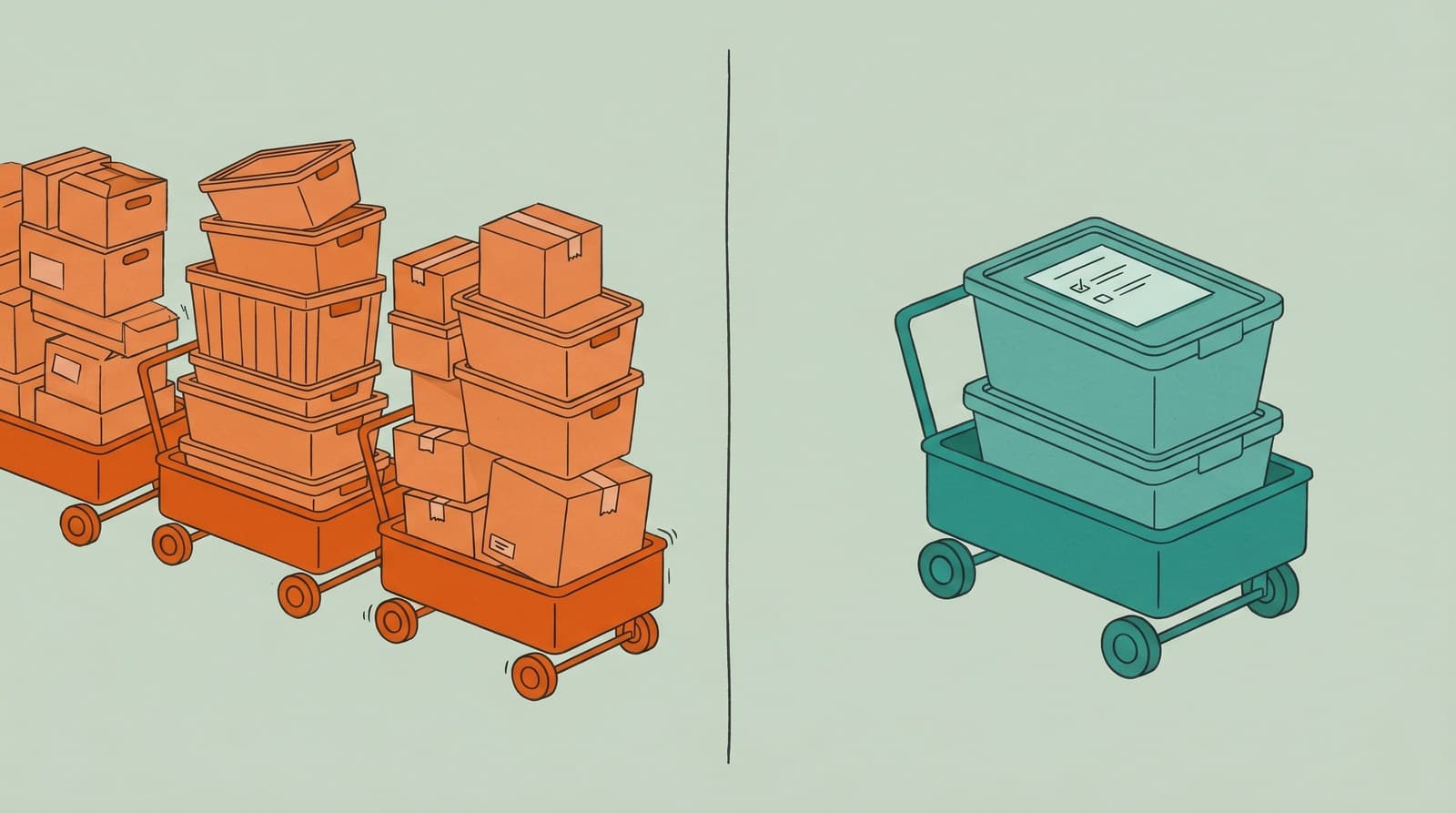
Too many products can actually hurt your sales by overwhelming shoppers and spreading your effort thin. A focused sheet keeps you on your proven items. Tracking what comes home also feeds your sell-through rate, the share of stock that actually sold, which is one of the clearest signals of what to make more or less of next time.
None of this requires a spreadsheet degree. It is one page, six columns, and a habit of writing down what sold. The first sheet is the hardest. Every one after that is mostly copy, adjust, and go.
Conclusion
A craft fair prep sheet answers the three questions that keep makers up at night: what to make, how many, and how long it will take. Set targets from past sales. Subtract what you already have. Total the hours so you know when to start. That is the whole method, and you can run it on paper today.
The payoff is a calmer week and a lighter load on event day. You make what you will actually sell, you stop remaking stock you already own, and you walk in knowing the work is done.
If you would rather skip the arithmetic, MyEventPrep builds the sheet from your own sales and keeps the math current. Sign up free and turn your next event into one clean page. Then pack with a clear checklist and a quick post-event debrief to make the next sheet even better.
Frequently Asked Questions
What is a craft fair prep sheet?
It is a single page listing each product, a target quantity, how many you have on hand, how many to make, hours per unit, and total production hours. It turns scattered to-dos into a finite plan. The to-make number is simply your target minus what you already have, so you only build the gap.
How many of each product should I make for a craft fair?
Base it on past sales at similar events. If you have no history, a common starting point is the hourly sales method: about 3 sales an hour over a 6-hour show is roughly 18 items, plus backups. Made Urban suggests bringing enough to profit even if you sell only 75%.
How do I calculate total production hours?
Multiply each product's to-make quantity by its hours per unit, then add the column. If you need 100 items and make 2 per hour, that is about 50 hours. Count the full cycle, including tagging and packing, then work backward from event day to pick a start date.
Why subtract what I already have on hand?
Because remaking stock you already own wastes hours. Your target is what you want at the event; your on-hand count is what you already made. The difference is the only thing worth your time. Skipping this step is how makers end up overproducing and overpacking.
Can I make a prep sheet without software?
Yes. A pen, a notebook, and six columns are enough. Set targets from past sales, subtract on hand, multiply by hours per unit, and total it up. Tools like MyEventPrep just do the arithmetic and pull targets from your recorded sales so you do not recopy the sheet each time.