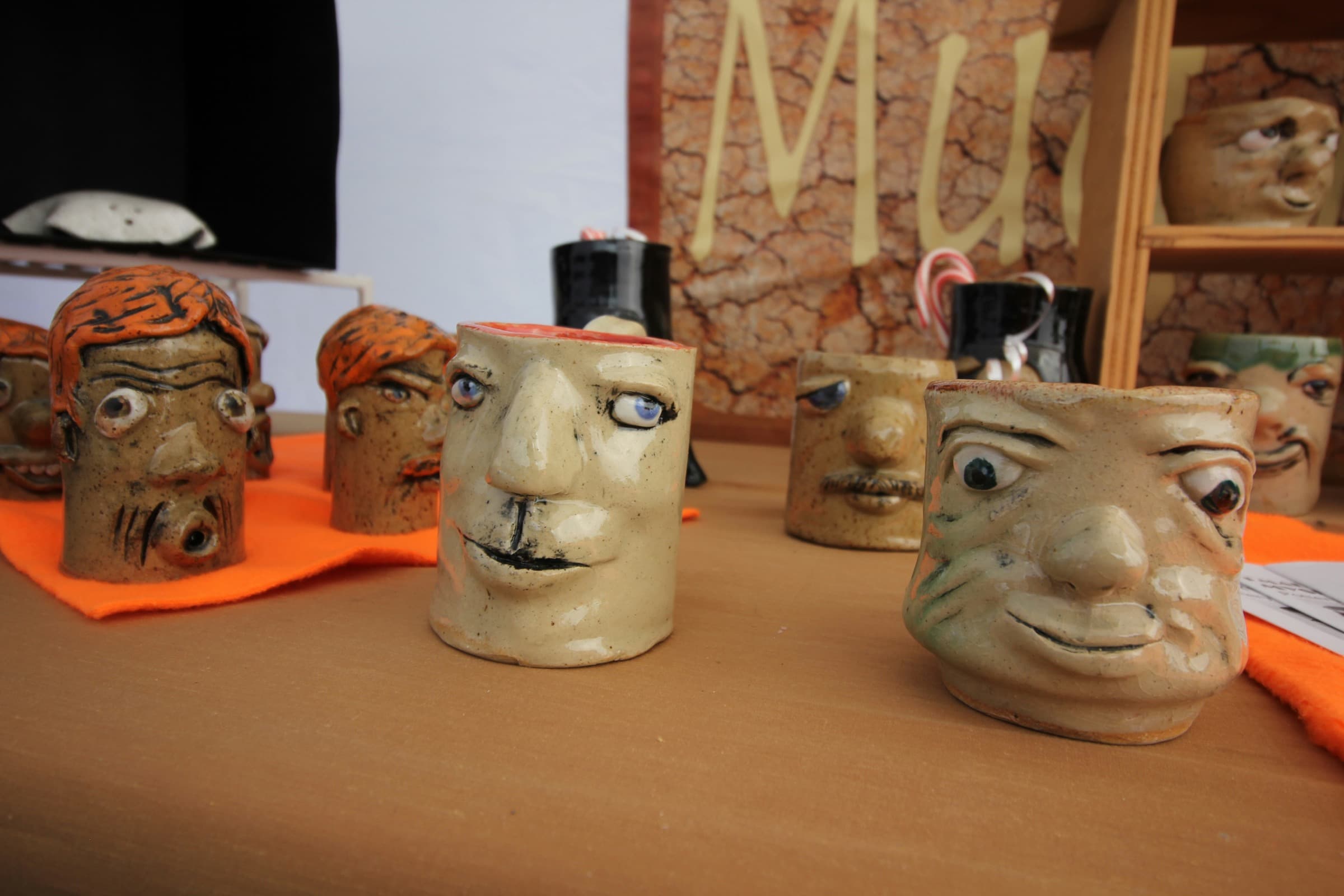
A ceramic artist's booth — hand-thrown stoneware mugs, bowls, and vases arranged on warm wood shelving in golden-hour light.

For makers · Ceramics

Heavy boxes. Careful hands. Calm setup.

Packing ceramics takes time, padding, and a good system. Unpacking at load-in is its own project. MyEventPrep helps you plan the layout and track what sold so each show gets a little easier to repeat.

A pottery week in the life

Plan the layout. Pack with padding. Learn which forms actually sold.

Plan

Bring the right mix of forms, not the whole studio.

Mugs in volume, statement vases for the front. MyEventPrep looks at what sold at similar events and tells you how many of each form to pack — so you’re not hauling out the serving platters that haven’t moved since spring.
Pack

Padding, bins, dollies, and the steady hand to load.

A weather-aware checklist that knows your booth: shelving, risers, signage, packing materials, and the small things you only remember at 6 a.m. (you forgot the dolly strap last September).

Learn

Know which form carries the show.

Per-piece sales come back from Square. Next time you prep, you can see at a glance which mugs flew off the shelf, which glaze got picked up most, and which one-off everyone asked about.

Ceramics booths run on a different clock.

Heavy. Breakable. One-of-a-kind. And built around production timelines you can’t shortcut, no matter how full the show calendar is.

01

Pack carefully or pay for it

Newsprint, bubble wrap, foam, towels. Every piece padded. The wrong system, and one mug shifts and takes three with it.

02

One-of-one means hard to track

Each piece is its own SKU, with its own glaze, its own size, its own price. Spreadsheets give up. So do you.

03

The kiln doesn’t care about your show schedule

Throwing, drying, bisque, glaze, glaze fire. Booking the next show means knowing what you can actually have ready in time.

04

“Do you have another mug like that one?”

A returning customer remembers the speckled blue. You sold the last one in March. Without a record, you can’t even confirm whether you made it.

“You’re a potter, not an inventory manager.
Stop running the show like one.”

Every piece has a place. Including the ones still in the kiln.

MyEventPrep keeps your full catalog in one place — every form, every glaze — so each event’s pack list comes from your inventory, not from a count the night before.

Connect Square once. Your forms come with you.

Including the glaze and form detail you’d never type into a spreadsheet twice.

Add the event, then choose pieces from your catalog — mugs by the dozen, statement vases by name. Padding, the dolly, and the wrap paper are already on the checklist; the forecast lives there too. After the show, Square shows you which forms moved by glaze and price. That’s where the next firing schedule starts — not from a hopeful guess.

That’s how a ceramics booth gets easier. One firing at a time.

Plan the shelves before load-in

A booth layout that respects weight and fragility.

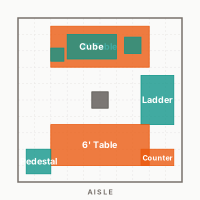
Drag the heavy pieces low and to the back. Keep mugs and cups in browse range. Save your setup once and reuse it next show — or branch a new layout for the rare booth where you have wall space.

A 10×10 ceramics template is included as a starting point: low and sturdy, with customer flow that respects how pottery is actually shopped.

Ceramics booth 10x10 layout diagram with low sturdy shelving for heavy pieces, mug shelves at browse height, and a wrap counter.

Built around what ceramic artists actually track

The little details that decide whether a show was worth it.

Per-form sell-through

See which mugs, bowls, and vases moved at each event — and which sat the whole weekend. Plan your next throw and the next pack list from data, not gut feel.

Packing + display checklist

Bins, padding, risers, dolly, signage, wrap paper, gift bags. Edit it once and it carries forward to every event you create.

Custom + commission requests

Per-event notes capture the “can you make a matching set?” conversations so they don’t live and die in a single Saturday.

Repeat customers

Jot a note when someone buys — the speckled blue mug, the matching bowl set. When they come back to your booth six months later, your reflections do, too.

Common questions from ceramic artists

A lot of my pieces are one-of-a-kind. Will it still work?
Yes. You can either catalog by form (e.g., “wheel-thrown mug, speckled blue”) and let each represent a small batch, or treat true one-offs as their own product. Either way, sales come back attached to what you brought, so you can see what moved.
Does it know about firing time or production lead time?
Each product carries a “time to make” value, so you can see total production hours for an event before you commit. It won’t schedule your kiln runs for you, but it’ll tell you when an event needs more than you can realistically have ready.
Can I plan my booth layout, not just what I'm bringing?
Yes. The booth layout planner is included — drag shelving, risers, the wrap counter, and signage onto a canvas, save the setup, and reuse or branch it for the next show. A 10×10 ceramics template is included as a starting point.
Do I get a checklist that's actually useful for ceramics?
You start with a vendor checklist that covers display props, packing materials, signage, and the small stuff (dolly, wrap paper, gift bags). You edit it once, and from then on it carries forward to every event you create.
Can I update the checklist or jot reflections from the booth?
Yes. Event details, the checklist, neighbor notes, and post-event reflections all work on phones and tablets, online or off. Cross items off as you set up, save the custom-order conversation that just happened, mark which mug glaze sold out — it all syncs back when you’re on wifi again.

The next firing
already has a plan.

Start with one event. Bring your forms. See how it feels.

Hero photo by Judy Beth Morris on Unsplash.